What is the life cycle of a Monstera Plant?
A Monstera plant made changes as it grow. A small plant starts with small or plain leaves. Then, it will becomes a climbing vine with many large leaves, split edges and natural holes. A full grown plant may make flowers, fruit and seeds in warm outdoor conditions.
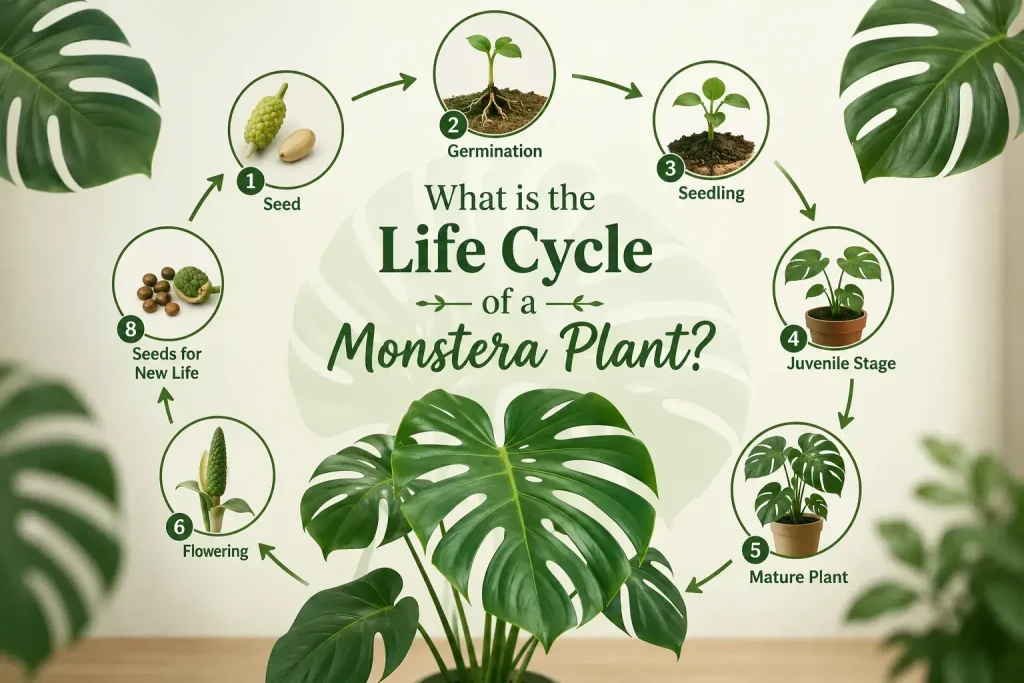
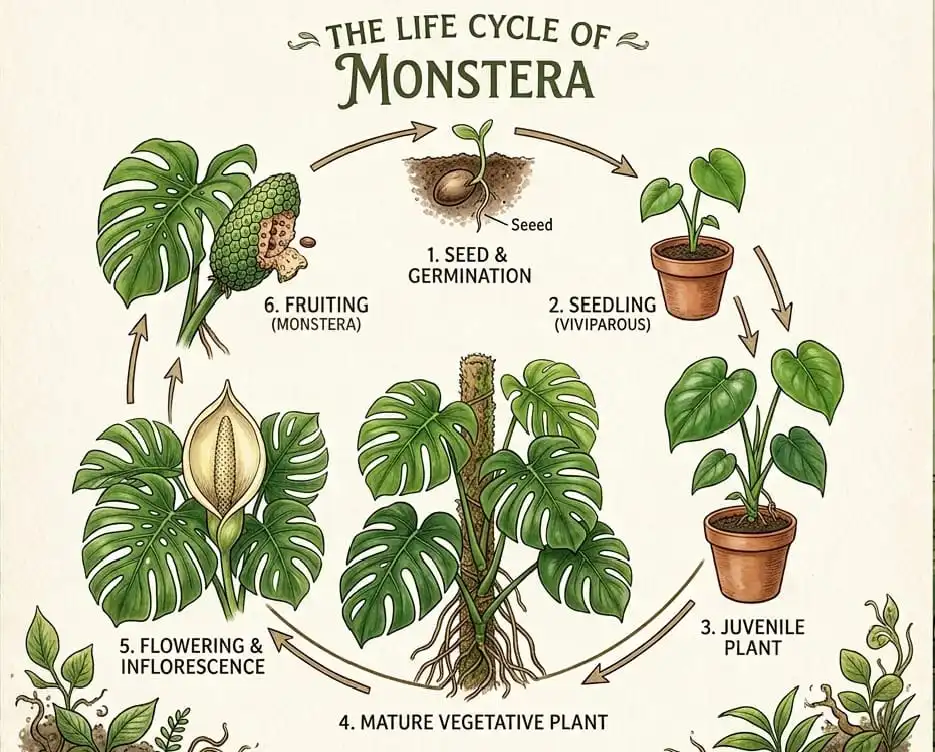
The life cycle usually moves from seed, germination, seedling, juvenile growth, climbing growth, mature leaf growth, flowering and then fruiting. Most indoor Monsteras reach the mature leaf stage but do not bloom. Light, warmth, water, root health, space and support affect growth.
How the Monstera Life Cycle Begins
A Monstera start from a seed or stem cutting. In nature seeds form inside ripe fruit. When a seed falls on warm and damp soil it start growing. A stem cutting forms roots first from a node and then start producing new leaves.Monstera deliciosa comes from tropical areas of Mexico and Central America. It grows as a climbing vine. Small plants begin near the ground and climb tree trunks as they grow.
Stage 1: Seed
The first stage is seed stage in full life cycle of monstera plant. A healthy seed may contain a tiny plant and stored food. It needs moisture, warmth, air and suitable soil before starting a growth.
New Monstera seeds start better than old or dry seeds. Growers place them in a light potting mix that stays damp. More water can block air from reaching the seed while very dry soil can stop the young root. Use a drainage pot.The seed does not need direct or strong sunlight. Bit light and steady warmth are better. The container should have holes so extra water can leave and the roots of a plant can get fresh oxygen.
Stage 2: Germination
Germination starts when the seed start taking water and the first root gets out through its outer coat. This root helps the plant to consume water and minerals. After some time a small shoot grows upward.The first leaf is simple and soft. It will not have the large cuts and holes seen on older Monsteras because it is a new plant. The seedling is using most of its energy to build roots and a small stem.
Germination changes according to temperature, seed age and moisture. Warm soil supports faster sprouting. Cold soil may slower the growth or cause rot
Stage 3: Seedling Growth
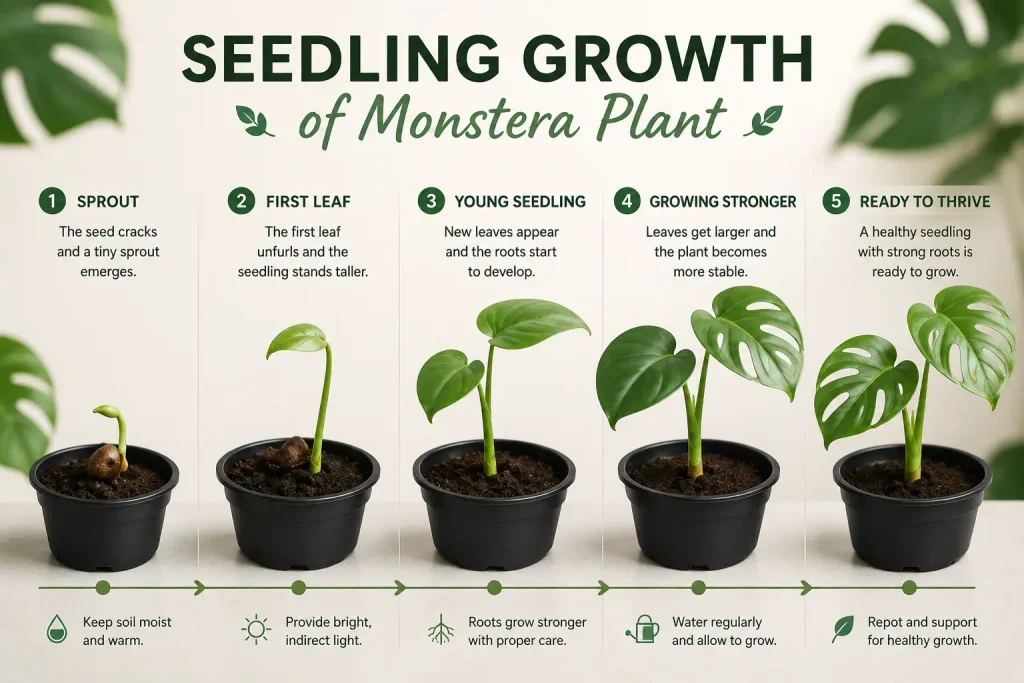
After the first leave open, the plant enters the seedling stage. Its roots spread in the pot and stem becomes stronger. New leaves may be small, thin and free from splits.
A Monstera seed needs bright or indirect light. Strong sunlight may burn starting leaves. Less light can cause weak stems and slow leave growth. Water only when you feel the upper layer of soil is dry. Check the soilby finger touch.
A small drainage pot is safer than a large one. Unused soil can stay wet for many days and harm the roots so use the soil which is not new. Move the plant into a slightly larger pot as it grows use a pot having holes for air flow.
Stage 4: Juvenile Growth
The juvenile stage is common in garden shops. The plant has several leaves, a longer stem and a stronger root system. Its leaves are often heart shaped and may still have no holes.Every new leaf become larger when the plant gets enough light, water, food, and root space. Missouri Botanical Garden notes that new leaves are usually smaller and mostly uncut while old leaves are larger and have many openings.Monstera plant also grow aerial roots from its stem. In forest they help the vine attach to bark and take in moisture. Indoors they grow toward the pot, wall or moss pole support.
Stage 5: Climbing Growth
Monstera is a climbing vine. In natural home it grows from the forest floor until it reaches a tree or another firm surface. It then climbs upward at tree or another support.A moss pole can support this habit indoors. Tie the main stem loosely with soft plant tape. Keep leaf stalks free because they turn toward the light.
Support can help the plant make larger leaves and growth faster. A trailing vine continue to grow but its leaves may stay smaller. Climbing gives the stem a stable path and copies its natural habit.
Stage 6: Mature Leaves and Fenestrations
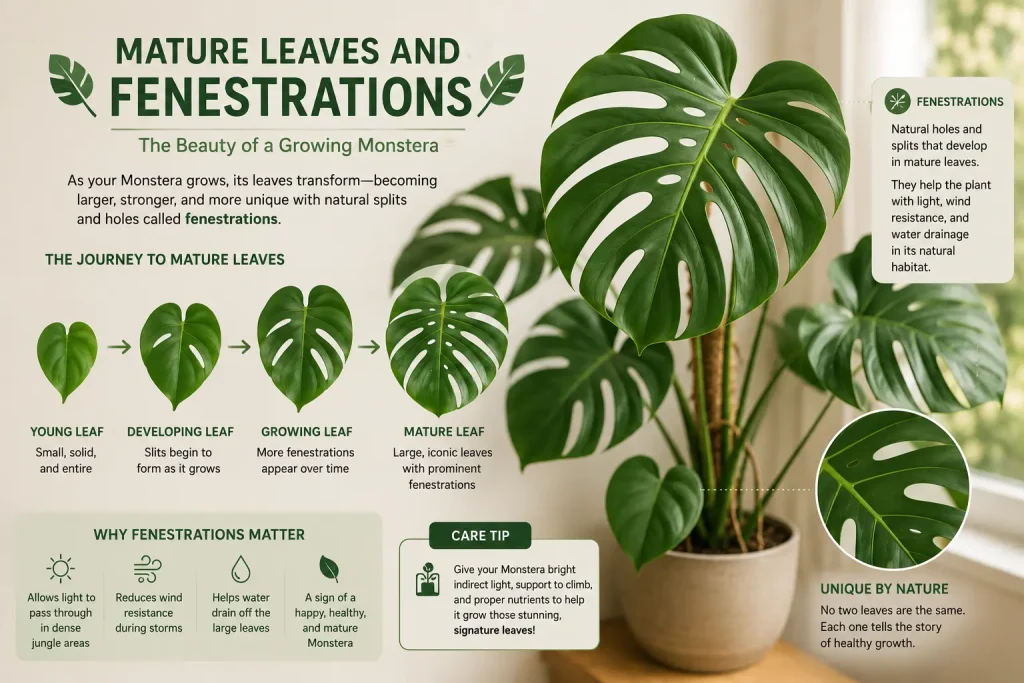
A Monstera reaches its mature leafy stage when it start making large leaves with inner holes. These openings called fenestrations.
Indirect sunlight is linked with larger leaves. A plant in a dark corner may stay alive but cannot grow healthy or properly. Bright filtered light often supports faster growth and broader leaves.Healthy roots also matter. Roots need moisture and air. A loose drainage pot mix with bark, perlite or similar material helps water drain while keeping air spaces. A crowded root system may slow growth while an oversized pot may stay wet too long.
Not every new leaf will be bigger than the last. Low light, cold air, damaged roots, pests or a recent move can lead to a smaller leaf. Check the next few leaves before judging the plant’s health and also notice the changing things.
Stage 7: Flowering
A fully grown Monstera may make a flower structure with a pale spathe around a thick spadix. The spadix carries many tiny flowers.Flowering is uncommon inside homes. A plant need years of growth, warm temperatures, bright indirect light and steady care before it blooms while healthy indoor plant may never flower. Those people are lucky who saw the flower of monstera.
Outdoor plants in tropical and warm subtropical areas have a better chance of flowering. Missouri Botanical Garden and NC State both note that indoor plants rarely make flowers or fruit.
Stage 8: Fruit and Seed Formation
After pollination the flower can form green fruit. Its surface is made of many small sections. It ripens slowly. University of Florida guidance states that the fruiting spike can take about one year to mature.
Only fully ripe fruit should be eaten while Unripe fruit can irritate the mouth and throat. Ripe sections loosen naturally and reveal soft flesh beneath them. Seeds inside ripe fruit can begin a new generation.
How long does a monstera take to mature?
There is no single timetable. A seed grown Monstera may need several years before it produces large adult leaves. Indoor growth is often slower because light changes with the season and root space is limited.University of Florida guidance reports that outdoor plants grown from stem cuttings may begin fruiting in about four to six years. Plants grown from suckers may fruit in about two to four years. These ranges apply to good outdoor conditions not the average home.A cutting from an older vine may make large leaves sooner than a seedling because it comes from mature stem tissue. It still needs time to form roots and begin steady leaf growth.
Care That Supports Every Growth Stage
Place the plant in o indirect light. A little soft morning sun may be fine, but strong afternoon sun can scorch leaves.Water when the upper part of the potting mix begins to dry. Let extra water leave through the bottom and do not leave the pot sitting in water.
Use a loose growing mix and a pot with drainage holes. Keep the plant away from cold drafts and sudden temperature changes. NC State lists a preferred indoor range of about 60°F to 85°F.Add support while the vine is easy to guide. Repot when roots fill the pot, circle tightly or grow through the drainage holes. Choose a new pot only slightly wider than the old one.
The Monstera life cycle in simple terms
A Monstera start its life as seed or rooted cutting. It first builds roots then makes small juvenile leaves. As the vine gets older and finds support it climbs at tree in forest and moss pole at indoor and produces larger leaves. Mature leaves may develop splits and inner holes. Under warm outdoor conditions, an older plant may flower, form fruit and produce new seeds.
Mostly monstera indoor plants do not have flowers or fruit. Proper care can made a monstera plant healthy for many years.
What is the Monstera life cycle?
The Monstera life cycle includes seed germination, seedling growth, juvenile growth, mature growth, flowering, fruit production and natural aging.
How does a Monstera plant begin its life?
A Monstera begins its life as a seed. Under warm, moist conditions, the seed germinates and develops its first roots and small leaves.
How long does a Monstera seed take to germinate?
Fresh Monstera seeds usually germinate within two to four weeks. Germination may take longer when the temperature or moisture level is too low.
What does a young Monstera plant look like?
A young Monstera has small, solid, heart-shaped leaves. The leaves usually do not have holes or splits during the early growth stage.
Does a Monstera flower during its life cycle?
Yes, a mature Monstera can produce flowers. However, flowering is uncommon indoors because the plant needs warm, humid and stable growing conditions.
Does a Monstera produce fruit?
Mature Monstera deliciosa plants can produce edible fruit after flowering. The fruit must be fully ripe because unripe fruit contains irritating calcium oxalate crystals.
How long can a Monstera plant live?
A healthy Monstera can live for several decades. Proper light, watering, pruning, feeding and repotting can help extend its lifespan.