Propagation
Monstera Propagation
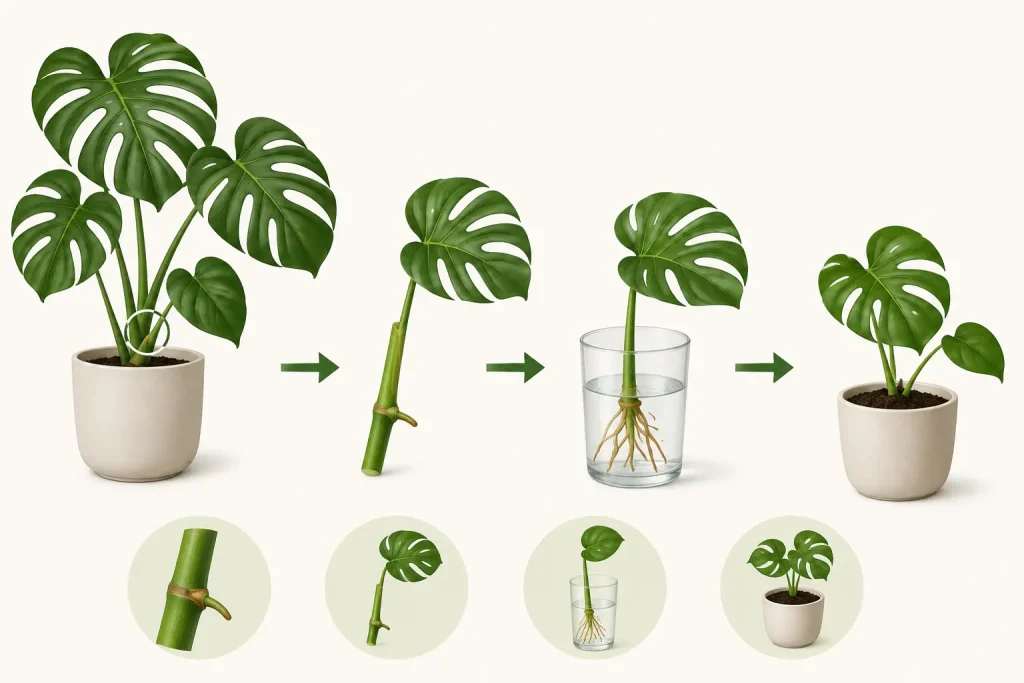
Monstera propagation is the process of growing a new Monstera from a part of existing plant. It is a useful part of plant care for people who want to grow many monstera plants and don’t have enough money to purchase them. The most important thing in the whole process of propagation is a healthy node. You have to understand a node before propagation. A Monstera leaf by itself is not normally enough to produce a complete new plant. A suitable stem section with at least one healthy node is needed because the node contains the growth tissue that can produce new roots and shoots. A better propagation starts before the cutting is taken. The health of the parent plant, condition of the stem, location of the node, cleanliness of the tools, light, temperature, humidity and moisture can all affect how well a new cutting grows.
What is Monstera Propagation?
It means producing new plant from old plant. With Monstera propagation starts with a suitable and healthy part of a parent plant. When that plant material contains the right growth tissue and receives suitable conditions, it can develop roots and new growth. The needs of monstera plant should be fulfil. This type of plant reproduction is different from growing a plant from seed. With a good stem section, the new plant begins from tissue taken from the parent plant. Monstera deliciosa is a climbing plant that has nodes on its stems and these node a main part of propagation.
For this reason, understanding the stem is more useful than simply choosing a healthy looking leaf.
Propagation and Monstera Growth
Propagation is the start of a new plant from older plant. A new Monstera plant needs suitable light, water, temperature, humidity and growing space. As the plant grows it may produce larger leaves and longer stems. It can also produce aerial roots. Mature Monstera plants often benefit from support because they naturally grow as climbing plants.
Types of monstera Propagation:
- Monstera Water Propagation
- Monstera Soil Propagation
- Monstera Air
- Layering Monstera
- Propagation From Nodes
- Monstera Propagation Aftercare
- Variegated Monstera propagation
Understanding the Monstera Stem
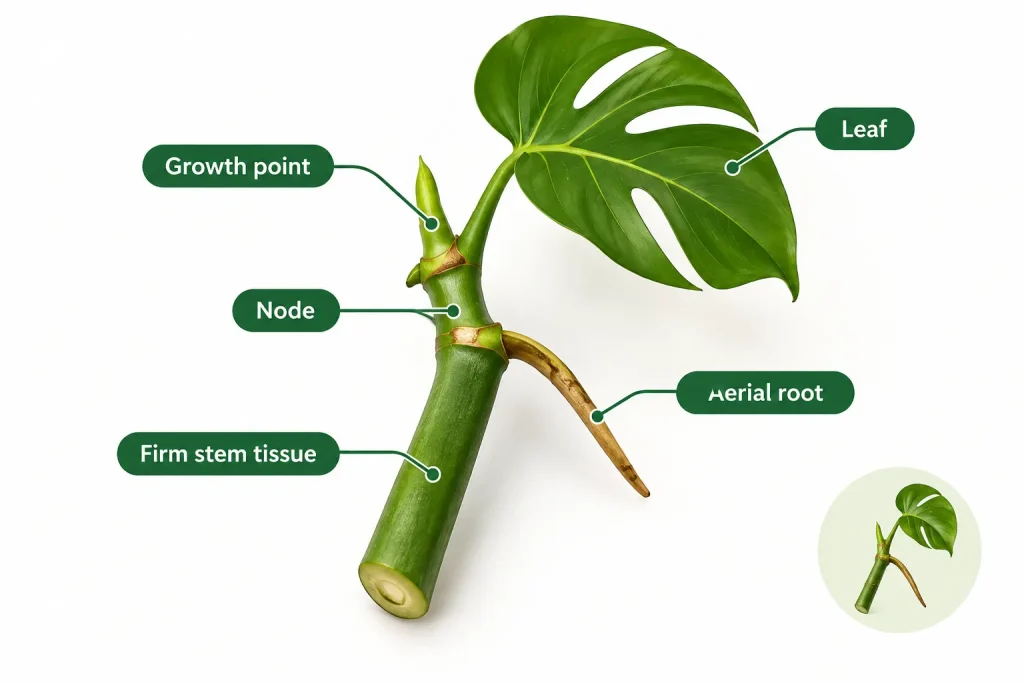
The stem is the most important parts of a Monstera. Leaves connect to the main stem through petioles. Nodes are found along the stem, usually near these attachment points. Aerial roots may also develop from areas around the nodes. When preparing for propagation, look at the stem rather than focusing only on the leaves.
A suitable stem section may contain:
- One or more healthy nodes
- A leaf
- An aerial root
- Firm stem tissue
- A visible growth point
The exact appearance can differ depending on the age and size of the plant.
Choosing the Right Stem Section
The quality of the stem section matters. Look for a stem that contains at least one healthy node. You have to check that the stem should not have large areas of soft, black, or rotten tissue. A leaf may be included with the cutting but the leaf itself is not the main part responsible for producing the new plant. The node should be healthy and clearly connected to the stem.
Why Propagate a Monstera?
There are many practical reasons to propagate Monstera.
- Grow Another Monstera
- Manage a Large Plant
- Save Healthy Plant Material
- Share a Monstera
- Grow More Plants From One Parent

What is a Monstera Node?
Node is point where a new growth start it is a place where new leave heave start to made. Node is a point where also roots form when it is use for a propagation. It is a like a dot on the stem.
Signs That You Have Found a Node
Look for:
- A leaf attachment point
- A small raised area
- A joint along the stem
- A bud or growth point
- An aerial root near the stem
- A thicker part of the stem

The appearance of a node can vary, so it is useful to inspect the entire stem before making any cut.
Why the Node Matters?
The node is the main part needed for stem propagation. It contains growth tissue that can produce new roots and shoots under suitable conditions. A healthy Monstera leaf may stay green for some time after being removed, but a leaf without a node does not normally have the growth point needed to become a complete new plant. This is why identifying the node should come before cutting the plant.
What Makes a Good Monstera Cutting?
| Feature | What to Look For |
|---|---|
| Node | Healthy and intact |
| Stem | Firm with no obvious rot |
| Leaf | Healthy if included |
| Aerial root | Healthy if present |
| Parent plant | Good overall health |
| Cutting surface | Clean and free from damaged tissue |
When is a Monstera Ready for Propagation?
- Healthy leaves
- Firm stems
- Active growth
- Good root condition
- No serious pest problem
- No widespread decay
Are Aerial Roots Required?
No. Aerial roots are not required for Monstera propagation. The node is the main part needed when producing a new plant from stem material. A cutting may already have an aerial root, which can be useful, but a healthy node can also produce roots without an existing aerial root. This is why a cutting should be judged by the condition of its node and stem rather than by the presence or absence of an aerial root.
Can a Monstera Leaf Grow Into a New Plant?
No, its not possible because a leave does not have a not on it. As we know the node is very important for propagation. This is the common points people need to understand before propagation. The leaf can remain alive for some time period because it contains stored resources and plant tissue but without a suitable node there is no normal growth point for producing a new stem. If your goal is to produce a complete new Monstera you have to select plant material that includes a healthy node.
How Many Cuttings Can One Monstera Provide?
You can make many cuttings there is no fixed number.
The number depends on:
- Plant size
- Number of healthy nodes
- Stem length
- Plant health
Amount of growth remaining after cutting
A full size healthy Monstera may have many suitable nodes. But you have to know that taking too much plant material at one time can weaken the parent and cause problems. It is better to look the health of the parent plant than to take as many cuttings as possible.
How Many Plants Can Come From One Monstera?
Many plants can came there is no fixed number The number depends on the size of the parent plant and the number of suitable nodes available. A large mature Monstera can have many nodes along its stem. A young Monstera may have only a few. The parent plant should remain healthy after material is removed, so the number of cuttings should not be the only factor considered.
When Should You Propagate Monstera?
Spring and summer are generally good periods for propagation because Monstera grows actively in warm conditions. Indoor propagation can also work at other times of the year when temperature and light remain suitable. The plant does not follow the same growth pattern in every home. A Monstera kept in a warm room with good light may continue growing when an outdoor or cooler plant has slowed down. The main goal is to provide conditions that support healthy growth.
A Simple Preparation Checklist
| Item | Check |
|---|---|
| Parent plant | Healthy |
| Stem | Firm |
| Node | Present and healthy |
| Aerial root | Present if available |
| Cutting tool | Clean and sharp |
| Container | Clean |
| Growing area | Warm |
| Light | Bright indirect |
| Moisture | Ready and controlled |
| Pot | Drainage holes if needed |
Expert Guidance for Better Propagation
Start with the plant rather than the equipment. A healthy parent plant gives you better material to work with. Learn to identify the node before making any cut. Use clean tools. Give the cutting proper indirect sunlight and warmth. Keep the moisture under control Do not check the progress daily because it can create disturb. Give roots enough time to develop These basic practices cover most of what a beginner needs to start learning Monstera propagation.
Basic Tool Checklist for Monstera Propagation
| Tool | Needed | Main Use |
|---|---|---|
| Pruning shears | Yes | Cutting healthy stem sections |
| Sharp plant knife | Optional | Making precise cuts |
| Rubbing alcohol | Recommended | Cleaning cutting tools |
| Clean container | Yes | Holding propagation material |
| Small pot | Later | Planting established cuttings |
| Growing medium | Later | Supporting root development |
| Clean water | Yes | Maintaining suitable moisture |
| Spray bottle | Optional | Lightly moistening materials |
| Plant label | Optional | Identifying cuttings |
| Gloves | Optional | Hand protection |
| Clean work surface | Recommended | Preparing and handling cuttings |
Research Based Notes
University and botanical horticulture sources support several basic points used in this guide. The University of Connecticut identifies stem cuttings and layering as propagation options for Monstera deliciosa and recommends using healthy stem material with nodes.
Penn State Extension notes that Monstera prefers bright filtered light, warm conditions, good drainage and moderate to high humidity.
Iowa State University Extension explains that houseplant stem cuttings can often root within several weeks and that suitable moisture, light and growing conditions support successful rooting. Kew also provides general guidance for propagating houseplants, including the need for clean cutting tools and suitable light and warmth. These sources provide a useful foundation for the general propagation information presented here.
Final Thoughts
Monstera propagation starts with understanding the plant. The node is the key part of a suitable stem cutting while the condition of the parent plant can affect the quality of the material you take. Preparation first before propagation makes the process more easier. Use clean tools, select healthy stem tissue, provide suitable warmth and manage moisture carefully. A new cutting may take some time to develop new roots and visible leaf growth may come later. Give the plant time rather than making frequent changes. Once the cutting becomes established, continued care will help it develop into a healthy Monstera.
For a Monstera website, this page should remain the main parent page for propagation. Detailed subjects such as water propagation, soil propagation, air layering, node selection, aftercare, and propagation problems can be covered on separate child pages.
FAQs
Can every Monstera cutting grow into a new plant?
No. A cutting should contain at least one healthy node. Without a node, a Monstera cutting cannot produce new roots and shoots.
How long does Monstera propagation take?
Most Monstera cuttings begin developing roots within 2–6 weeks, depending on temperature, light, humidity, and the health of the cutting.
When is the best time to propagate a Monstera?
The best time is during the active growing season, usually spring and summer, when the plant is naturally producing new growth.
Do Monstera cuttings need an aerial root?
No. A cutting can grow without an aerial root as long as it has a healthy node. However, an aerial root may help the cutting establish more quickly.
How do I know if my Monstera cutting is healthy?
A healthy cutting has a firm stem, an intact node, clean cut surfaces, and, if included, healthy green leaves with no obvious signs of rot or disease.
When should I move a rooted cutting into a pot?
You can transplant the cutting once it has developed several healthy roots that are about 2–4 inches (5–10 cm) long. At this stage, it is usually ready to establish in a suitable potting mix.