Air Layering
Monstera air layering propagation is a method of growing roots on stem while the stem is attached to the whole plant. Once the roots are grown and are enough to support this cutting it can be cut out from the whole plant. This method can help you grow another Monstera without cutting a stem or taking a lot of care. Many plant owners use air layering when they want to grow another plant from a healthy and mature stem.
What is Monstera Air Layering Propagation?
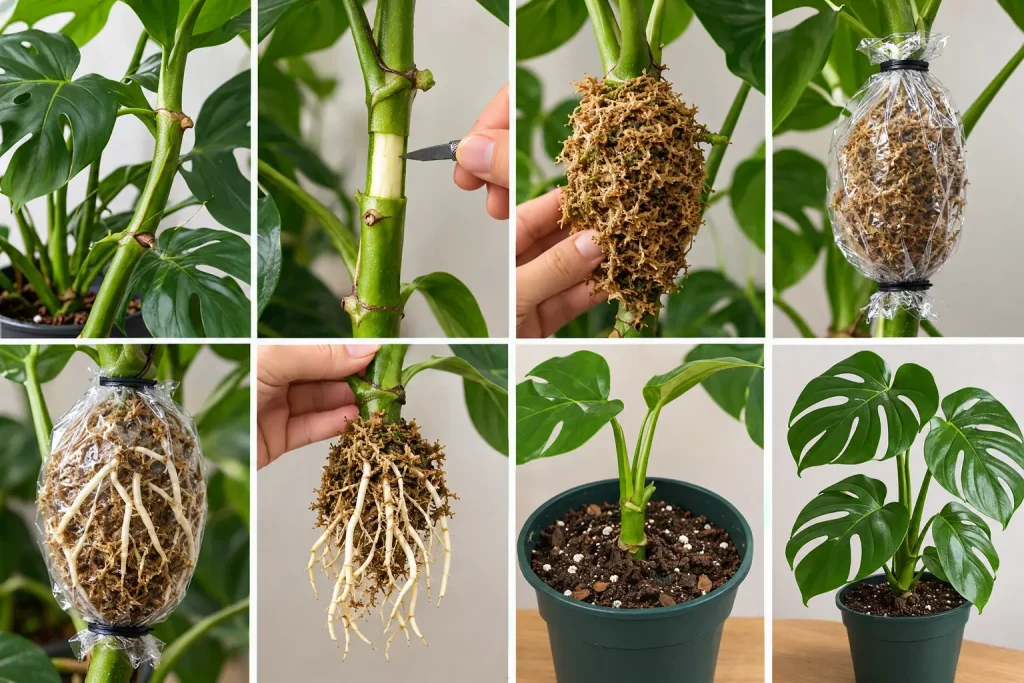
Air layering is a propagation method in which roots are developed on a stem before it is separated from the parent plant. For Monstera plant this process usually involves wrapping a healthy stem node with moist sphagnum moss. The moss keeps the area moist while the stem remains attached to the parent plant. Once enough roots have grown, you can cut below the rooted section and plant it in a separate pot.
Unlike water propagation, air layering allows roots to develop before the stem is removed. With ordinary soil propagation, a cutting is placed in potting mix before it has developed roots.
Which Monstera Plants Can Be Propagated Through Air Layering?
Air layering may work with several climbing Monstera species, including:
* Monstera deliciosa
* Monstera adansonii
* Monstera standleyana
* Monstera siltepecana
Choose a healthy plant with a firm stem and a clearly visible node. A node is the part of the stem where a leaf, aerial root or new growth can emerge.
Gather these supplies before you begin.
| 🧰 Material | 🎯 Purpose |
|---|---|
| 🌿 Sphagnum moss | 💧 Keeps the area around the node moist |
| 🛍️ Clear plastic wrap | 💦 Covers the moss and helps retain moisture |
| 🪢 Soft plant ties or string | 🌱 Secures the plastic around the stem |
| ✂️ Clean pruning shears | 🌿 Cuts the stem after roots develop |
| 💧 Clean water | 🌿 Moistens the moss |
| 🧤 Gloves | 👐 Help keep your hands clean |
| 🪴 Small plant pot | 🌱 Holds the new plant after separation |
| 🪵 Well-draining potting mix | 🌿 Supports healthy root growth after planting |
🌿 How to Propagate Monstera by Air Layering
Follow these eight steps to grow a new Monstera plant while the selected stem remains attached to the parent plant.
🌱 Choose a Healthy Stem
Look for a healthy stem with at least one clear node. The stem should be firm, free from soft or black areas, and attached to a plant that is growing well.
Avoid stems with serious damage, signs of rot, or weak growth.
A node is important because it contains the growth points needed for new roots and shoots. A leaf stalk alone cannot produce a complete new Monstera plant.
💧 Prepare the Sphagnum Moss
Place the sphagnum moss in clean water until it becomes moist. Then gently squeeze out the extra water.
The moss should feel damp but should not drip when you press it. Too much water around the stem may increase the risk of rot.
Keep the moss clean and ready before moving to the next step.
🌿 Wrap the Node With Moss
Place a layer of moist moss around the selected node. Cover the area where roots are expected to form.
Use enough moss to surround the node without placing too much pressure on the stem.
The moss should remain in contact with the node throughout the process. Check that it covers the target area from all sides.
🛍️ Cover the Moss With Plastic
Wrap clear plastic around the moss to help it retain moisture. Secure the plastic above and below the covered area with plant ties or string.
Do not tie it so tightly that it damages the stem.
Clear plastic allows you to check the moss and watch for root growth without removing the covering each time.
💦 Check Moisture Regularly
Check the moss every few days. If it starts to dry, carefully open the covering and add a little water.
Avoid soaking the moss. It should stay moist, not waterlogged.
Also check the stem for dark, soft areas or an unpleasant smell. These may be signs of rot. If rot develops, remove the affected material and check whether the stem remains healthy.
🌱 Wait for New Roots
Root development can take several weeks or longer, depending on the plant, temperature, light, and growing conditions.
Do not cut the stem as soon as you see the first small root. Wait until enough roots have developed to support the separated section.
You can check the roots through the clear covering. Healthy roots are generally firm and may appear cream, white, or light brown as they grow.
✂️ Cut Below the Rooted Section
Once the node has a healthy group of roots, use clean pruning shears to cut the stem below the rooted area.
Make the cut carefully so the new plant retains its node, leaves, and developing roots.
Do not pull the new plant away from the parent. A clean cut helps reduce unnecessary damage to both sections.
🪴 Plant the New Monstera
Place the rooted section in a pot with drainage holes. Use a loose, well-draining potting mix that allows air to reach the roots.
Arrange the roots in the pot and cover them with the mix. Avoid burying the node too deeply.
Water the pot until excess water drains from the bottom. Empty any water left in the saucer.
Place the new plant in bright, indirect light while it adjusts to its new pot.
How Long Does Monstera Air Layering Take?
| 🌱 Stage | 🔍 What to Expect |
|---|---|
| 🗓️ First Few Days | 💧 The moss stays moist around the node. |
| 🌿 Following Weeks | 🌱 Root growth may begin. |
| 🪴 Several Weeks or Longer | 🌳 Roots may develop enough for separation. |
| ✂️ After Cutting | 🌿 The new plant adjusts to its pot. |
Best Conditions for Monstera Air Layering
The right growing conditions can help your Monstera remain healthy while roots form.
Light
Keep the parent plant in bright, indirect light. Avoid strong direct sunlight on the wrapped moss because it can heat the covered area and cause moisture loss.
Temperature
Normal warm indoor conditions generally suit Monstera growth. Cold conditions may slow root development, while excessive heat can dry the moss quickly.
Moisture
Keep the moss evenly moist. Check it often enough to prevent drying but do not leave it soaked.
Plant Health
Start with a healthy parent plant. A plant that is already weak, severely damaged or affected by root rot may not respond well to propagation.
Common Mistakes to Avoid
Air layering is fairly simple, but a few mistakes can delay root growth or damage the stem. Using a leaf without a node: A leaf or leaf stalk alone cannot normally produce a complete new Monstera plant. Choose a stem section with a node.
Keeping the moss too wet: Waterlogged moss can reduce airflow and encourage rot. Squeeze out excess water before wrapping it around the node. Allowing the moss to dry out: Dry moss cannot provide the steady moisture needed for root development. Check it regularly. Cutting the stem too early: A few tiny roots may not support the new plant after separation. Wait until a healthy group of roots has formed.
Using dirty cutting tools: Unclean tools may spread disease between plants. Clean your pruning shears before cutting. Placing the new plant in harsh sunlight: Strong direct light can stress the plant after separation. Give it bright, indirect light while it adjusts. Using a pot without drainage: Excess water needs a way to escape. A pot with drainage holes helps reduce the risk of waterlogged roots.
Air Layering vs. Water Propagation
| 🌿 Feature | 🌱 Air Layering | 💧 Water Propagation |
|---|---|---|
| 🌱 Where Roots Grow | On the attached parent stem | On a cutting placed in water |
| ✂️ When the Stem Is Cut | After roots develop | Before or when placed in water |
| 👀 Root Visibility | Through the plastic covering | Directly through the water |
| 🪴 Main Material | Moist sphagnum moss | Clean water and a suitable container |
| 🌿 Best Starting Point | A healthy attached stem with a node | A healthy cutting with a node |
| ⚠️ Main Concern | Moss moisture and stem rot | Water quality and cutting health |
Benefits of Monstera Air Layering
Air layering offers several practical benefits for home growers.
* Roots develop before separation: The new plant remains connected to the parent while roots form.
* No need to root a detached cutting first: The stem remains attached during early root development.
* Useful for tall plants: A rooted section can be removed from a plant that has grown too tall or leggy.
* Easy root checks: Clear plastic makes it possible to watch root development.
* A way to grow another plant: You can use a healthy stem to produce a separate Monstera for your home.
Success still depends on plant health and suitable growing conditions. Some stems may take longer to root and others may fail to produce roots.
Experts Advice
Monstera air layering is a useful method of making many monstera plants from one plant. You just have to select a healthy plant and then peal its healthy stem having a node and use it for air layering. Most of plant sellers use this technique to make more. It is a fast way of growing many plants from a one plant. This way is very fast but you also have to take care of this layering until a proper plant grow from it.
FAQs
1. What is air layering in Monstera plants?
Air layering is a propagation method in which roots grow on a stem while it remains attached to the parent plant. Once enough roots develop, the stem can be cut and planted separately.
2. How long does Monstera air layering take?
Monstera air layering can take several weeks or longer. The time depends on the plant’s health, temperature, moisture, and growing conditions.
3. What materials are needed for Monstera air layering?
You need moist sphagnum moss, clear plastic wrap, a healthy Monstera stem with a node, and ties or string to secure the covering.
4. Should sphagnum moss stay wet during air layering?
The moss should remain moist but not soaked. Too much water can increase the risk of stem rot.