Two Ways To Grow Monstera Plant
Growing Monstera plant is a time taking process but each stage brings showable changes. A tiny plant does not look same like the large Monstera seen in homes and plant collections. The leaves start small then become larger and more detailed as the plant grows and gets older.
The timeline can vary from one Monstera to another. Light, temperature, water, nutrition, pot size, humidity and growing support all affect the speed of growth and plant size. The species also matters.
Monstera Growth at a Glance
A Monstera generally passes through these stages:
Seed or newly rooted cutting
- Young seedling
- Juvenile plant
- Developing climber
- Mature plant
- Large mature specimen
A plant grown from a seed follows a different beginning from a stem cutting. A cutting is a part of an older plant so it may skip the true seedling stage. The Horticultural Society said Monstera deliciosa is a climbing plant and gives a maturity period of about 10–20 years under its plant profile. This does not mean every indoor Monstera needs exactly 10–20 years to look mature. Indoor conditions and the plant’s starting size can change the timeline.
FIRST STEP
1. By Seed
2. By Stem ( cutting )
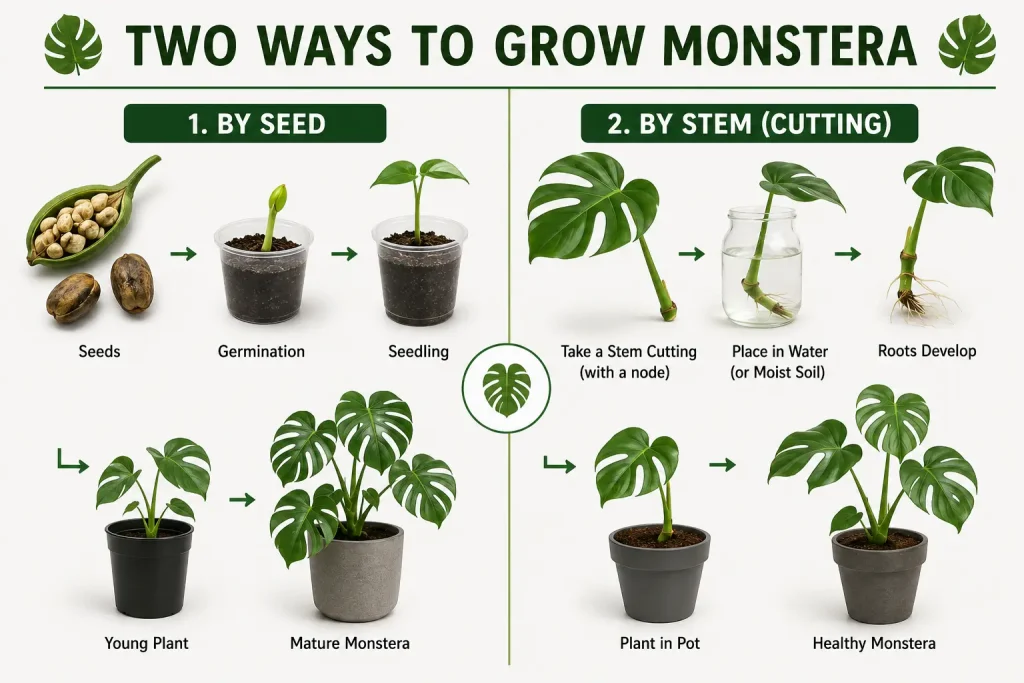
The life of a seed grown Monstera starts with a healthy new seed.
Finding a fresh seed is difficult but try to use a fresh one. Monstera seeds can lose their ability to grow when they become old or dry. This is one reason fresh seeds from a reliable source are a better choice. At this stage, there is no leaf, stem, or root system that you can see above the growing medium. The seed contains the young plant and its stored food. Once suitable conditions is that when the seed start growing it needs warmth, moisture, oxygen and a suitable growing medium.
The life of monstera start with a stem is more better than a seed .
Find a stem having a node on it. Place the stem in a soft mud which is filled in a small pot. After few time the node on stem start grows and made a new leave on it. The monstera grow by stem becomes mature fast than a monstera made with a seed. When the leave appears you have to give a proper care and proper fertilizers to this little monstera. This will become larger according to time.
SECOND STEP
SEED
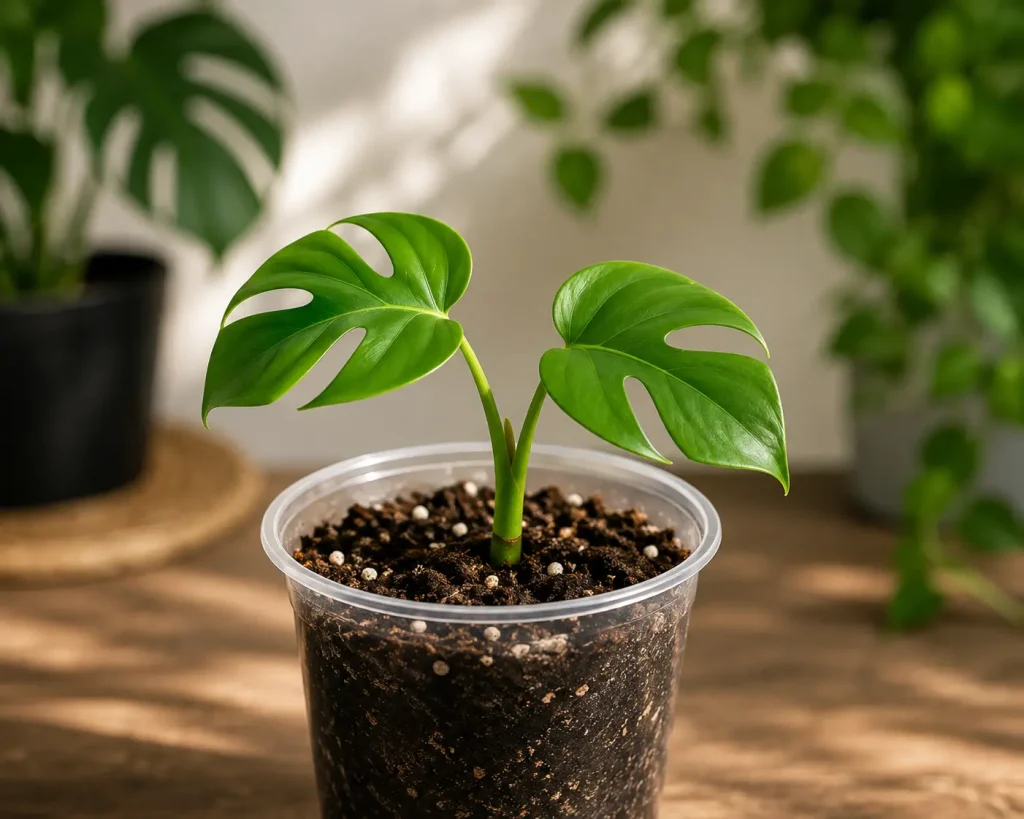
The Young Seedling
After germination, a small seedling begins to appear.
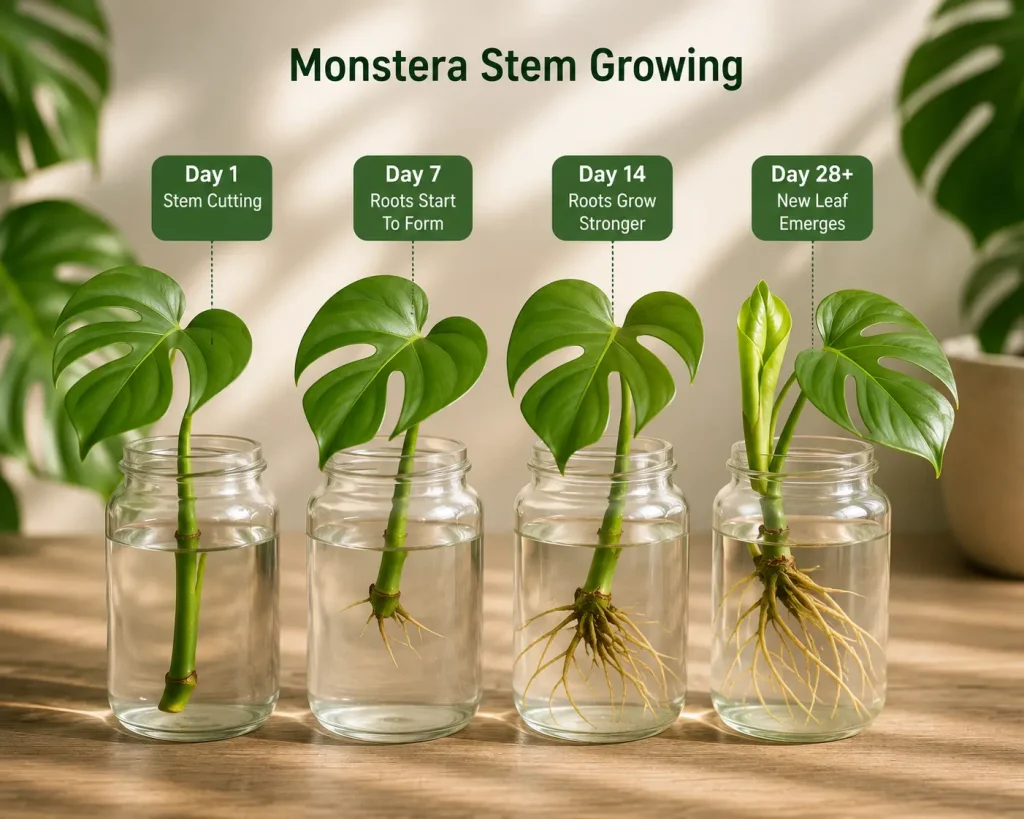
STEM
The stem grows
After growing stem in soil , it begains to grow.
The first leaves are usually simple and much smaller than adult leaves. Young Monstera deliciosa plants do not have holes on its leaves when it become larger the holes start appearing. This is a normal part of growth.
When the Growth starts the stem start becoming green and after some time the leaves are also start apperaing from the nodes of a stem.
What a young seedling needs
A young Monstera benefits from:
* Bright filtered light
* Warm growing conditions
* A growing medium that drains well
* Even moisture without waterlogging
* A small container suited to its root size
* Gentle feeding once the plant is ready for nutrients
Too much water can damage new or young roots. A small plant does not need a large pot at start because it will become large after a some time.
Same Steps in Seed and Stem grow
Juvenile Monstera
As the plant produces more leaves, it enters the juvenile stage. The leaves become larger than the first leaves, but they may still have no holes or only limited fenestration. The stem also becomes stronger. Monstera deliciosa is a climbing vine. In nature it grows among other vegetation but indoors a young plant may first grow along the soil or lean toward a light source before it starts climbing properly and need a support like a moss pole. At this point, good light becomes especially useful. A plant kept in poor light may produce smaller leaves and longer spaces between leaves. You also have noticed aerial roots appearing from the stem. These roots are a normal in growing days of monstera plant.
The Climbing Stage
In this stage the monstera plant become larger and need a climbing support like a moss pole, coir pole, trellis or another suitable structure can help the plant climb. The Royal Horticultural Society notes that Monstera plants benefit from being trained onto a moss pole. When a plant climbs, it can produce larger and more mature leaves with more holes. This stage can create a clear change in the appearance of the plant.
Instead of producing only small leaves near the base, a climbing Monstera can begin producing larger leaves as it gains height. The spaces between leaves can also change. A plant with good light and support may develop a stronger climbing habit than a plant left to trail across a table.
First Fenestrations
One of the most interesting changes in a Monstera timeline is the appearance of fenestrations. Fenestrations are holes and openings found in big or mature Monstera leaves. They are not caused by insects chewing the leaf they made naturally. Young Monstera deliciosa plants have solid leaves. As the plant develop holes and splits can begin to appear on it.
Light, climbing growth, plant health and genetics all play an important part. The RHS notes that younger plants and plants growing in poor light often have fewer holes and less openings.
Larger Mature Leaves
With continued healthy growth new leaves can become much larger and displays the good look of monstera.\ This is when a Monstera deliciosa begins to show the look most people expect from a mature Swiss cheese plant. Leaves can become broad, glossy, deeply divided and heavily fenestrated. The RHS lists mature Monstera deliciosa as capable of reaching around 4–8 metres in height under suitable conditions, although an indoor plant will usually remain much smaller because of its container, light, support and available space. The University of Minnesota Extension also notes that mature Monstera deliciosa can produce leaves several feet wide than a smaller one. A large leaf does not appear fully with in a day they took a time. A new Monstera leaf first develops from the growing point than it slowly opens before reaching its final size.
Which Monstera Plant is Healthy
A mature Monstera can have a healthy stem, larger leaves and a well developed climbing habit. The leaves may have many holes and deep splits. The plant can also become tall when it has proper space and care. Maturity does not mean the plant stops growing.
A Monstera can continue producing new leaves for a long time. Instead of reaching final size and stopping, it keep growing when its conditions are suitable.
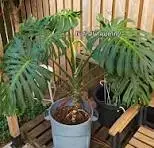
Time Required by Monstera Plant to Mature
There is no fix that applies to every Monstera plant because monstera has many types. A Monstera grown from seed can take many years to reach in mature form. A plant started from a cutting can appear mature fast because the cutting came from an existing old plant The source of the plant also matters. A small rooted cutting take lot of months in building roots before producing regular new leaves. The University of Minnesota Extension reports that propagated nodes can take up to 2–3 months before producing new leaves while roots may form in about 2–4 weeks under suitable conditions.
Monstera Timeline by Plant Size
| Growth Stage | Typical Appearance |
|---|---|
| Seed | No visible leaves |
| Seedling | Small, simple leaves |
| Young Plant | Larger leaves with little or no fenestration |
| Juvenile Climber | Stronger stem and larger foliage |
| Developing Mature Plant | More holes and deeper leaf splits |
| Mature Plant | Large leaves, strong climbing growth and many fenestrations |
| Large Specimen | Very large foliage and extensive climbing growth |
How to Tell If Your Monstera Is Getting Older
Age is not always easy to judge from plant height alone.
Look at several signs together:
* Leaves are becoming larger.
* New leaves have more fenestrations.
* The stem is thicker.
* Aerial roots are well developed.
* The plant climbs more strongly.
* Leaf growth becomes more consistent.
* The plant needs stronger support as it gets larger.
Sources Used for This Article
* University of Minnesota Extension — Monstera deliciosa propagation and plant growth information.
* Royal Horticultural Society — Swiss cheese plant growing guide.
* Royal Horticultural Society — Monstera deliciosa plant profile and maturity information.
* Royal Horticultural Society — Swiss cheese plant guide and fenestration information.
FAQs
Can Monstera be grown from seeds?
Yes, Monstera can be grown from seeds. Fresh seeds can germinate and develop into seedlings when given warm temperatures, moisture and suitable growing conditions.
Is growing Monstera from a stem cutting easier than growing from seed?
Yes. Stem cuttings are generally easier and faster because the cutting already contains part of a mature plant. A cutting with at least one healthy node can develop roots and produce new growth.
How long does it take for a Monstera seed to grow?
Monstera seeds can germinate within a few weeks under suitable conditions, but growing from seed into a larger plant takes much longer than propagating from a stem cutting.
Can a Monstera stem cutting grow without a node?
A stem cutting needs a node to produce new roots and shoots. A piece containing only a leaf or petiole generally cannot develop into a new Monstera plant.
Which method is better for growing Monstera: seed or stem?
Stem propagation is usually the better choice for faster results and is commonly used to produce a plant similar to the parent. Growing from seed takes longer but allows you to follow the plant’s growth from its earliest stage.