Blue Monstera

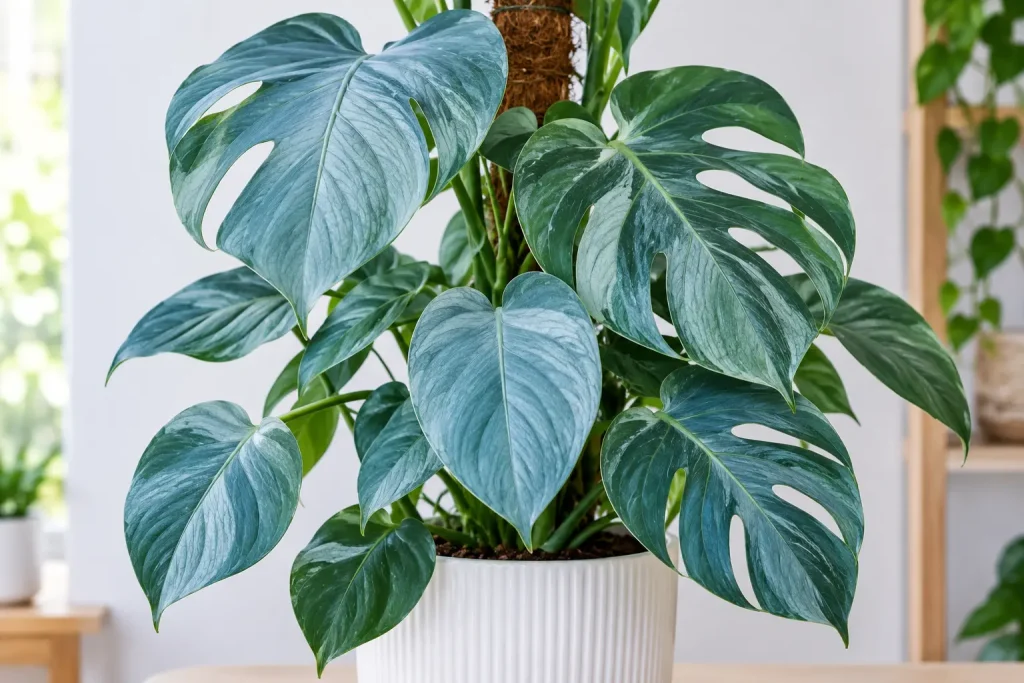
Blue Monstera is the famous plant name used by plant sellers and collectors for Monstera plants with blue green, silver-green or graygreen leaves. In many cases the plant sold as Blue Monstera is Monstera siltepecana, a climbing plant in the Araceae family. The Royal Botanic Gardens Kew lists Monstera siltepecana as an accepted species. Its natural range includes parts of Mexico and Central America. The plant is also commonly called Silver Monstera because its young leaves can have a silver or blue green appearance. One thing new plant owners should know that is the color can change as the plant grows. Young leaves have silver and blue green tones. Older leaves can become darker green and develop natural holes called fenestrations.

πŸ”Ž Blue Monstera at a Glance

FeatureDetails
Common NameBlue Monstera / Silver Monstera
Botanical NameMonstera siltepecana
Plant FamilyAraceae
Growth HabitClimbing and trailing
Natural RangeMexico and Central America
Young Leaf ColorSilver-green to blue-green
Mature Leaf ColorDarker green
Mature Leaf FeatureFenestrations (leaf holes)
Light RequirementsBright, indirect light
Soil RequirementsWell-draining growing mix
HumidityModerate to high
PropagationStem cuttings
Indoor UseHouseplant
Pet SafetyKeep away from pets; the plant contains calcium oxalate crystals that can irritate pets if chewed.

πŸƒ Why Does Blue Monstera Look Blue?

Blue Monstera does not usually have true blue leaves. The blue appearance comes from the silver green or blue green color of the young foliage. Dark green veins can make the lighter parts of the leaf appear even more blue or silver. Under natural light the leaves may appear more silver green. Under different indoor lights they may look greener or slightly gray. The name Blue Monstera is treated as a common selling name rather than the botanical name of a separate blue leaf Monstera species.

blue monstdera

🌿 Young Blue Monstera vs Mature Blue Monstera

The plant can change quite a lot as it grows.

Young leaves

Young leaves are often:

* Small
* Narrow
* Silver green
* Blue-green
* Marked with dark veins
* Mostly free of large holes

Mature leaves

As the plant gets older, leaves can become:

* Larger
* Darker green
* More developed
* More heavily veined
* Fenestrated

β˜€οΈ Blue Monstera Light Requirements

Blue Monstera grows best with bright indirect light. A location near a bright window can work very well as long as the plant is protected from strong direct sunlight for long periods.

Good locations include:

* Near an east facing window
* Near a bright north facing window
* A short distance from a west facing window
* Behind a thin curtain
* Under a suitable grow light

πŸƒ Blue Monstera Light Problems

Light conditions can affect the growth and appearance of a Blue Monstera. Learn how to spot the signs of insufficient light and excessive direct sunlight.

01 / LOW LIGHT

πŸŒ₯️ Too Little Light

When a Blue Monstera does not receive enough light, its growth may slow down. New leaves may stay small, and the stems may become thin as the plant reaches toward a light source.

Signs you may notice
  • Longer gaps between leaves
  • Smaller new leaves
  • Thin stems
  • Slow climbing growth
πŸ’‘ Plant Care Tip Move your Monstera to a brighter location with indirect sunlight. Avoid placing it in a dark corner for long periods.
02 / STRONG SUN

πŸ”₯ Too Much Direct Sunlight

Strong afternoon sunlight can burn Blue Monstera leaves. Prolonged exposure to intense direct sunlight may cause dry, discolored areas that cannot return to their original condition.

Signs you may notice
  • Brown patches
  • Dry leaf areas
  • Pale spots
  • Crispy leaf edges
🌱 Plant Care Tip Keep the plant away from harsh afternoon sunlight. A sheer curtain can filter strong rays while allowing natural light into the room.
```

πŸ’§ How Often Should You Water a Blue Monstera?

Blue Monstera does not need water on a fixed weekly schedule. Instead check the soil. Allow the upper part of the soil to dry before watering again. Penn State Extension recommends allowing the top 1–2 inches of soil to dry before watering Monstera again.

A simple method is:

1. Check the top layer of soil with your finger.
2. If it still feels wet then wait.
3. If it has dried, water the plant.
4. Water slowly until some water comes from the drainage holes.
5. Empty excess water from the saucer.
6. Check the soil again before the next watering.

Your watering routine can change during the year.

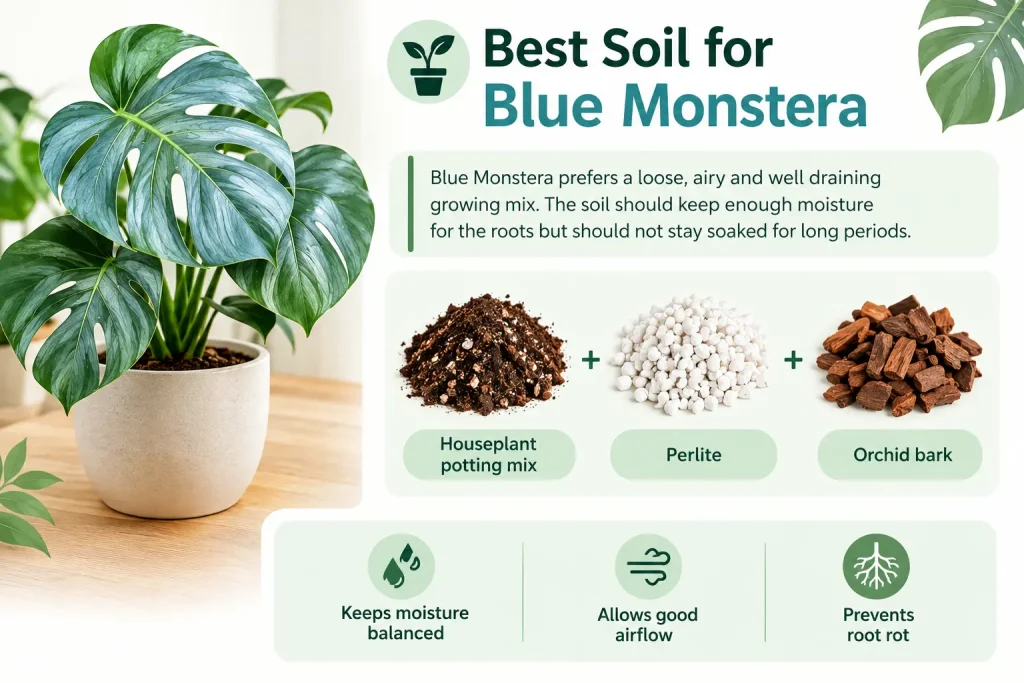
πŸͺ΄ Best Soil for Blue Monstera

Blue Monstera prefers a loose, airy and well draining growing mix. The soil should keep enough moisture for the roots but should not stay soaked for long periods.
A simple mix can include:

* Houseplant potting mix
* Perlite
* Orchid bark
* Coco coir

The exact recipe is less important than good drainage and airflow around the roots.

Blue Monstera

Choose a pot with drainage holes

Drainage holes are very useful for Monstera plants. They allow extra water to leave the container instead of sitting around the roots. A decorative pot without drainage can increase the chance of wet soil and root problems.

πŸ’¨ Blue Monstera Humidity

Blue Monstera comes from tropical areas, so it generally grows well in moderate to higher humidity. NC State Extension lists around 40–60% humidity for Monstera siltepecana.

If the air inside your home is very dry, you can try:

* Using a small humidifier
* Keeping plants together
* Placing the plant in a naturally humid room
* Keeping it away from heating vents

🌑️ Blue Monstera Temperature

Blue Monstera prefers warm conditions. NC State Extension gives a temperature range of around 60–95Β°F (16–35Β°C) for *Monstera siltepecana.
For indoor growing keep the plant away from:

* Cold drafts
* Air conditioning vents
* Very cold windows
* Heating vents
* Sudden temperature changes

A stable indoor temperature is usually easier for the plant.

🌿 Should Blue Monstera Climb or Trail?

Blue Monstera can grow as either a climbing or trailing plant. This gives you several ways to display it indoors.

Letting it trail

A trailing plant works well in:

* Hanging baskets
* Shelves
* Plant stands
* Tall cabinets

Trailing growth can help the plant keep its younger leaf form for longer.

Letting it climb

If you want larger mature leaves give the plant something to climb.

You can use:

* Moss poles
* Trellises
* Rough wooden supports
* Other stable climbing structures

As the plant grows upward it produce larger leaves and more mature fenestrations.

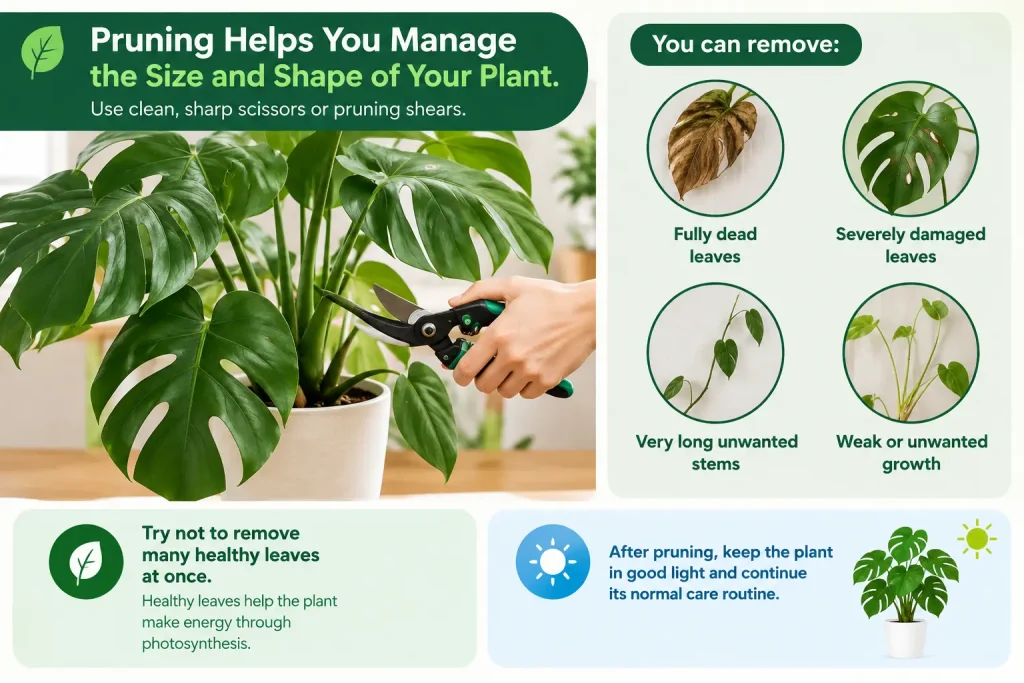
βœ‚οΈ How to Prune Blue Monstera

Pruning helps you manage the size and shape of your plant. Use clean, sharp scissors or pruning shears.

You can remove:

* Fully dead leaves
* Severely damaged leaves
* Very long unwanted stems
* Weak or unwanted growth

Try not to remove many healthy leaves at once. Healthy leaves help the plant make energy through photosynthesis. After pruning, keep the plant in good light and continue its normal care routine.

pune a monstera
`

🌿 How to Propagate Blue Monstera

Stem cuttings are one of the easiest ways to produce a new Monstera plant. The most important part of the cutting is the node. A leaf alone usually cannot produce a complete new Monstera plant.

Choose a healthy stem section with at least one suitable node before you begin. The node is where new roots and shoots can develop.

πŸ”Ž
Remember: A suitable cutting needs a healthy node. A leaf without a node will not normally grow into a complete new plant.

πŸͺ΄ Simple Propagation Method

Follow these six steps to help your Monstera cutting develop roots.

01

Choose a Healthy Stem

Pick a healthy section of the plant with good growth. Look for a firm stem and avoid sections with signs of rot or serious damage.

βœ” Tip: Choose a cutting with a healthy leaf and at least one node.
02

Find a Node

Look for the point on the stem where a leaf or aerial root develops. This area contains the growth point needed for successful propagation.

βœ” Tip: Identify the node before making your cut.
03

Make the Cut

Use clean, sharp scissors or pruning shears. Cut just below the node so the cutting includes the section needed for new root growth.

βœ” Tip: Clean your cutting tool before use to reduce the risk of infection.
04

Start Rooting

Place the cutting in water or a suitable moist propagation medium. If using water, keep the node submerged while keeping most leaves above the water.

βœ” Tip: Change the water regularly to keep it fresh.
05

Give It Good Conditions

Keep the cutting in a warm place with bright, indirect light. Avoid harsh direct sunlight and extreme temperature changes while the roots develop.

βœ” Tip: Check the cutting regularly for healthy growth.
06

Wait for Roots

Allow the cutting time to develop a healthy root system. Once the roots are established, move it into a suitable, airy, well-draining growing mix.

βœ” Tip: Handle the new roots gently when potting the cutting.

🌱 Be Patient With Root Growth

Do not expect instant results. Root growth can take time, depending on the cutting and growing conditions. Keep your cutting warm, provide bright indirect light, and check it regularly without disturbing it too often.

```

πŸ› Common Blue Monstera Problems

Even a healthy plant can develop problems from time to time.

Yellow leaves

A yellow leaf can have several causes.

Possible reasons include:

* Too much water
* Poor drainage
* Old foliage
* Root problems
* Sudden changes in growing conditions

First check the soil.

If the soil remains wet for many days look at the drainage and growing mix.

Brown leaf edges

Brown edges can be linked to:

* Dry air
* Irregular watering
* Strong sunlight
* Root problems
* Heat
* Physical damage

Look at the whole plant before deciding what caused the problem.

Curling leaves

Curling leaves can occur when the plant is short on water or exposed to very dry conditions.

Check the soil first.

If the soil is dry give the plant a thorough watering. If the soil is already wet, adding more water may make the problem worse. Check the roots, light, temperature, and airflow instead.

Small new leaves

Small new leaves can appear when the plant does not have enough light or when growing conditions are poor. Move it to a brighter location with filtered light. If the plant is climbing, give it a stable support.
πŸ› Common Pests on Indoor Monstera Plants

Indoor Monstera plants can attract several common houseplant pests. These insects and mites may feed on plant tissue, damage leaves, or weaken new growth. Check your plant regularly for signs of pests.

01 Spider mites on a Monstera leaf πŸ•·οΈ Spider Mites

Tiny pests that can cause pale speckles on leaves. Fine webbing may appear during a heavy infestation.

02 Mealybugs on a plant stem πŸ› Mealybugs

Small, soft-bodied pests with a white, cotton-like coating. They often gather around stems and leaf joints.

03 Scale insects attached to a plant stem πŸͺ² Scale Insects

Small, shell-like bumps that attach to stems and leaves. They feed on plant sap and may weaken growth.

04 Aphids clustered on young plant growth 🌱 Aphids

Small, soft-bodied insects that often gather on tender shoots and fresh leaves, causing distorted growth.

05 Thrips, slender insects that can damage Monstera leaves πŸͺ΄ Thrips

Slender insects that scrape plant tissue and may leave silvery streaks, pale marks, or tiny dark spots.

Plant Care Tip: Inspect both sides of the leaves, the stems, and new growth. If you find pests, isolate the affected plant from other houseplants while you identify and treat the infestation.

```

πŸͺ΄ When Should You Repot a Blue Monstera?

You do not need to repot the plant just because a certain amount of time has passed. Look for signs that the roots have filled the current container.

These signs can include:

* Roots coming through drainage holes
* Roots tightly filling the pot
* Soil drying much faster than before
* Slow growth
* The plant becoming unstable

A very large pot can keep unused soil wet for too long.

🌸 Does Blue Monstera Produce Flowers?

Yes, Monstera siltepecana can produce flowers.

Like other plants in the Monstera genus, its flowers are arranged around a spadix and surrounded by a spathe. Indoor flowering is not common, so most people grow this plant for its foliage rather than its flowers. Kew records the species as having a greenish-white spathe and a white flowering spadix.

πŸ”΅ Blue Monstera vs. Other Monstera Plants

FeatureBlue/Silver MonsteraMonstera deliciosaMonstera adansonii
Botanical NameM. siltepecanaM. deliciosaM. adansonii
Young Leaf ColorSilver or blue-greenGreenGreen
Mature Leaf ColorDark greenGreenGreen
Growth HabitClimbing or trailingClimbingClimbing or trailing
Mature LeavesCan develop fenestrationsLarge leaves with splitsLeaves with many holes
Main AttractionSilver-blue young foliageLarge, split mature leavesDistinctive hole-filled foliage

🌱 Final Takeaway

Blue Monstera is the famous name that can cause some confusion with other plant types. When it belongs to Monstera siltepecana the plant is especially known for its silver blue or blue-green leaves and mature leaves that can develop fenestrations. It can be a good indoor plant when given bright indirect light, suitable watering, warm temperatures and moderate humidity.

FAQs

🌱 1. What Is a Blue Monstera Plant?

Blue Monstera usually refers to Monstera siltepecana, a tropical climbing plant known for its silver-blue or blue-green leaves when young. As the plant matures, its leaves become darker green and may develop holes under suitable growing conditions.

Blue Monstera grows best in bright, indirect light, warm temperatures, and well-draining soil. Water it when the top layer of soil begins to dry. Avoid overwatering, as soggy soil can damage its roots.

No. Blue Monstera prefers bright, indirect sunlight. Too much direct sunlight can scorch its leaves and cause discoloration. A spot near a window with filtered light is usually a good choice.

Monstera siltepecana is less common than Monstera deliciosa in some plant markets, but it is available from specialist nurseries and online plant sellers. Prices depend on the plant’s size, maturity, and availability.

Scroll to Top