Large vs Small Monstera Types
Monstera plants are most famous houseplants because of their green leaves, natural holes and climbing growth. Some types of monstera plant grows large or huge size leaves while some species have small leaves. Monstera plant has lot of species with different abilities. Every monstera plant represents a beautiful and eye catching view. Select the monstera plant specie according to your interest or available space.
What are Large Leaf Monstera Types?
Large leaf Monsteras are climbing plants having strong and fat stem. Their leaves develop deep splits and holes as the grow. Attach a support like moss pole to support its growth.
1. Monstera deliciosa
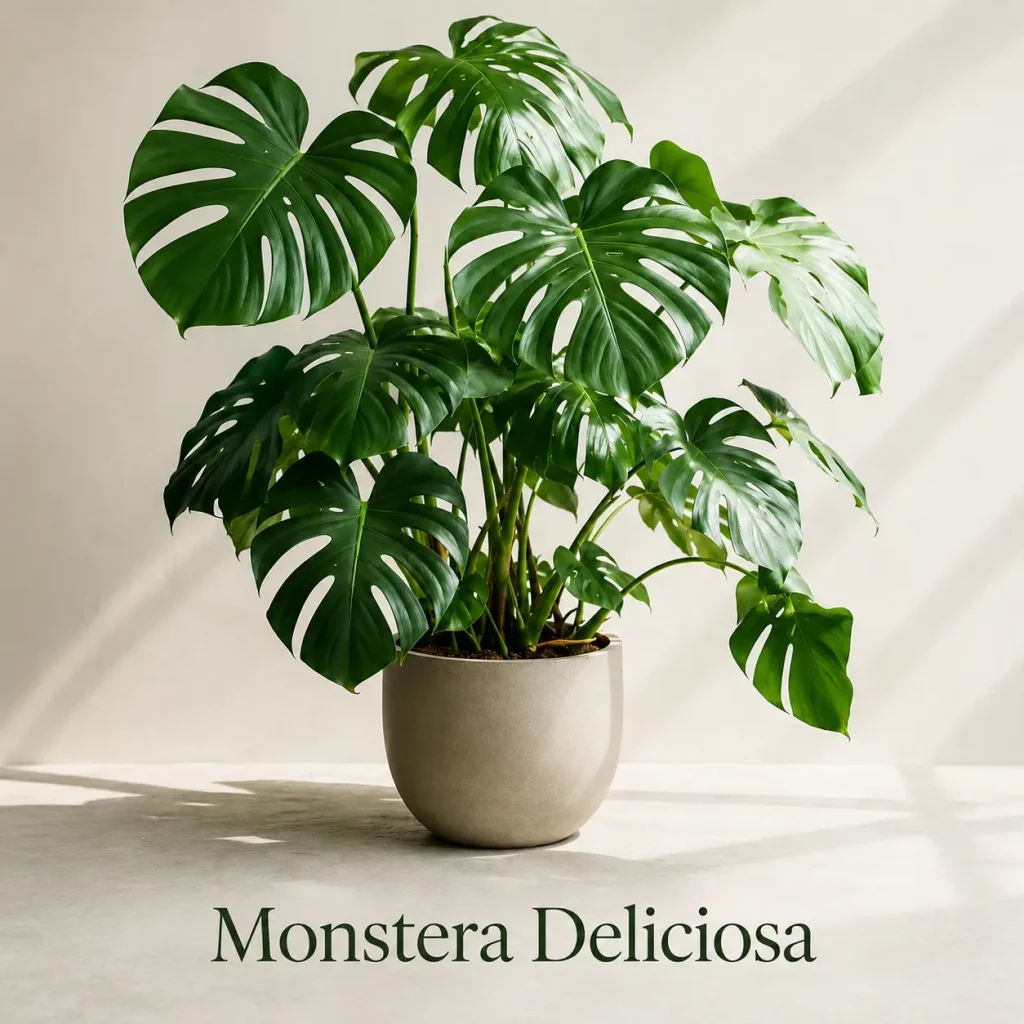
Monstera deliciosa is one of the best-known Monstera types. Young plants usually have solid, heart-shaped leaves. As the plant grows and matures, new leaves may develop splits along the edges and holes within the leaf surface.
Mature leaves can grow very large under suitable conditions. Singapore’s National Parks Board reports that the leaves can reach about 90 cm in width.
Main features:
* Large, dark green leaves
* Thick stems and strong aerial roots
* Deep splits and holes on mature leaves
* Climbing growth habit
* Needs enough room as it grows
Monstera deliciosa is a best choice for those people who want a large indoor plant. It can grow well in a bright room with filtered light, suitable watering and a support structure.
2. Monstera deliciosa ‘Thai Constellation’
It is a variegated form of Monstera deliciosa. Its leaves have creamy white or pale yellow markings that look like scattered stars and represents a eye catching view. Its leaf color differs from that of a standard green Monstera deliciosa its mature leaves can also become large.
Main features:
* Large leaves with cream colored markings
* Climbing growth habit
* Thick stems and aerial roots
* Needs bright, indirect light
* Often grows more slowly than a fully green plant under similar conditions
The pale parts of its leaves contain less chlorophyll than the green parts. For this reason good lighting is important but strong direct sunlight can damage the foliage.
3. Monstera esqueleto
Monstera esqueleto is known for its long leaves and large openings. The holes can take up much of the leaf surface, giving the plant a very different look from Monstera deliciosa.
Its leaves can become large when the plant matures under suitable growing conditions.
Main features:
* Long, narrow leaves
* Large openings across mature leaves
* Climbing growth habit
* Benefits from a suitable support
* Needs bright, indirect light and a well draining potting mix
This type is a good option for plant growers who like unusual leaf shapes. However, it needs room to climb and may be harder to find than common Monstera types.
Large vs Small Monstera Types: Comparison Table
| Feature | 🌱 Large-Leaf Types | 🍃 Small-Leaf Types |
|---|---|---|
| Common Examples | Monstera deliciosa, Thai Constellation, Monstera esqueleto | Monstera adansonii, Monstera siltepecana, Monstera dubia |
| Leaf Size | Often broad or long when mature | Usually smaller, depending on species and age |
| Leaf Shape | Broad leaves with splits or large openings | Often narrower leaves with oval holes or silver markings |
| Stem Thickness | Often thick and strong | Usually thinner, especially in trailing types |
| Growth Habit | Mainly climbing | Climbing or trailing |
| Space Needs | Often needs more floor and climbing space | Often fits well on shelves or in hanging baskets |
| Support | A moss pole or strong support may help | A trellis, moss pole, or flat support may help |
| Best Location | Rooms with enough space for a large plant | Smaller rooms, shelves, and hanging displays |
| Care Needs | Bright, indirect light and well-draining soil | Bright, indirect light and well-draining soil |
| Mature Appearance | Broad foliage with splits or large holes | Smaller foliage or leaves with different shapes and markings |
What Are Small-Leaf Monstera Types?
Small-leaf Monsteras usually have smaller leaves and thinner stems than large-leaf types. Many grow as climbing or trailing vines, making them suitable for shelves, hanging pots, and smaller rooms.
However, small leaves do not always mean that a plant will remain tiny. Some types can produce larger leaves as they mature or climb.
1. Monstera adansonii
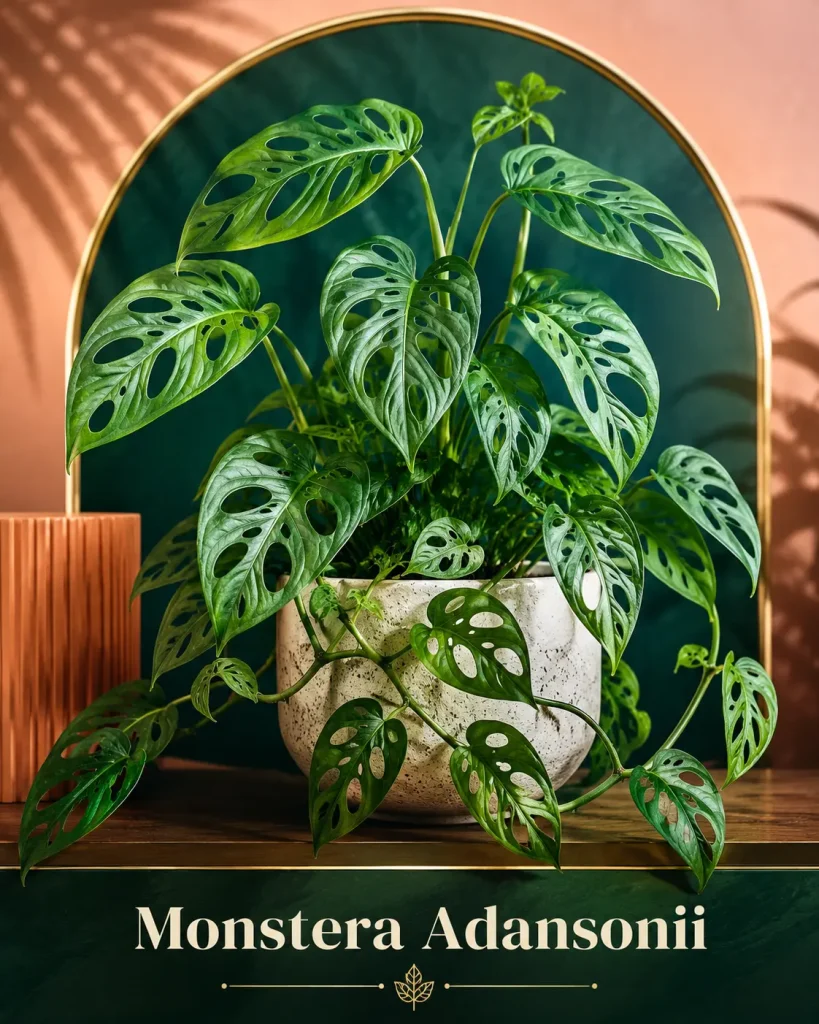
Monstera adansonii is commonly called the Swiss cheese plant. Its leaves have oval holes surrounded by green leaf tissue. Unlike the deep edge splits of mature Monstera deliciosa these openings usually remain inside the leaf rather than reaching the outer edge.
Its smaller leaves and flexible stems make it a popular choice for indoor growing.
Main features:
* Smaller leaves with oval holes
* Thin and flexible stems
* Climbing or trailing growth
* Suitable for hanging baskets and shelves
* Can grow well with a moss pole or trellis
Monstera adansonii is a practical choice if you want a leafy plant but do not have room for a large Monstera deliciosa. You can let its stems hang down from a shelf or train them to climb. Give it bright, indirect light and water when the upper part of the potting mix begins to dry. Avoid leaving the roots in standing water.
2. Monstera siltepecana
Monstera siltepecana is another type that can suit smaller indoor spaces, especially when it is young. Its juvenile leaves often have a silver-green surface with darker green veins.
As the plant matures and climbs its leaves can change in shape and color. Mature foliage may become greener and develop holes.
Main features:
* Silver green juvenile leaves
* Darker green leaf veins
* Climbing or trailing growth
* Smaller leaves when young
* May develop larger perforated leaves as it matures
This plant is a good choice if you like a Monstera with silver markings. A hanging basket works well but a support can help it grow upward.
Remember that a young Monstera siltepecana may look very different from a mature plant. Its leaf color and shape can change as it grows.
3. Monstera dubia
Monstera dubia has an unusual growth pattern. When young, its leaves lie close to the surface it climbs, such as a tree trunk or a suitable board.
Its juvenile leaves often have green and silvery markings. As the plant matures, its leaves can become larger and change in appearance.
Main features:
* Small, close fitting juvenile leaves
* Green and silver patterns when young
* Climbing growth habit
* Benefits from a flat climbing support
* Changes in leaf shape as it matures
Monstera dubia is suitable for people who enjoy watching a climbing plant change as it grows. A flat support can help it attach and grow in its natural climbing pattern.
It is worth remembering that the small leaves seen on a young plant may not represent its mature size.

Why Do Some Monstera Plants Have Larger Leaves?
Several factors affect the size of Monstera leaves.
🌱 Plant Age
Young Monsteras usually have smaller leaves than mature plants. As the plant grows, its stems and roots develop, and new leaves may become larger. For example, a young Monstera deliciosa may have small, solid leaves, while mature plants often develop larger leaves with splits and holes.
☀️ Light Conditions
Monsteras generally grow well in bright, indirect light. Too little light can slow growth and lead to smaller leaves. Place your plant near a bright window, away from strong direct sunlight. If growth slows, check the lighting before changing your watering routine.
🪴 Climbing Support
Many Monstera types climb trees and other surfaces in their natural habitats. A moss pole or sturdy trellis can support their stems. As a climbing plant matures, it may produce larger leaves, depending on its species and growing conditions. Support helps the plant climb but does not guarantee larger leaves.
💧 Water and Soil
Monsteras need water, but their roots also need air. Soil that stays wet for too long can damage the roots and slow new growth. Use a loose, well-draining potting mix. Water when the upper part of the soil begins to dry, and let excess water drain away. Warm rooms may cause soil to dry faster.
🌿 Nutrients
Monsteras need nutrients to grow healthy leaves and stems. A suitable houseplant fertilizer can help during active growth. Follow the label directions because too much fertilizer can harm the roots. If leaves look pale or growth is weak, check the plant's light, watering, and root health before adding more fertilizer.
Common Mistakes When Choosing Monstera Types
Avoid these common mistakes:
1. Assuming every small plant is a small leaf species
Monstera deliciosa have small leaves while mostly monstera have large leaves so do not assume that every small size monstera also has small leaves.
2. Expecting every Monstera to develop deep splits
Every specie of monstera has different leave shape. Monstera adansonii has enclosed oval holes while mature Monstera deliciosa often develops splits .
3. Buying a large type without enough room
A mature climbing Monstera may need a support and space for its broad leaves. So you have to check your available space before buying a large leaves monstera.
4. Giving too much water to encourage growth
More water does not means fast growth. Some species only need less amount of water. Adding more water can also cause many problem’s.
5. Ignoring the plant’s support needs
Climbing types of monstera needs a support like moss pole for growing upward. Adding a support can also make the growth process fast.
Experts Advice: How to Choose the Right Monstera
The best Monstera for your home depends on its mature size, leaf shape and growth habit.
Choose Monstera adansonii if you like smaller leaves. Monstera siltepecana may suit you if you prefer silver green juvenile leaves while Monstera dubia offers a different climbing pattern.
Remember that leaf size alone does not tell you whether a Monstera is healthy. Check the roots, stems and leaves and provide suitable growing conditions.
Reliable sources for the article
- National Parks Board: Monstera deliciosa — describes mature leaf size, growth, and aerial roots.
- Penn State Extension: Monstera as a Houseplant — discusses Monstera adansonii, Monstera siltepecana, and climbing support.
- Royal Horticultural Society: How to Grow Swiss Cheese Plants — provides growing guidance and compares common Monstera types.
- Royal Botanic Gardens, Kew: Monstera deliciosa — provides botanical details about mature leaves.
FAQs
Which Monstera has the largest leaves?
Monstera deliciosa is known for its large, broad leaves. Mature plants can develop deep splits and holes.
Which Monstera is best for small spaces?
Monstera adansonii is a good choice for small spaces. Its trailing stems work well in hanging baskets and on shelves.
Why are my Monstera leaves small?
Small leaves may result from young age, low light, poor root health, or a lack of climbing support. The plant’s species also affects leaf size.
Can a small Monstera grow larger leaves?
Yes. Some Monstera types produce larger leaves as they mature. Bright, indirect light, healthy roots, and suitable climbing support can help.
Do large-leaf Monsteras need more care?
Not always. They may need more space and stronger support, but both large- and small-leaf types need suitable light, water, and well-draining soil.