Monstera Plant Benefits and Disadvantages
Walk into a unique home, a coffee shop or a workplace and there is a chance that you can see a Monstera plant. Its large leaves and eye catching shape made it one of the most popular houseplant in the whole world while many people buy it because of its appearance they soon find that it has many other good qualities hidden in it Monstera is also called the Swiss Cheese Plant because large leaves develop natural holes and splits on them as the become old. Openings are a normal part of the plant’s growth.
People of all ages enjoy growing process of Monstera Plant. Some keep it to decorate their homes while others simply enjoy caring plant.Even Monstera is popular many people still ask the same questions. Is it good for indoor spaces? Does it have any health benefits? Is it easy to grow? Does it have any disadvantages? and a lot of other questions.
What is a Monstera Plant?
Monstera is a tropical plant from the rainforests of Central America. It has large leaves having natural holes on them and it grows about 7feet tall. It has many natural habits but the most noticeable habit is its climbing. In forests it can climb on tress while indoor it needs a support like moss pole for climbing. When it starts climbing it displays a amazing and eye catching look.
Benefits of Growing a Monstera Plant
1. Adds Natural Beauty to Room
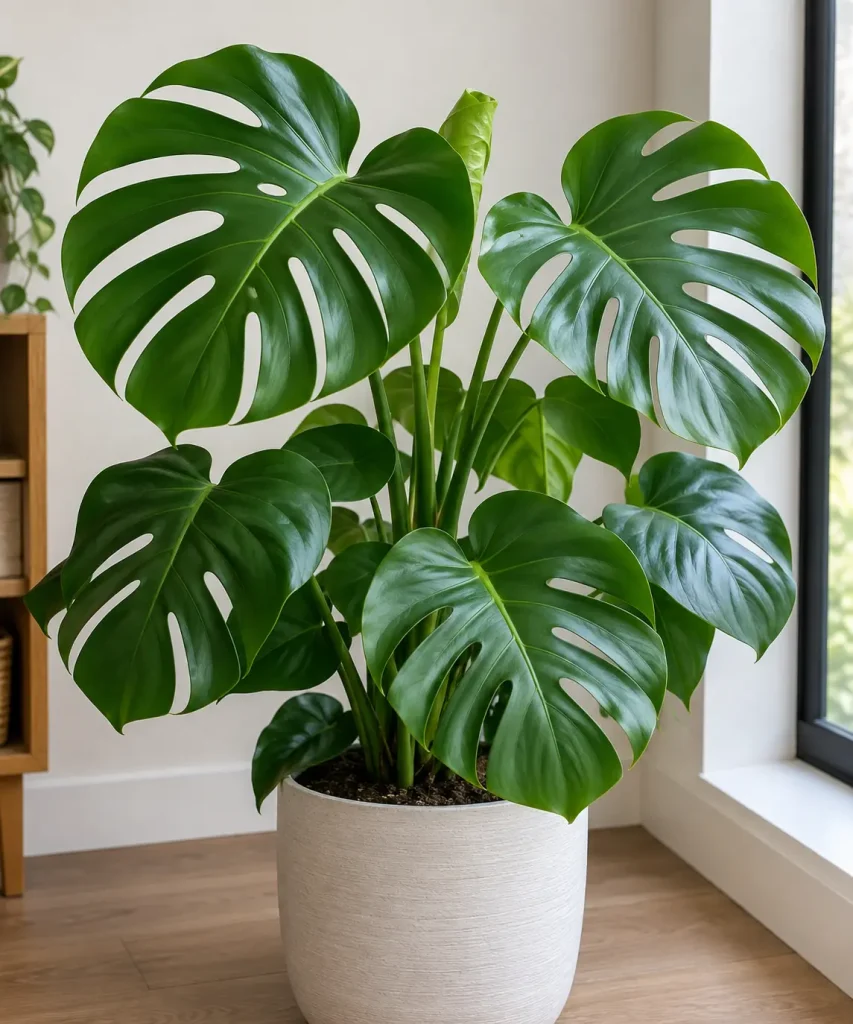
One of the biggest reasons why people like or choose the monstera plant only. Due to large green leaves make empty spaces feel more welcoming. A single healthy plant can change the look of a living room, bedroom, office or reading corner without needing expensive decorations. Unlike many decorative items a Monstera continues to grow and change over time. This gives your room a fresh, Beautiful and aye catching appearance throughout the year.
2. Easy for New Plant Owners
Many beginners worry about choosing the wrong houseplant. Monstera removes much of that worry because it is fairly easy to care for.
It grows well when you provide:
* Bright indirect light
* Well draining soil
* Water when the top layer of soil becomes dry
* Normal indoor temperature
You do not need special gardening skills to grow a healthy Monstera plant.
3. Can Live for Many Years
Unlike fresh flowers grows (on flower plant every day) that last only a short time but Monstera can stay healthy for many years. As the plant becomes more older it start developing stronger stems, larger leaves and a fuller amazing appearance. Many families keep the same Monstera for a long time because they fulfil its proper needs and some even pass cuttings to friends or relatives so new plants can grow from one original one.
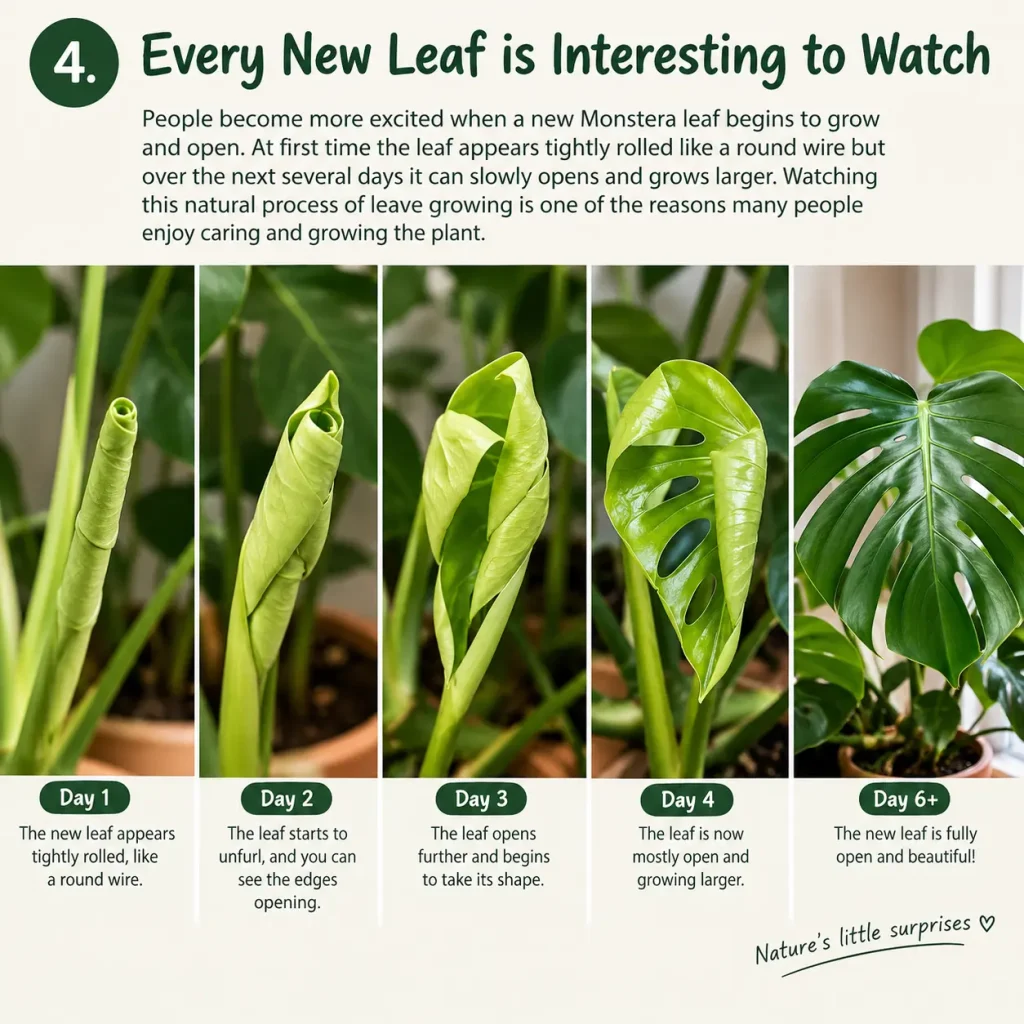
4.Every New Leaf is Interesting to Watch
People become more excited when a new Monstera leaf begins to grow and open. At first time the leaf appears tightly rolled like a round wire but over the next several days it can slowly opens and grows larger. Watching this natural process of leave growing is one of the reasons many people enjoy caring and growing the plant.
5. Makes Indoor Spaces Feel More Pleasant
People say that a room feels cool and calmer when they adds a healthy green monstera plants. Research suggest that spending time around indoor plants support a pleasant indoor environment and can contribute to positive feelings for some people. For many owners simply seeing healthy green leaves after a busy day adds comfort to their home and mind.
6. A Good Choice for Apartments
Not every person has a large garden. Many people live in apartments where outdoor space is very less and limited. Monstera grows proper indoors when it receives enough indirect light. A medium sized pot can support healthy growth of plant for several years before the plant needs a larger container.
7. Works Well in Home Offices
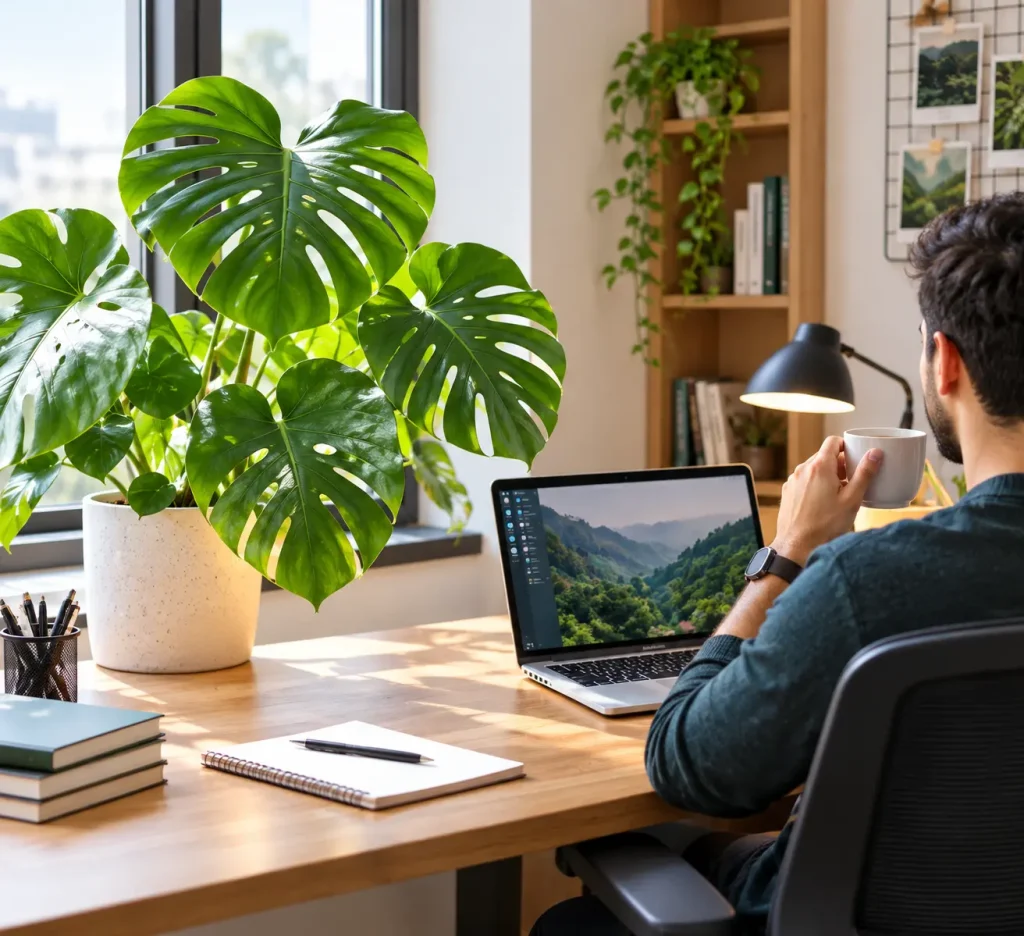
Working from home has become common for many people . Adding a Monstera near a desk gives a natural greenery look into the workspace. Many people enjoy looking at plants during short breaks and a healthy Monstera adds life to a room without taking more efforts.
8. New Plants Can Grow from Cuttings
The main reason why Monstera remains popular from it beginning is that it can be propagated from healthy stem cuttings having a node. This means one big or healthy plants can produce several new plants. Many owners enjoy sharing these young plants with friends and family making Monstera personal gift.
9. A Great Long Term Houseplant
Some indoor plants lose their beauty after a short period but monstera often becomes more attractive as it grows. Larger leaves, stronger stems and fuller growth make an older plant even more eye catching than a young one. Many people feel proud when they look back at photos showing how much their Monstera has grown over the years and how many monstera plants they have.
10. Suitable for Many Rooms
Monstera belongs to those indoor plants that can fit into many parts of a home.
It looks beautiful in:
* Living rooms
* Bedrooms
* Home offices
* Dining rooms
* Reading corners
* Hallways
* Apartment balconies with indirect light
Because it adapts well to indoor conditions many home owners move it to different rooms as they change their home layout.
Disadvantages of Monstera Plants
Every plant has both good and bad points. Knowing the disadvantages before taking a Monstera helps you decide whether it matches your home and lifestyle. So that’s why you just have to check that.
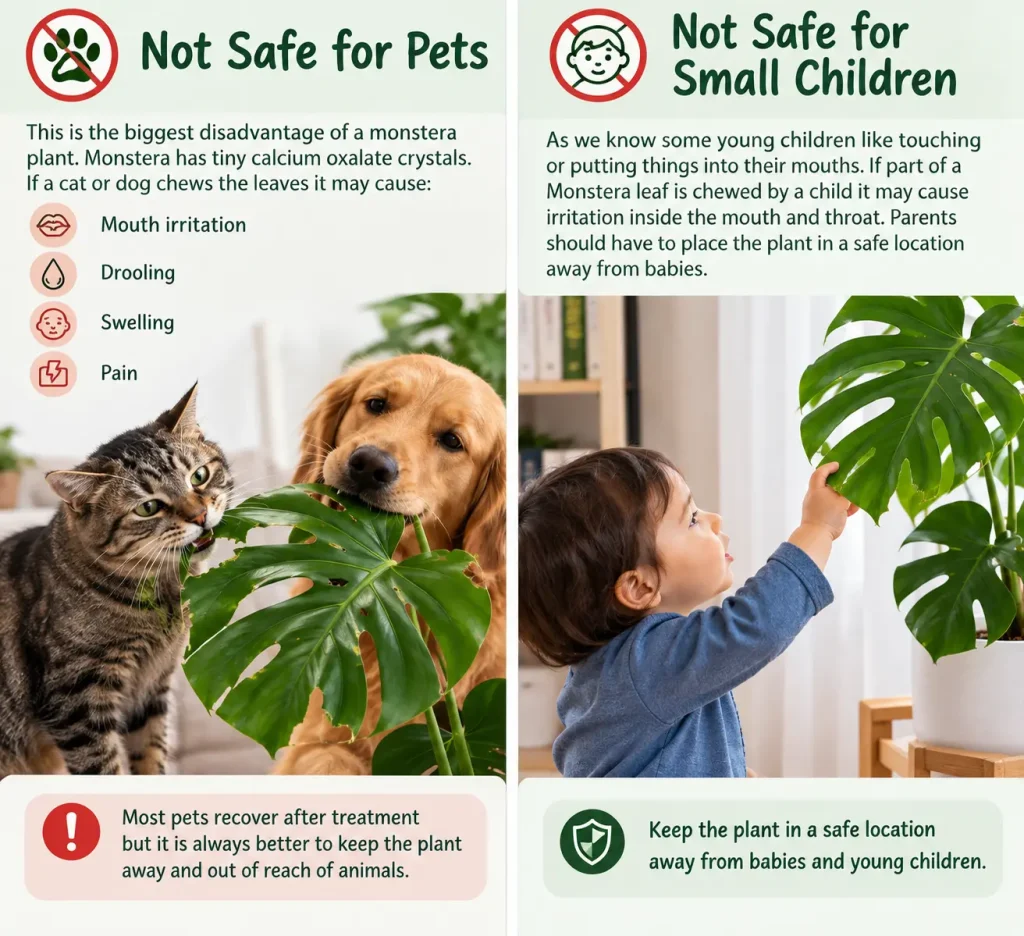
1. Not Safe for Pets
This is the biggest disadvantage of a monstera plant. Monstera has tiny calcium oxalate crystals. If a cat or dog chews the leaves it may cause:
* Mouth irritation
* Drooling
* Swelling
* Pain
Most pets recover after treatment but it is always better to keep the plant away and out of reach of animals.
2. Not Safe for Small Children
As we know some young children like touching or putting things into their mouths. If part of a Monstera leaf is chewed by a child it may cause irritation inside the mouth and throat. Parents should have to place the plant in a safe location away from babies.
3. Needs Good Light
Monstera grows best in bright indirect light rather than a direct sunlight.
If the room is too dark you have to notice:
* Slow growth
* Small leaves
* Long weak stems
* Fewer natural leaf splits
Choosing the right location is one of the most important part of growing a healthy Monstera plant.
4. Can Take Up a Lot of Space
Many people buy a small Monstera without realizing how large it may become. After several years the plant can spread widely and grow quite tall. If you live in a very small apartment you may need regular pruning or a larger space.
5. Needs Support as It Grows
In nature, Monstera climbs trees while at inside home, large plants often need a moss pole or any other strong support. Without support a heavy stems may lean or spread across the floor.
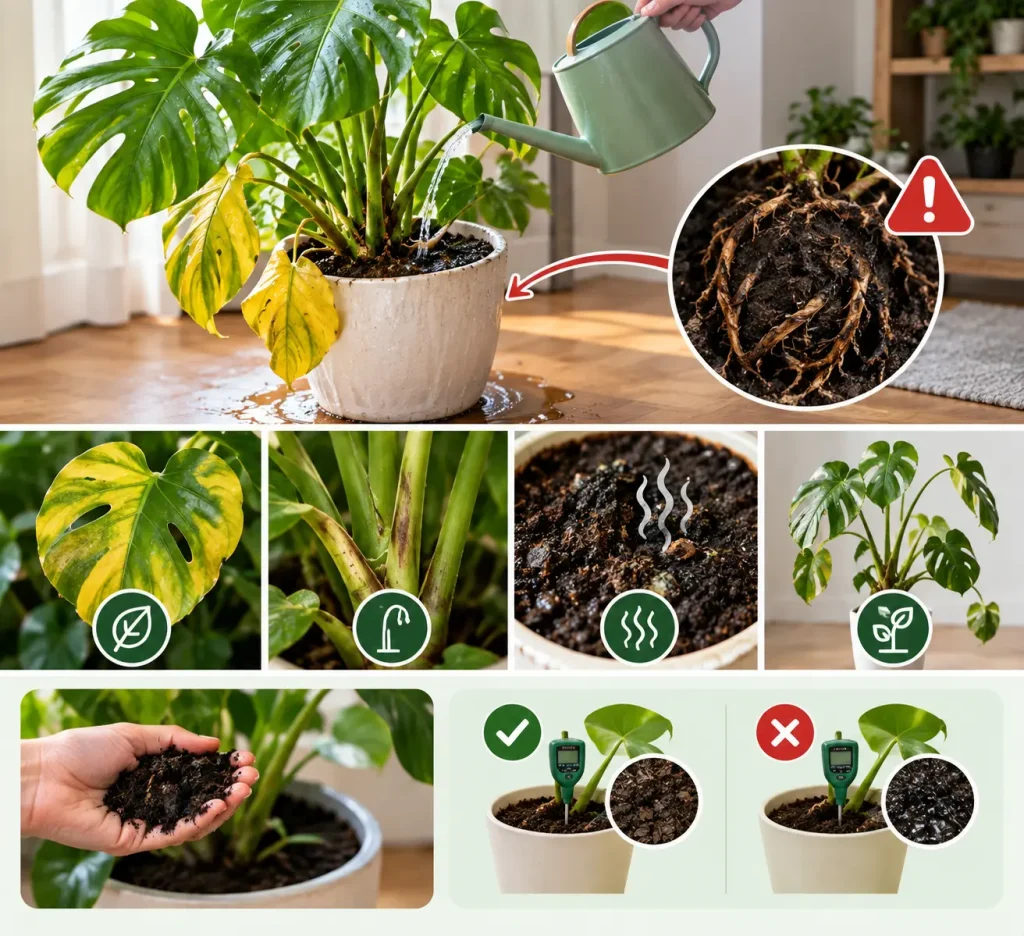
6. Wrong Watering Can Cause Problems
Overwatering is the common mistake of every fresher. Soil that stays wet for a long time can damage the roots and may cause many other problems.
Signs include:
* Yellow leaves
* Soft stems
* Bad smell from the soil
* Poor growth
Checking the soil before watering is much better than watering on a fixed schedule.
7. Dust Builds Up on the Leaves
The large leaves easily collect dust. When too much dust covers the surface of plant leaves it looks bad and represents a dusty look. Clean the leaves with a soft cloth every few weeks helps keep them fresh and maintain their good or amazing look.
8. May Attract Common Houseplant Pests
Monstera is fairly hardy and pests can sometimes appear.
The most common ones include:
* Spider mites
* Mealybugs
* Scale insects
* Fungus gnats
Check your monstera plant regularly because inspection helps catch problems before they become serious.
9. Needs Repotting
As the roots grow larger, the plant needs more space. Most Monstera plants need a larger when the grow larger.
Repotting takes a little time but it can helps the plant continue growing.
Is Monstera the Right Plant for you?
Monstera is a good choice if you:
* Want a beautiful indoor plant
* Are new to gardening
* Have bright indirect light
* Enjoy watching plants grow over time
* Have enough room for a larger plant in the future
You may want another plant if:
* Your home has very little natural light.
* You have pets that chew leaves.
* You want a very small plant that stays the same size.
Tips to Get the Best Results
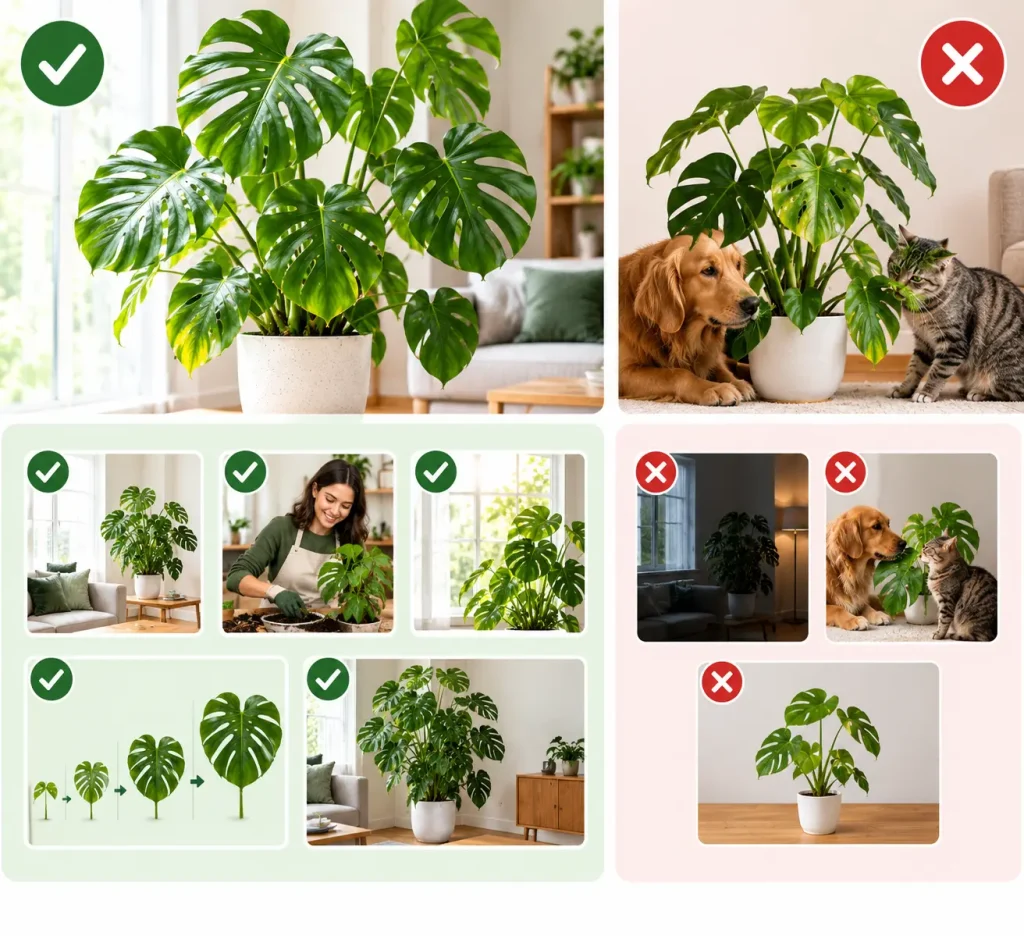
Healthy Monstera plants usually have shiny green leaves and steady growth.
These simple habits can help:
* Water only when the top part of the soil looks dry.
* Place the plant near a bright window.
* Turn the pot every few weeks so all sides receive light equally.
* Remove yellow or damaged leaves.
* Remove or wipe dust from the leaves with soft cloth.
* Feed the plant during growth season like summer or spring.
* Use a support like moss pole with big plants.
* Check both sides of the leaves for pests every week.
Final Thoughts
There is many reason why Monstera has become favorite or mostly liked houseplant in the whole world. It combines beauty, easy care and long life in a single plant. Beginners enjoy it’s growing process because it represents an mazing look while experienced plant lovers appreciate watching the converting of small leaves and making natural holes on them. Like other houseplant Monstera also has a few drawback. It needs enough indirect sunlight, proper watering and a safe place away from pets and small children where the didn’t touch or chew it. It can also become quite large so planning ahead is helpful.
For most homes or other places like office the good points of monstera are much greater than the bad ones. If you can provide the right growing conditions a Monstera can stay healthy for along time and become one of the most attractive plants in your indoor collection of plants.
FAQs
What are the main benefits of keeping a Monstera plant indoors?
Monstera plants are popular indoor houseplants because they:
- Enhance the aesthetic appeal of homes and offices with their unique split leaves.
- Help improve indoor air quality by absorbing certain airborne pollutants.
- Increase humidity levels through natural transpiration, which can benefit dry indoor environments.
- Are relatively low-maintenance and suitable for beginners.
- Can promote a calming, biophilic atmosphere that may reduce stress.
What are the disadvantages of owning a Monstera plant?
While Monstera plants have many advantages, they also have a few drawbacks:
- They are toxic to cats, dogs, and humans if ingested due to calcium oxalate crystals.
- Require bright, indirect sunlight to thrive and may struggle in very low-light conditions.
- Can grow quite large, making them unsuitable for small spaces without regular pruning.
- Need occasional support, such as a moss pole, to mimic their natural climbing habit.
- Overwatering can quickly lead to root rot.
Is a Monstera plant safe to keep around pets and children?
Monstera plants are not completely safe around curious pets and young children. The leaves and stems contain calcium oxalate crystals that can cause:
- Mouth irritation
- Swelling of the lips and tongue
- Drooling
- Vomiting (in pets)
It’s best to place the plant out of reach or choose a pet-safe alternative if your pets or children are likely to chew on plants.
Does a Monstera plant improve air quality?
Yes, Monstera plants can contribute to better indoor air quality by:
- Absorbing small amounts of indoor pollutants.
- Releasing oxygen during photosynthesis.
- Increasing indoor humidity, which may help reduce dry air discomfort.
However, while they provide some air-purifying benefits, a single Monstera should not be relied upon as a substitute for proper ventilation or an air purifier.
Is a Monstera plant worth buying?
For most plant lovers, yes. A Monstera is an excellent choice if you want a stylish, easy-to-care-for houseplant with long-lasting appeal. It’s ideal for homes, apartments, and offices that receive bright, indirect light. However, if you have pets, toddlers, or very limited indoor space, you’ll need to consider its toxicity and eventual size before purchasing.