Problems and Solutions of Monstera Plant
Monstera plants are the most popular indoor plants because of their large green leaves and attractive look. They are easy to grow but they can still develop many problems if their growing conditions are not right and improper care. Many owners worried a lot when they notice yellow leaves, brown edges, drooping stems, slow growth and other problems. The good news is that most of these problems can be fixed when you understand what caused them and what is the main reason of happening.
Plant cannot tell you what is happening but it shows the signs of disease according to time. You have to recognize the problem earlier and start its solution.
Here are some main problems of monstera plant and their solution:
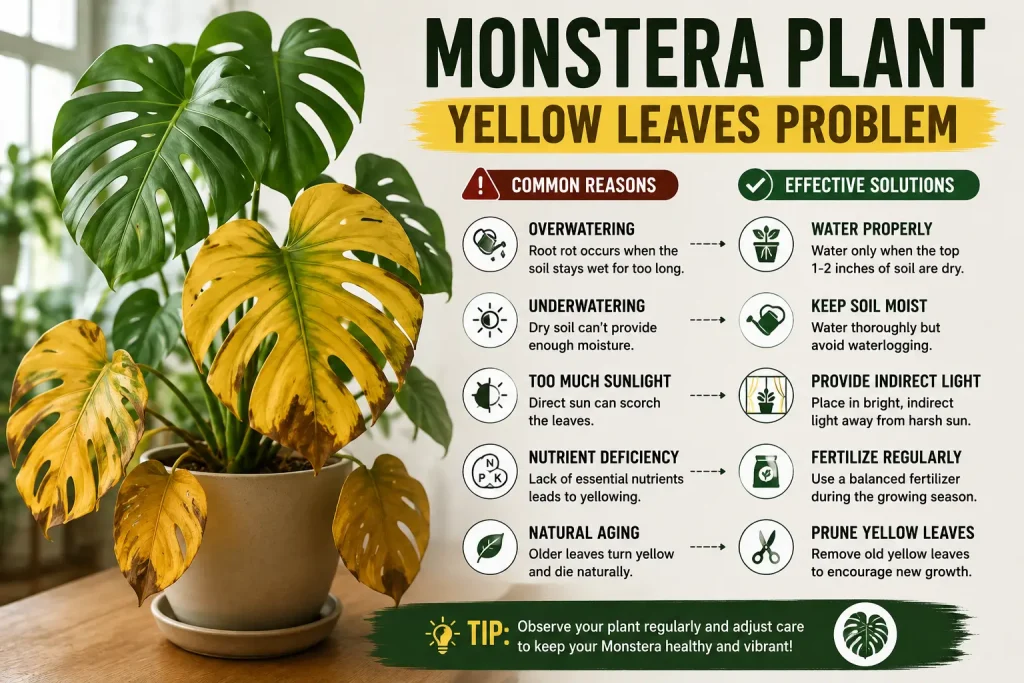
1. Yellow Leaves
Yellow leaves are the first sign that shows something is affecting or destroying your Monstera plant health. In some cases a single older leaf turning yellow is normal because the plant naturally replaces old leaves by new leaves. However if several young leaves change color at the same time the plant is asking for help.
Common Causes
* Overwatering
* Poor drainage
* Lack of sunlight
* Nutrient deficiency
* Randomly temperature changes
How to Identify the Problem
If you noticed that the leaves become soft, pale yellow and the soil stays wet for several days, excess watering is usually the cause. If the leaves become light green before turning yellow the plant is not getting the light according to his need.
How to fix it
Check the condition of soil before watering. Water only when the top two inches of soil feel dry. Always use a pot with drainage because extra water gets out from these wholes. Move the plant to a place where light reaches. During spring and summer feed the plant with a balanced or proper fertilizer according to the need.
Prevention Tips
* Never water on a fixed schedule without checking the soil.
* Remove excess water from the saucer after watering.
* Rotate the plant every week so all sides of plant receive equal light.
2. Brown leaf tips and crispy edges
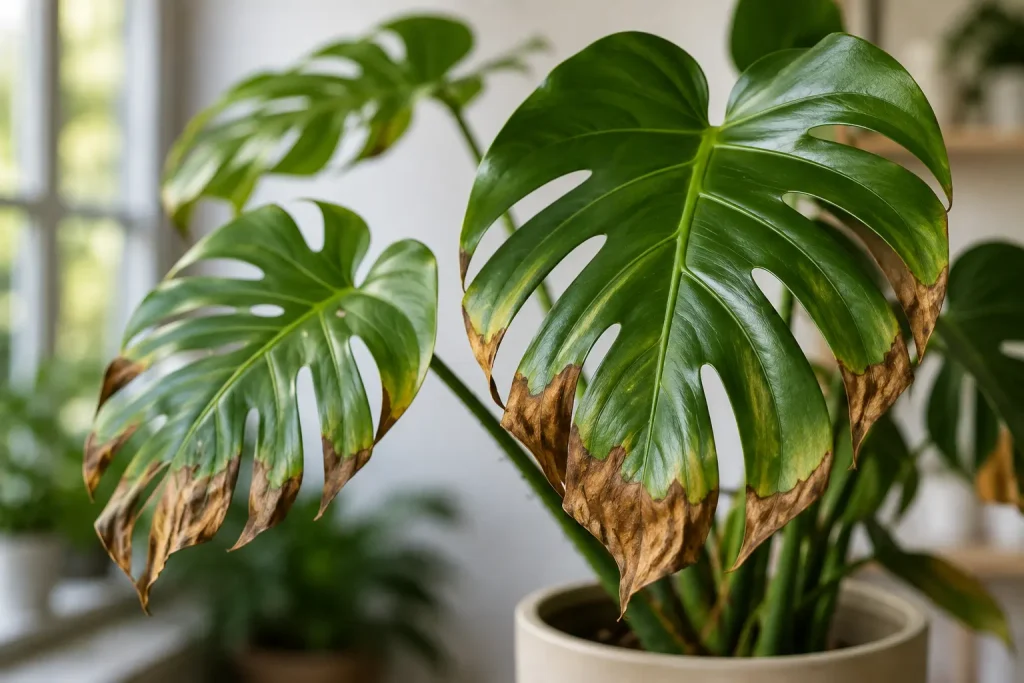
Brown tips are also the main problem of monster plant. This problem appears slowly and move from edges to center slowly and destroys the green leave.
Common causes
* Less humidity
* Underwatering
* Salt buildup from fertilizer
* Dry indoor air
* More hot and cold temperature
Signs
The older leaves start affecting first. This problem starts and destroys leaves look. At the start the stem look green but slowly starts becoming light green this is the firs step of this problem.
How to Fix It
Water deeply whenever the soil begins to dry instead of giving the plant small amounts every day and also checks the soil by finger touching before watering. Increase humidity by placing and use humidifier nearby or grouping several houseplants together at a same place. Change little bit upper soil every few months with clean water to remove excess fertilizer salts.
Prevention tips
* Keep humidity among 50% and 70%.
* Avoid placing the plant near heating vents.
3. Root Rot
Root rot is the most damaging problems for a Monstera plant. It develops when the roots remain in wet soil for a long time. Due to less oxygen the roots start decaying and cannot absorb fertilizers and water.
Symptoms
* Yellow leaves
* Drooping stems
* Soft black roots
* Bad smell from the pot
* Soil that remains wet for several days
How to Fix Root Rot
Remove plant from it pot or container and wash politely its roots and change the soil of container. You have to use a drainage pot always because it is always best. Do not water after replacing soil plant take a time to recover its damage roots so you have to be water plant after few days.
Prevention Tips
* Never allow water to collect at the bottom of the pot use drainage pot.
* Use a chunky potting mix that drains well and good for plant.
* Check soil moisture by touching before every watering.
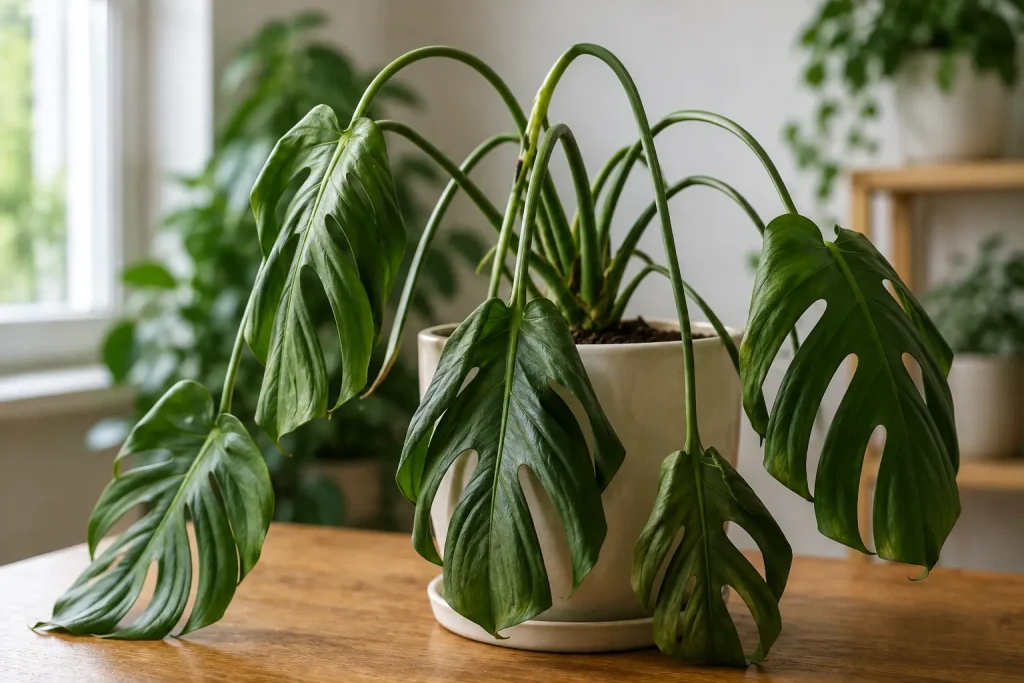
4. Drooping leaves
Drooping leaves can make people think that this problem starts due to less amount of water but the reason maybe over watering or less watering.
Common causes
* Dry soil
* Waterlogged roots
* Cold temperature
* Recent repotting
* Randomly environmental changes
How to Find the Cause
Insert your finger into the soil. If the soil feels dry several inches below the surface the plant needs water. If the soil is wet wait before watering again and checks the soil by finger touch.
If the plant was recently repotted mild drooping is often temporary.
Solution
Do not water at the same time water only when the soil feels dry. Place your monstera plant near a window and a cold place.
Prevention Tips
* Water only when need.
* Avoid moving the plant daily.
* Keep the plant in a location with steady temperature.
5. Brown or Black Spots on Leaves
Leaf spots can develop due to many different reasons. Some are caused by excess moisture while others appear after direct sunlight damages the leaf surface.
Causes
* Wet leaves that remain damp
* Overwatering
* Fungal diseases
* Bacterial infections
* Sunburn
Signs
Small dark spots may gradually grow larger. Some spots develop yellow rings around the edges while others become dry and brittle.
Treatment
Remove badly damaged leaves currently using clean pruning tools. Improve air circulation around the plant.
If the problem continues spreading isolate the plant from nearby houseplants until the issue is under control.
Prevention Tips
* Keep leaves dry.
* Water early in the day if needed.
* Allow good airflow around the plant.
6. Slow Growth and Small Leaves
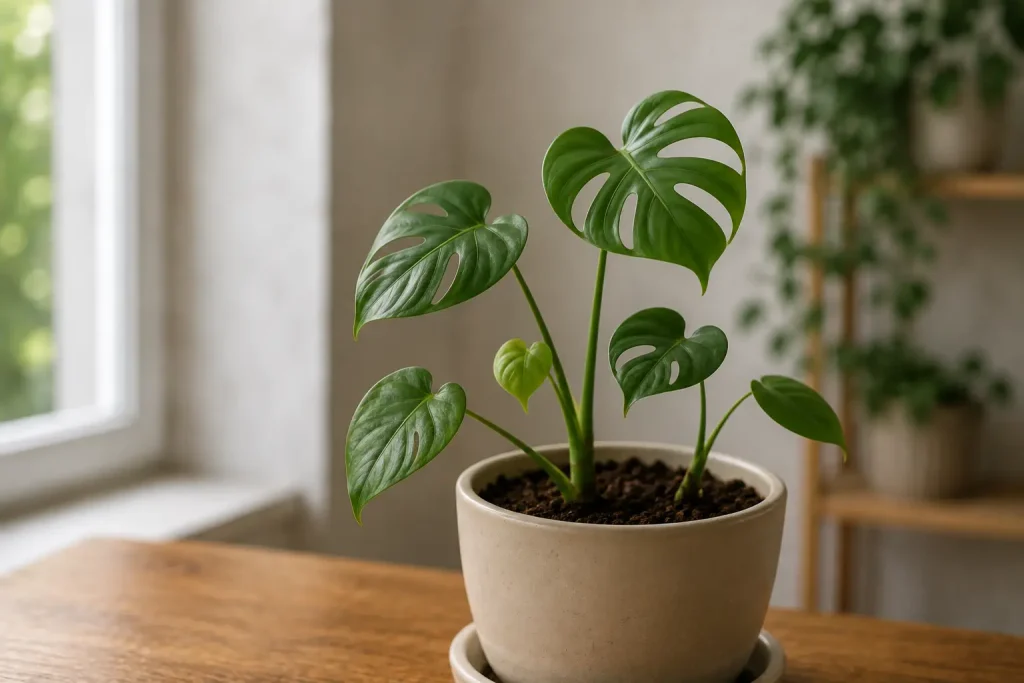
Many owners do not wait to see the large leaves of their monstera they said their plant is not growing fast but its not truth. You have to be patience it takes time to grow larger. Also use proper care for fast growth. And you have not to use more fertilizers for fast growth because it destroys the plant.
Common causes
* Less light
* less space
* Bad soil quality
* Lack of nutrients
* Cool indoor temperature
Solution
Place the plant near a bright window where it receives indirect sunlight according to need each day. Repot when roots begin circling the inside of the pot. Feed the plant during spring and summer with a balanced fertilizer and do not over feed the plant or do not fill the pot with more fertilizers.
A moss pole can increases the speed of plant growth and made it larger.
Prevention Tips
* Repot every one to two years if needed.
* Clean dust from leaves so they can absorb more light.
* Support climbing stems with a moss pole.
7. Common Pests
When the surrounding air is dry the insects attack on indoor plants.
Some common pests include:
* Spider mites
* Mealybugs
* Scale insects
* Thrips
These insects are are on leaves and stems and eat the healthy part of plant and made it week.
Signs
* Tiny moving insects
* Sticky residue on leaves
* White cotton-like patches
* Thin webbing
* Small yellow dots
How to Remove Pests
You have to check the leaves on monstera three times a week if you find any insect on them use spray insecticidal soap or neem oil according to the product directions. Repeat the treatment every few days until no insects remain and also clean the dust from leaves. Keep the infected plant away from other healthy plants.
How to keep your Monstera healthy
Monstera plant can be protected from many problems and disease if proper care or fertilizers will be given to it. Water your monstera only when you feel the surface is dry and over watering can also cause many other problems. Also check the changes made by your monstera plant according to time. Checks the leaves of monstera every week and use insect killer to protect your plant from insects and also remove dust from leaves using soft cloth.
A healthy monstera plant made your home eye catching and beautiful. A monstera made its leaves larger according to time but some types such as monstera Giga has small leaves. When you pay attention to changes in the leaves, stems and roots your Monstera has a much better chance of staying healthy and becoming a beautiful indoor plant for many years.
FAQs
Why are my Monstera leaves turning yellow?
Yellow leaves are usually caused by overwatering, poor drainage, low light or natural aging. Check the soil moisture, make sure the pot has drainage holes, and place the plant in bright indirect light.
What causes brown tips and crispy edges on Monstera leaves?
Brown tips often appear because of low humidity, underwatering, salt buildup from fertilizer or inconsistent watering. Increase humidity, water when the top 2–3 inches of soil are dry and flush the soil occasionally.
Why is my Monstera plant drooping?
Drooping leaves can result from underwatering, overwatering, transplant shock or temperature stress. Check the soil, water only when needed and keep the plant in a stable indoor environment.
Why is my Monstera growing slowly?
Slow growth is commonly caused by insufficient light, lack of nutrients, cold temperatures or a root-bound pot. Move the plant to brighter indirect light, fertilize during the growing season and repot if the roots are crowded.
Why are my Monstera leaves small and have no splits?
Small leaves without fenestrations usually mean the plant is not receiving enough light or has not reached maturity. Provide bright indirect light, use a moss pole for support and maintain proper feeding.
How do I get rid of pests on my Monstera plant?
Common pests include spider mites, mealybugs, aphids, scale insects and thrips. Wipe the leaves, isolate the plant and treat it with insecticidal soap or neem oil until the pests are gone.