
Seasonal Changes In Monstera Plant
Monstera plants do not grow or made the same changes every month. Their leaves, roots and overall health change according to the seasons. Many people think that the growth speed of monstera is same all the year but its not true. Monstera made its growth slower and fast according to light, temperature, humidity and day length.
If you know what happens with monstera in each season than you can care it properly. It helps you to understand why your Monstera may grow quickly in some seasons and slow down in another one. These natural changes are normal and happen to healthy plants.
Why Seasons Matter for Monstera Plants
Monstera plants come from warm places of forests. In their natural home, they grow under tall trees where they receive filtered sunlight, warm temperatures, steady moisture and when they become larger they climb at the tree.
When grown inside a home they still respond to seasonal changes and the need a support like moss pole. Longer days usually lead to faster growth while shorter days slow the plant growth. Even if your home’s temperature stays comfortable and is according to monstera plant need its good for monstera.
Spring: The Start of Fresh Growth
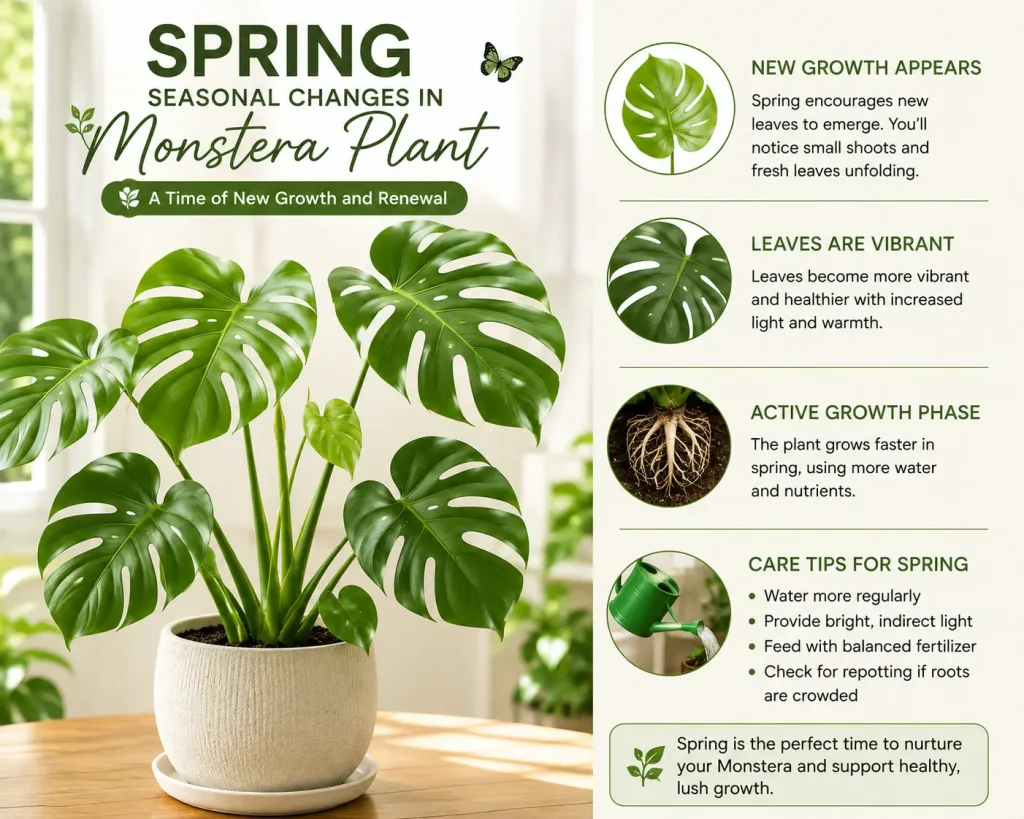
Spring is the best and busiest growing season for a Monstera. As daylight hours increase, the plant begins producing fresh leaves, stronger stems and made many new changes.
You may notice small green shoots start appearing from the stem. These slowly open into new leaves. Young plants may produce simple leaves while mature plants made larger leaves with natural holes.
Spring is a good time to inspect the plant after winter. Remove dry or damaged leaves or wipe dust from healthy leaves.
If plant made a more growth and roots start coming out of pot than move the plant to big pot having drainage holes.
Water Needs During Spring
As monstera start making new changes it needs more feed as compare to winter. In the time of monstera growth you have to give more water and do not water on a same time every day. Water after checking the soil of plant and uses a big pot with drainage holes because more water exceeds out and plant grow freely
Feeding During Spring
Spring is a suitable time to begin regular feeding the monstera plant because plant is in its growing days.
You have to use a good or balance feed for a monstera plant. Do not over feed you plant because it destroys the pant and made it unhealthy.
Summer: The Fastest Growing Season
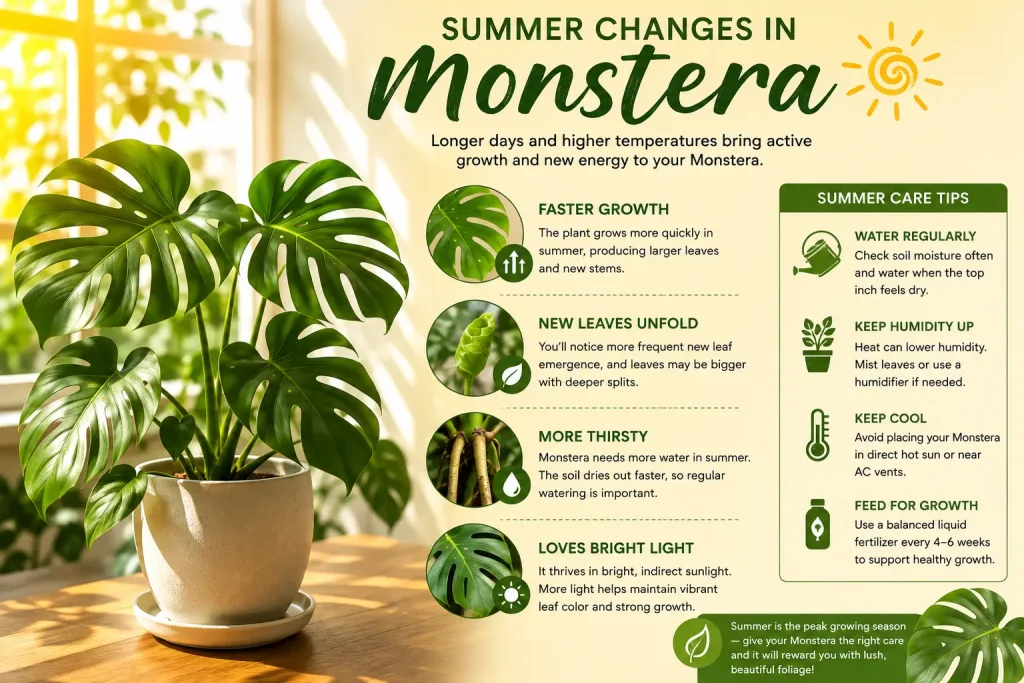
Summer is the fastest growth of the year. Warm temperatures, brighter days and higher humidity help Monstera plants produce larger leaves and a healthy stems. Healthy plants grow many new leaves during this season.
A moss pole or another other support can help climbing stems grow upright and made little bit growth faster.
Watching the Light
Summer sunlight can become much stronger than spring sunlight. You have to place your monstera plant in an indirect sunlight because it will be helpful for a plant leaves and growth. If you place your monster plant in a harsh and direct sunlight it will burn the plants leaves and cause many other problems.
Watering During Summer
Warm weather causes soil dry more quickly than a cold weather.
You may need to water more but always check the soil before watering and add a fresh water.
Large pots usually stay wet longer than small ones. Humidity, airflow and indoor temperature also affect how quickly the soil dries and remain wet for a long time so place a plant where temperature is little bit cold.
A watering schedule that works in June may not work in August, so do not follow the same schedule and checks the soil before watering.
Humidity During Summer
Many homes have higher humidity during summer which Monstera plants enjoy and displays a lovely look.
If indoor air becomes dry because of air conditioning the leaf edges start turn brown and you have to away the plant from air conditioning place instantly.
A humidifier, grouping plants together or placing the pot near other houseplants may help keep humidity at a good level.
Cleaning the Leaves
Dust slowly collects on large Monstera leaves. Checks the leaves and use a soft cloth for removing dust from plant leaves. Clean leaves can take in more light than dusty ones.
This simple habit also gives you a chance to check for insects or early signs of disease.
Autumn: Growth Begins to Slow
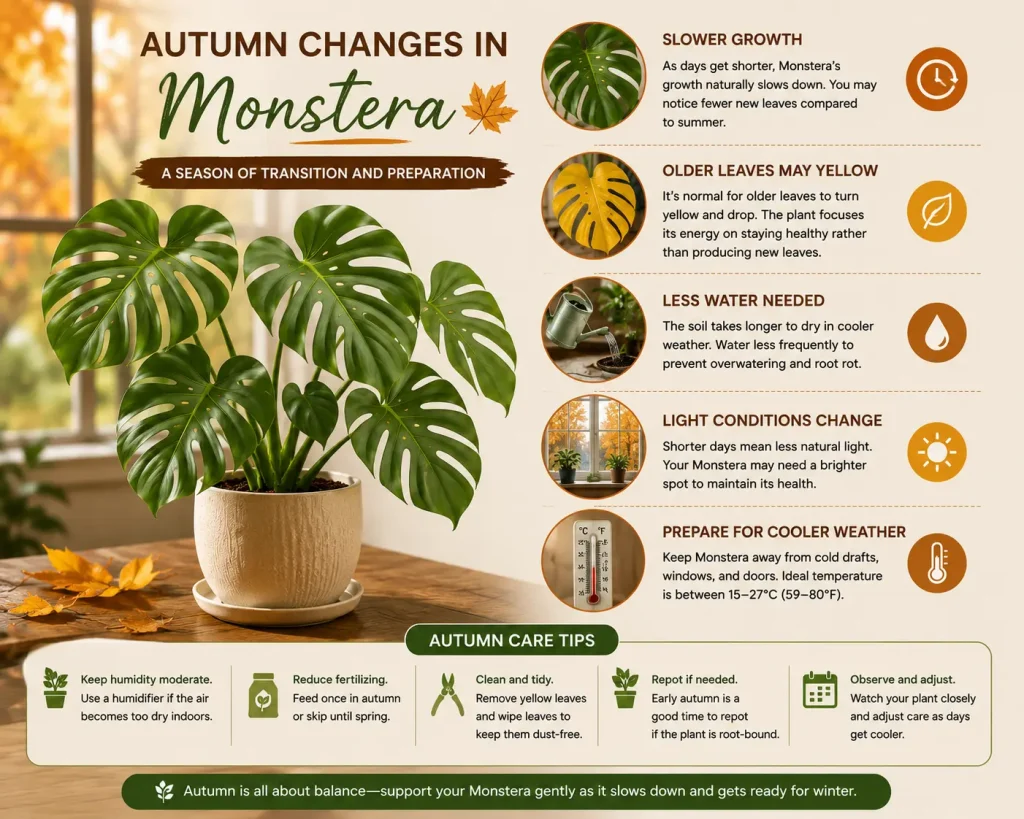
As the days become shorter, Monstera plants usually begin growing more slowly.
You may notice fewer new leaves appearing. Existing leaves remain healthy, but the plant makes the process of new leaves growing slow. This condition is normal due to season change. Many people make the mistake of giving the same amount of water they used during summer. Since the plant is growing less, the soil stays wet longer so that you have to water a less amount.
Feeding Less Often
Since growth slows naturally less use of fertilizer is good.
Giving large amounts of fertilizer when the plant is not actively growing may burn the whole plant.Allow the plant to settle into its slower seasonal pattern.
Watching Indoor Conditions
As outdoor temperatures fall, heaters may begin running inside the home. You have to move the plant to the good place where heat air does not reaches and the plant become stay healthy.
Winter: A Resting Period
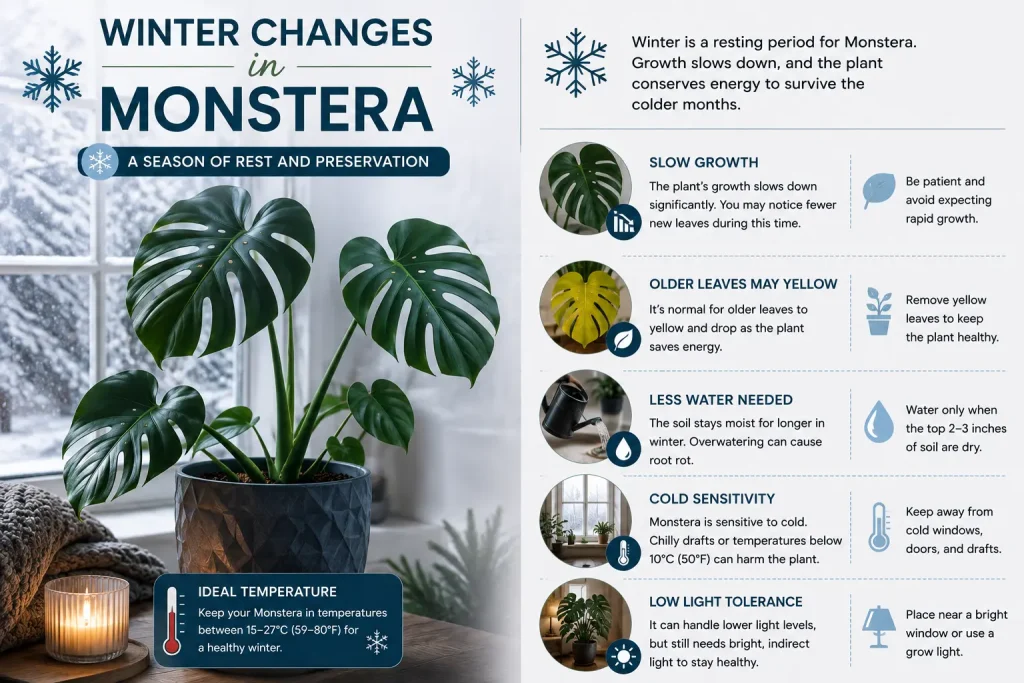
Winter is rest season for a Monstera.
The plant is still alive and healthy, but stops or slower the growth. Some plants may not produce any new leaves in winter time period. This resting period is natural.
Many owners worried when they do not see new growth or changes in their plant during winter. As long as the leaves stay firm and green the plant is often doing exactly what it should.
Water Carefully
The biggest winter mistake is watering too often and thinking that it made the growth process continue.
Cool temperatures and shorter days mean the soil dries much more slowly. Always check the soil before adding more water. In winter the soil stays wet for a long time.
Give the Plant Enough Light
Since winter days are shorter and fogy so you have to place your monstera in such a place where light reaches freely. Rotate the pot every week so all sides of the plant receive light. This help plant to stay healthy for a long time. If natural light is limited, a quality grow light can support healthy foliage during darker months and days.
Keep Temperatures Stable
Monstera plants suits good indoor temperatures.
Cold drafts from open windows and sudden temperature changes may stress the plant.
Try to keep the plant away from doors that open frequently opens during cold weather.
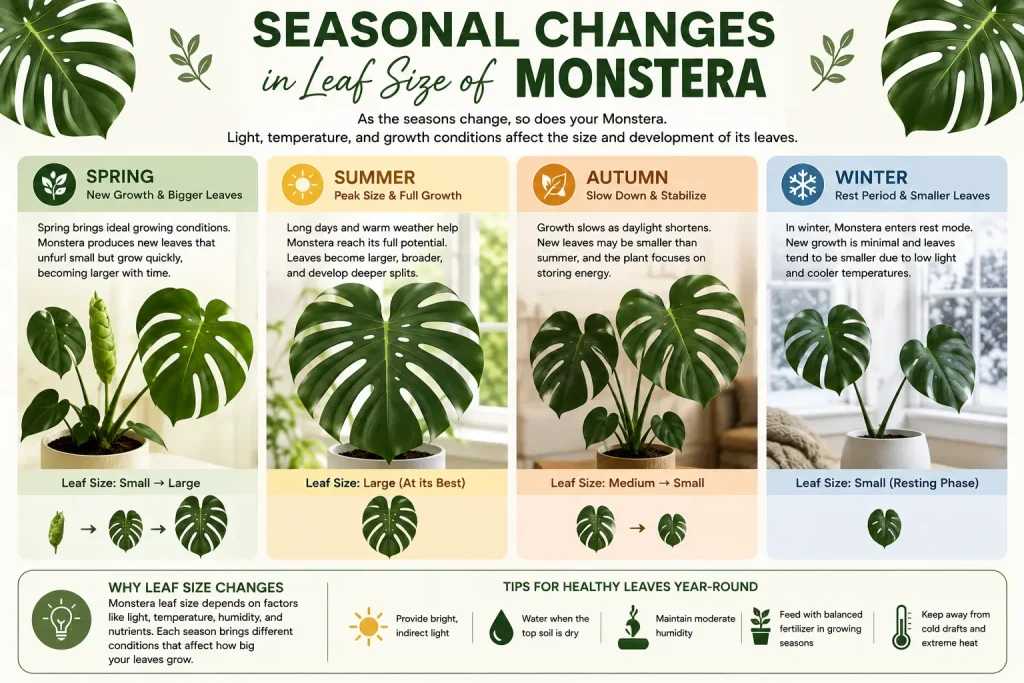
Seasonal Changes in Leaf Size
Many people notice that new leaves become bigger during growing months.
This happens because the plant has need able light, warmth and energy available.
During slower seasons new leaves may be smaller that the first one or may not be grow.
Leaf size also depends on the plant’s age and growing conditions.
Seasonal Repotting
If repotting is necessary spring is best because the roots recover quickly due to growing season.
Select a pot with drainage holes that allows water to gets out and the roods get fresh oxygen.
Aerial Roots Throughout the Year
Monstera plants naturally produce aerial roots.
These roots help the plant climb and collect moisture in nature according to its need.
Do not remove healthy aerial roots unless they are damaged.
Common Seasonal Mistakes
Many Monstera problems happen because care stays the same all year but you have to change the care routine according to season change. Watering heavily during winter, giving too much fertilizer during slow growth, placing the plant under direct summer sunlight and ignoring dry indoor air can made the plant unhealthy.]A healthy plant will naturally grow faster when its needs are fully fulfil.
By caring according to the seasons change, your Monstera can produce healthy roots, strong stems and beautiful green leaves. With patience and regular observation you will learn how your plant made changes according to the time.
FAQs
How does a Monstera plant change throughout the year?
A Monstera grows most actively during spring and summer. Growth slows in autumn as daylight decreases, and winter is usually a resting period with little or no new leaf development.
Does Monstera grow faster in spring and summer?
Yes. Warm temperatures, longer daylight hours, and higher light levels encourage faster growth, larger leaves and more frequent new leaf production during spring and summer.
Why does my Monstera grow slowly in autumn?
Growth naturally slows in autumn because days become shorter and light intensity decreases. The plant begins conserving energy as it prepares for winter.
Should I water my Monstera differently in each season?
Yes. Water more often during spring and summer when the plant is actively growing. In autumn and winter, reduce watering because the soil stays moist for longer and the plant uses less water.
Why are my Monstera leaves smaller in winter?
Smaller leaves during winter are usually caused by reduced light and slower growth. This is a normal seasonal response and larger leaves typically return when growing conditions improve in spring.
How can I help my Monstera stay healthy through every season?
Provide bright indirect light, adjust watering based on seasonal growth, maintain moderate humidity, protect the plant from temperature extremes, and inspect it regularly for pests and signs of stress. These simple adjustments help keep your Monstera healthy throughout the year.