
Why Are My Monstera Leaves Turning Yellow? (And How to Fix It)
Monstera plants are known by their large green leaves, natural holes and tropical look. They are popular and mostly loved indoor plants because they can grow well in homes with suitable light, water and soil.
If you have noticed yellow leaves on your plant, you may be asking yourself: Why are my Monstera leaves turning yellow? Is it because of too much water, poor sunlight or a problem with the roots?
The truth is that several things can cause this change. Overwatering is one of the most common and main reasons but underwatering, poor drainage, low light, pests and sudden temperature changes can also affect leaf color.
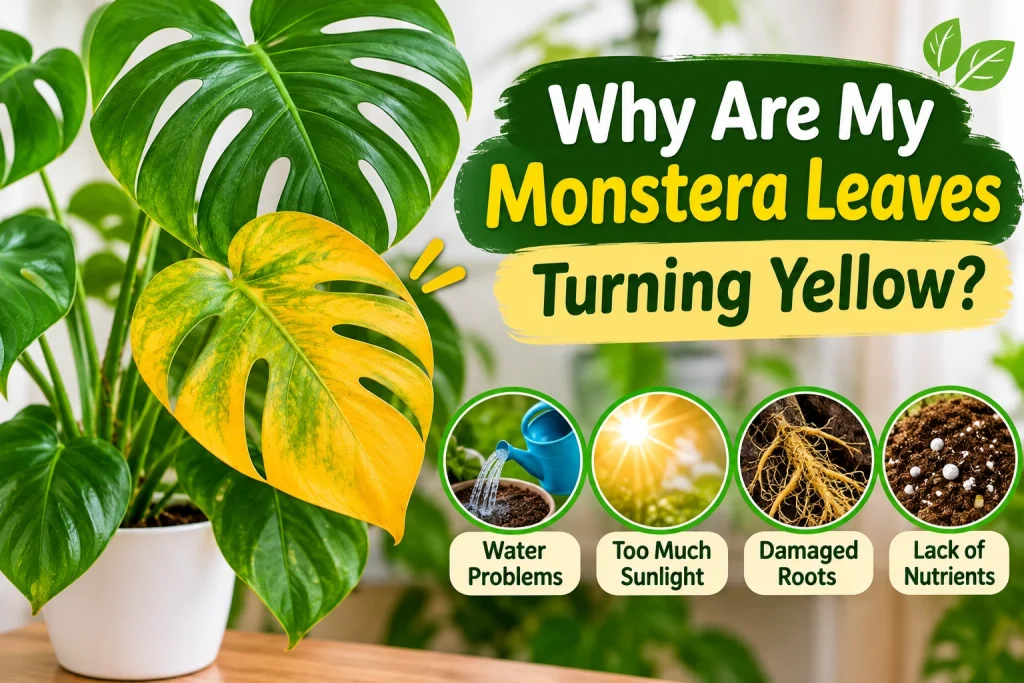
🌿 Why Are My Monstera Leaves Turning Yellow?
Monstera leaves turn yellow when plant is under stress or cannot get enough of what it need. This can happen because of water problems, unsuitable light, damaged roots or lack of nutrients. The location and appearance of the yellow areas can give you useful hints.
For example: yellow lower leaves may be linked to natural aging or watering problems. Yellow patches on the side facing a window may point to sun damage.
Before treating your plant, ask yourself:
* Is the soil wet, slightly moist or completely dry?
* Are the yellow leaves near the bottom or top?
* Do the leaves feel soft or crispy?
* Are there brown spots around the yellow areas?
* Have you recently moved or repotted the plant?
* Can you see small insects under the leaves?
💧 Overwatering Your Monstera
Overwatering is one of the main reasons. Many plant owners think their plants need water every day but this habit can cause many problems to plant. Monstera roots need water and air to grow properly. When soil stays wet for too long there is less air around the roots. This can damage them and may lead to root rot. Damaged roots cannot take up water and nutrients properly. As a result, the leaves may turn yellow or become week.
Signs of an Overwatered Monstera
Look for these signs:
* Several leaves turning yellow.
* Soil staying wet for many days.
* Soft or drooping leaves.
* Brown or black roots.
* A bad smell coming from the soil.
* Slow growth or new leaves failing to develop.
How to Fix an Overwatered Monstera
Step 1: Stop watering.
Step 2: Check the drainage holes are present or working.
Step 3: Inspect the roots.
Step 4: Remove damaged roots.
Step 5: Repot when needed.
Helpful tip: Never leave your Monstera sitting in a saucer full of water. Empty the extra water after each watering session.
🏜️ Underwatering Your Monstera
Giving your Monstera too little water can also cause yellow leaves. Water helps move nutrients through the plant and keeps its leaves firm. When the soil becomes too dry the roots cannot supply enough moisture. The leaves may begin to droop, curl or develop yellow and brown areas.
Signs of an Underwatered Monstera
Check for these symptoms:
* The soil feels dry several inches below the surface.
* Leaves look weak and droopy.
* Leaf edges become brown and crispy.
* Leaves curl inward.
* The pot feels lighter than usual.
* Soil pulls away from the sides of the pot.
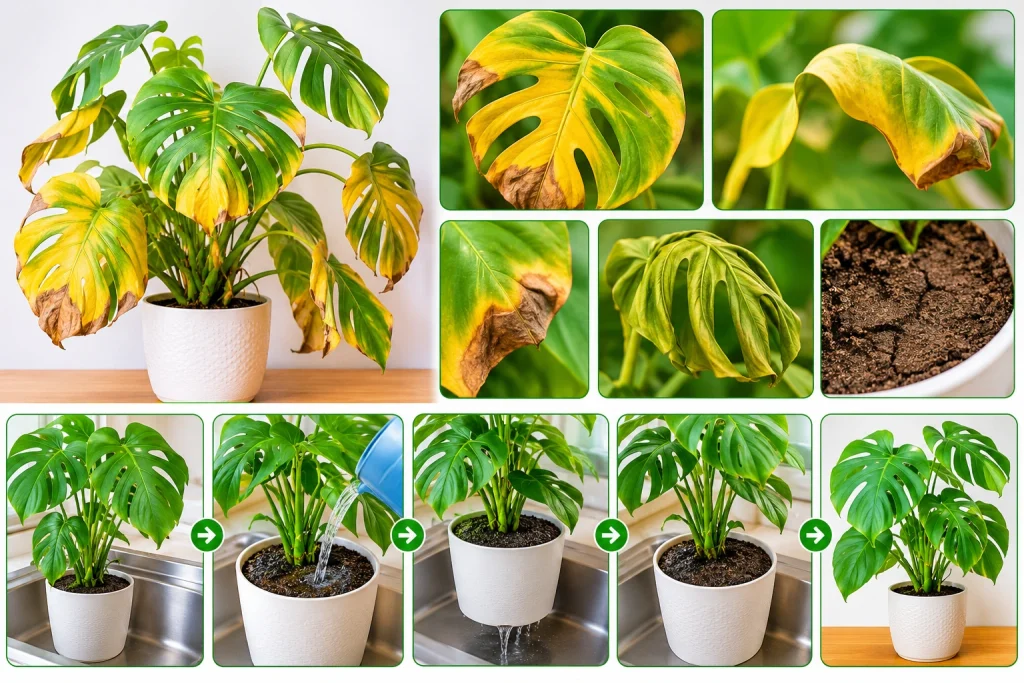
How to Fix an Underwatered Monstera
If the soil is very dry, give your plant a thorough watering.
1. Take the pot to a sink or another suitable place.
2. Pour water slowly over the soil.
3. Continue until water comes out through the drainage holes.
4. Let all extra water drain away.
5. Return the plant to its usual location.
☀️ Too Much Direct Sunlight
Monstera plants grow naturally in tropical forests where larger plants provide shade. This is why they usually prefer bright, indirect light . Strong direct sunlight can damage their leaves especially when a plant has not been slowly adjusted to brighter conditions. Sun damage may appear as pale yellow, tan or brown patches. These areas can become dry and crispy.
Signs of Sun Damage
* Yellow patches on leaves facing the window.
* Dry brown marks on the leaf surface.
* Pale areas appearing after moving the plant.
* Crispy edges on exposed leaves.
* Uneven damage on the side receiving direct sunlight.
How to Fix Sun Damage
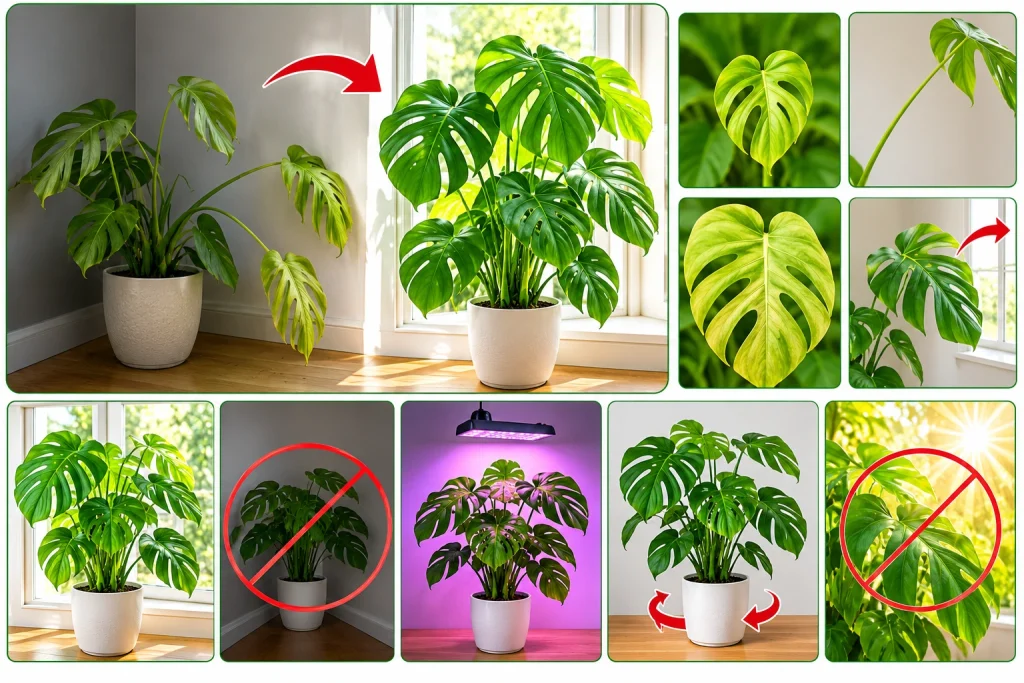
Move your Monstera to a bright location where sunlight does not fall directly on its leaves for long periods. An east facing window can provide softer morning light. If you use a south or west facing window a sheer curtain can help reduce strong rays.
🌑 Not Enough Light
Too much sunlight can burn Monstera leaves but too little light can also affect plant health. A Monstera kept in a dark corner may not receive enough light for normal growth. Its stems may become long and weak as they reach toward a brighter area. Low light can also slow growth and make leaves look pale.
Signs Your Monstera Needs More Light
* New leaves are smaller than older ones.
* Stems become long and stretched.
* Growth becomes slow.
* Leaves lose their rich green color.
* The plant grows toward a window.
* Soil takes longer than usual to dry.
How to Fix Low Light Problems
Try these simple changes:
* Move your plant closer to a bright window.
* Avoid dark corners.
* Use a grow light if natural light is limited.
* Turn the pot occasionally for more even growth.
* Keep the plant away from harsh afternoon sunlight.
What Soil is Best for Monstera?
A suitable Monstera mix should hold some moisture while allowing extra water to drain.
You can prepare a simple mix with these materials:
| 🌱 Soil Ingredient | Purpose |
|---|---|
| Potting Soil | Provides a base for growth |
| Orchid Bark | Creates air spaces |
| Perlite | Helps improve drainage |
| Coco Coir | Helps retain moisture |
| Horticultural Charcoal | Can be added as another mix component |
🪴 Poor Soil and Drainage Problems
The soil around your Monstera roots plays a major part in plant health. Heavy or compact soil may hold too much water and prevent enough air from reaching the roots. When the soil stays wet for a long time roots can become weak and may develop rot. Regular garden soil is often too heavy for indoor Monstera plants when used alone. A loose potting mix is usually a better choice.
🌡️ Sudden Temperature Changes
Monstera plants prefer warm and steady indoor conditions. Sudden temperature changes can cause stress and affect leaf health. Cold air from open windows, air conditioners, and winter drafts may damage the leaves. Placing a plant beside a heater can also expose it to unsuitable heat.
Signs of Temperature Stress
* Yellow leaves after a cold night.
* Sudden drooping.
* Dark or damaged leaf areas.
* Leaves falling after a room temperature change.
* Slow growth during colder periods.
How to Fix Temperature Problems
Choose a steady indoor location for your plant. Keep it away from cold drafts, air conditioner outlets, heaters and frequently opened exterior doors. Avoid moving your Monstera between places with very different temperatures.
🔎 How to Identify the Cause of Yellow Monstera Leaves
| 🌿 What You Notice | Possible Cause | What to Do |
|---|---|---|
| Several yellow leaves and wet soil | Overwatering | Check roots and drainage |
| Yellow leaves and dry soil | Underwatering | Water thoroughly |
| Yellow patches facing a window | Sun damage | Move to indirect light |
| Pale leaves and slow growth | Low light | Find a brighter location |
| Yellow spots with tiny insects | Pest damage | Inspect and treat leaves |
| Yellow leaves with mushy roots | Root rot | Remove damaged roots |
| One older lower leaf turns yellow | Natural aging | Monitor the plant |
| Yellowing after cold weather | Temperature stress | Move to a steady location |
| Yellow leaves and compacted soil | Poor drainage | Use an airy potting mix |
| Yellowing with weak growth | Possible nutrient shortage | Check soil and feeding |
🍂 Natural Aging of Older Monstera Leaves
Not every yellow leaf means something is wrong.
As a Monstera grows, its oldest leaves naturally reach the end of their life. The plant may take back some nutrients from an older leaf before it falls. This process is known as natural leaf aging. It often happens near the bottom of the plant. One older leaf slowly changes from green to yellow while the other leaves remain healthy.
Signs of Natural Leaf Aging
* Only one older lower leaf turns yellow.
* The change happens slowly.
* New leaves continue growing.
* The rest of the plant looks healthy.
* There are no signs of root damage or pests.
Should You Remove Yellow Monstera Leaves?
You can remove a fully yellow leaf if you do not want to leave it on the plant. Use clean scissors and cut the leaf stem near its base without damaging the main stem. If a leaf is only partly yellow, you can wait before removing it. It may still provide some nutrients to the plant. Avoid cutting several healthy leaves just because one old leaf has changed color.
Different problems can create similar symptoms. Use this table to compare what you notice with possible causes.
| 🌿 What You Notice | ⚠️ Possible Cause | ✅ What to Do |
|---|---|---|
| Several yellow leaves and wet soil | Overwatering | ✓ Check roots and drainage |
| Yellow leaves and dry soil | Underwatering | ✓ Water thoroughly |
| Yellow patches facing a window | Sun damage | ✓ Move to indirect light |
| Pale leaves and slow growth | Low light | ✓ Find a brighter location |
| Yellow spots with tiny insects | Pest damage | ✓ Inspect and treat leaves |
| Yellow leaves with mushy roots | Root rot | ✓ Remove damaged roots |
| One older lower leaf turns yellow | Natural aging | ✓ Monitor the plant |
| Yellowing after cold weather | Temperature stress | ✓ Move to a steady location |
| Yellow leaves and compacted soil | Poor drainage | ✓ Use an airy potting mix |
| Yellowing with weak growth | Possible nutrient shortage | ✓ Check soil and feeding |
🌿 Final Thoughts
Yellow leaves can destroy the beauty of monstera plant and made it dull. You have to care your plant and have to check the condition of its leaves. If you find and problem with the leaves than you have to start the treatment of them before it become serious.
❓ Frequently Asked Questions
Should I cut off yellow leaves from my Monstera?
You can remove fully yellow leaves because they will not turn green again. Use clean scissors and cut near the base of the leaf stem. If only a small part is yellow, you can wait and monitor it.
Can yellow Monstera leaves turn green again?
A fully yellow leaf generally cannot return to its original green color. Once the leaf has lost its green pigment, the damage is usually permanent. Focus on keeping the remaining leaves healthy.
How often should I water my Monstera?
Watering depends on the soil, pot size, room temperature, and light. Check the upper 1–2 inches of soil. When this area feels dry, water thoroughly and allow extra water to drain.
Why are my Monstera's new leaves turning yellow?
Yellow new leaves may be linked to root damage, poor drainage, nutrient problems, or unsuitable soil conditions. Check the roots and soil moisture first. Also inspect the plant for pests.
Why is my Monstera turning yellow after repotting?
Your plant may be experiencing repotting stress. Its roots need time to adjust to the new soil and pot. Keep it in bright, indirect light, avoid overwatering, and do not add extra fertilizer while it recovers.