
Why Some Plants Become Expensive : Rare Monstera Collecting
Monstera plants are famous houseplants but not every Monstera has the same value in this world. A common Monstera deliciosa can be easy to find while a rare variegated plant can cost hundred or thousands of dollars. Some mature specimens can cost even more due to their different look.
This difference often makes new plant collectors ask an obvious question:
Why are some Monsteras so expensive?
The answer comes from several factors that they may be due to plant genetics, variegation, availability, propagation, plant size, species and buyer demand can all affect the price. Rare Monstera collecting is not only about owning a plant with an unusual or rare leaf. It involves learning how different plants grow, how they are propagated and why their supply can be limited or finding them was difficult.
What Makes a Monstera Rare?
A Monstera may be considered rare when it is different from its other types. Rarity can come from different sources. Such as leaves shape, plant size, plant leaves color, stem size and many others.
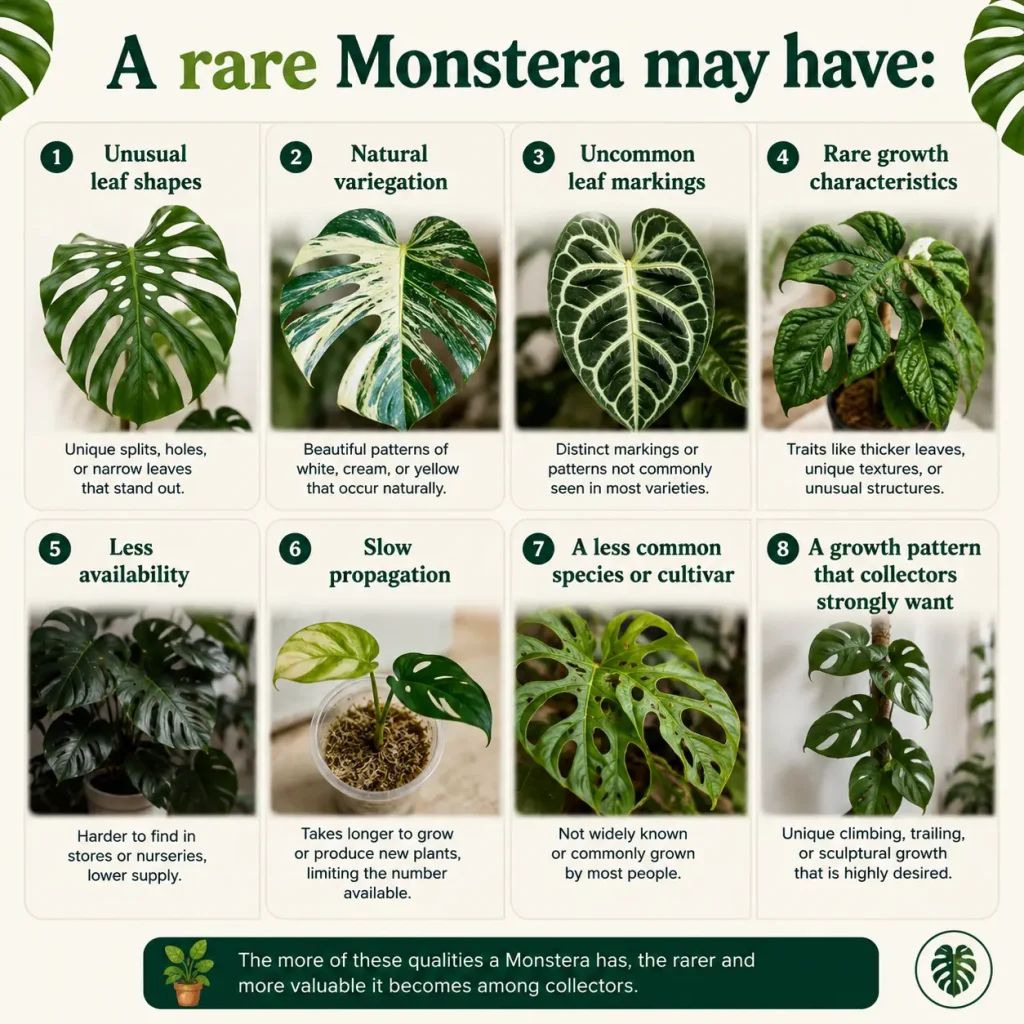
A rare Monstera may have:
* Unusual leaf shapes
* Natural variegation
* Uncommon leaf markings
* Rare growth characteristics
* Less availability
* Slow propagation
* A less common species or cultivar
* A growth pattern that collectors strongly want
A plant can be hard to find but have little demand. Another plant may become expensive because many collectors want it while only a small number are available.
Why Variegated Monsteras Are Often Expensive
Variegation means that different parts of a plant’s leaf have different amazing color on their body. This may be white, cream, yellow or lighter. A normal green Monstera has leaves that contain plenty of chlorophyll. A variegated Monstera has areas with reduced chlorophyll creating the patterns that collectors find attractive. Two most known examples is Monstera deliciosa, Albo Variegata and Monstera Thai Constellation.But the amount of white or yellow on a leaf is not the only thing that matters other color shades also made the plant beautiful. A collector may also look at how they appears across several leaves whether new growth continues to show the trait and whether the plant is healthy.
Variegation Is Not Always Stable
One important fact for new collectors is that variegation can change.
A plant may produce one highly variegated leaf and then produce a greener leaf later. Another plant may develop stronger variegation as it grows.
This is especially important when buying a cutting.
The look of first leaf does not guarantee that every future leaf will look the same.
A plant that has produced several leaves with a similar pattern gives more useful information about its growth.
Why Rare Cuttings Can Cost Less Than Mature Plants
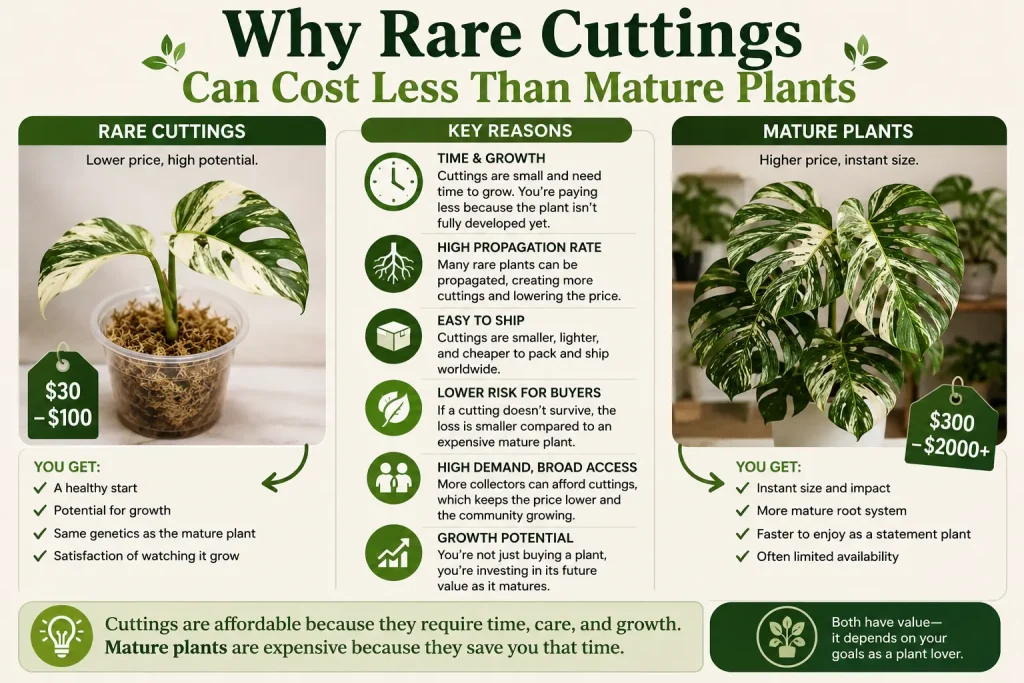
A cutting is not the same as an established plant.
A small cutting may have only one node and no developed root system. The buyer must then wait for roots and new growth.
A mature rare Monstera has already gone through months or years of care.
Mature plant may have:
* A developed root system
* Several established leaves
* A stronger stem
* A known growth pattern
* A history of previous leaves
* Better evidence of stable variegation
This explains why two plants from the same type can have very different prices.
Supply is one of the simplest ways to understand plant pricing.When very few plants are available, sellers have fewer specimens to offer. If many people want those plants, prices can rise. When more growers begin producing the same plant, the supply increases. As more plants enter the market, buyers have more choices. Sellers may then need to lower their prices. This pattern has appeared across the houseplant market. A plant that was difficult to find several years ago may become much easier to purchase after growers develop better propagation methods.
Tissue Culture Can Change Rare Plant Prices
Tissue culture has had an important effect on the availability of some ornamental plants. This method allows growers to produce many young plants from small amounts of plant material under controlled laboratory conditions. When a desirable Monstera can be produced through tissue culture on a larger scale, the number of plants available to buyers can increase. That can change the market price. Thai Constellation is a useful example when discussing this subject. It became known among collectors as a highly desirable variegated Monstera, but increased production has made it easier to find than during the earlier period when supply was much smaller.This shows why plant prices should not be viewed as permanent.
Why Monstera Albo Has a Different Story
Albo Variegata is another popular variegated Monstera.
Its white variegation is one of the main reasons collectors want it. Unlike plants that can be produced in large numbers through tissue culture, Albo is commonly propagated through cuttings. This can make production slower. The quality of the cutting also matters. A cutting with a good node and a history of attractive variegated growth may be more desirable than a cutting with uncertain future growth. The condition of the plant therefore becomes part of its value.
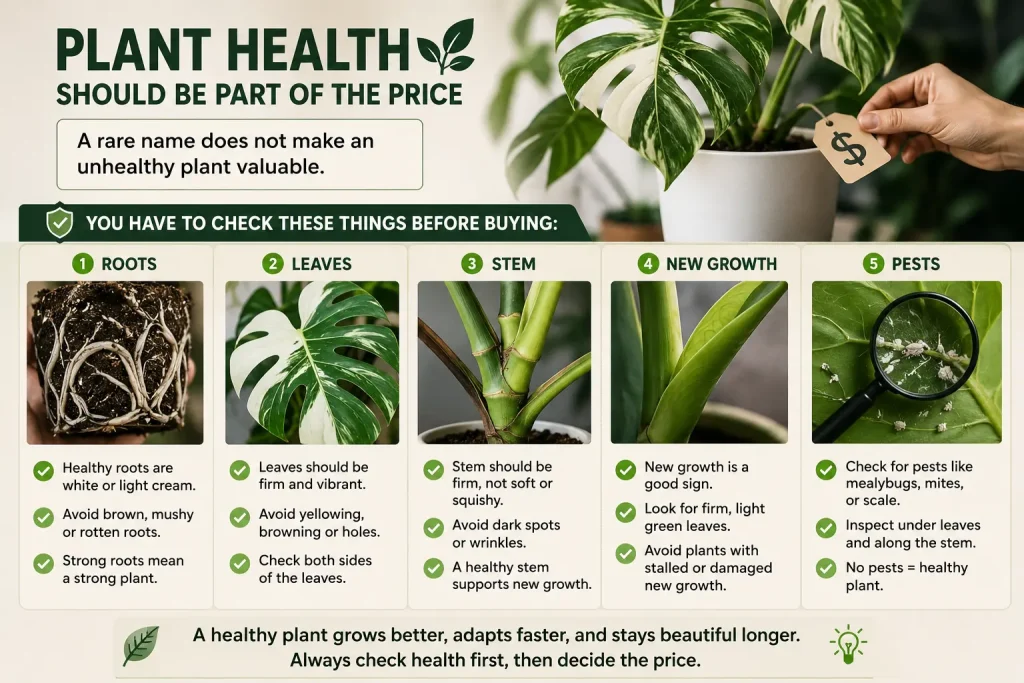
Plant Health Should Be Part of the Price
A rare name does not make an unhealthy plant valuable.
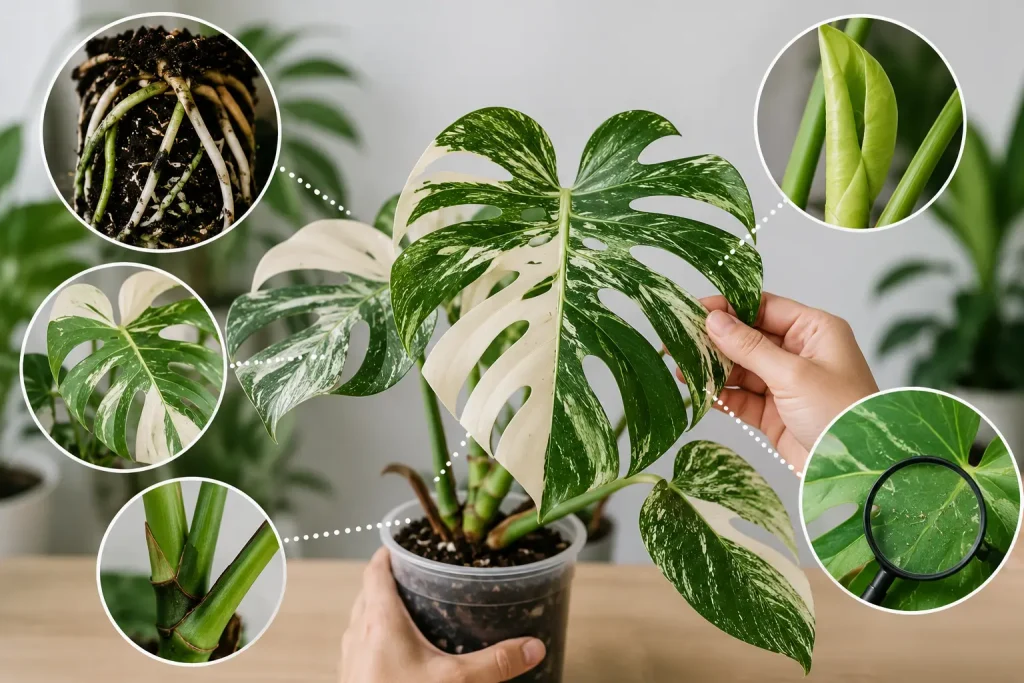
You have to check these things before buying :
* Roots
*Leaves
*Stem
*New growth
*Pests
Rare Species and Rare Variegation Are Different
It is useful to learn about: * rare species * and * rare variegation *.A Monstera can be rare because the species itself is uncommon in cultivation. Another plant may belong to a widely known species but have a rare genetic produces unusual variegation.
These are different forms of rarity.
For example, Monstera deliciosa is widely grown around the world but certain variegated forms are much less common than the standard green plant. A collector interested in species diversity may value an uncommon species. Another collector may care more about leaf patterns.
Why Rare Monstera Prices Can Fall
More Plants Enter the Market
- Propagation Becomes Easier
- Demand Decreases
- New Plants Become More Popular
- The Plant Becomes Widely Available
How Collectors Can Judge a Rare Monstera
Price alone does not tell you whether a plant is worth buying.
A better approach is to look at several details together.
- Plant Identification
- Variegation
- Root Health
- Node Quality
- Plant Size
- Growth History
- Seller Information
- Current Market Prices
Starting a Rare Monstera Collection Without Spending Too Much
A rare Monstera collection does not need to begin with the most expensive plants.
New collectors can start with more affordable varieties and learn basic care first.
These records can help you understand how your plants develop over time.
Keeping records can help too.
Write down:
* Plant name
* Purchase date
* Seller
* Propagation method
* Leaf changes
* New growth
* Repotting dates
* Any pest problems
What Buyers Should Avoid
High prices can sometimes attract misleading listings.
Be careful when a seller makes claims such as “guaranteed rare,” “guaranteed high variegation,” or “future investment” without providing useful evidence.
Also be cautious when a listing uses only one perfect photograph.
A buyer should want to see the actual plant, not just a stock image or an old photograph.
If purchasing a cutting, ask for a node.
If the seller refuses to provide basic information about the plant it may be better to look elsewhere.
Final Thoughts
Rare Monstera prices are different from simple monstera due to genetics, variegation, supply, propagation, plant size, health, species and collector demand. A rare Monstera can be beautiful and interesting but a high price does not guarantee future value. Supply can increase, trends can be change and propagation can become easier. For collectors learning about the plant is one of the best ways to make smart choices. Check its health, roots, node and variegation before paying a high price. The real value of a Monstera is not always its cost. A healthy plant that you enjoy growing can be more satisfying than an expensive plant bought only because it has a high price tag.
FAQs
Why are some Monstera plants so expensive?
Rare Monstera plants can become expensive because of limited availability, unusual variegation, slow propagation, uncommon genetics and strong demand from collectors.
Does rarity always make a Monstera more valuable?
No. Rarity alone does not guarantee a high price. Plant health, stable variegation, root condition, growth and overall quality can have a major effect on value.
Why are rare Monstera cuttings often cheaper than mature plants?
Cuttings usually have less established growth and may take longer to develop into a mature plant. Mature specimens with strong roots and attractive leaves generally offer more certainty to collectors.
What should collectors check before buying an expensive Monstera?
Collectors should inspect the roots, leaves, stem, new growth, and plant for pests. They should also check whether the plant matches the claimed variety and whether its variegation is stable.
Can the price of a rare Monstera change over time?
Yes. Prices can rise or fall as availability, propagation success, collector interest and market supply change. A plant that is difficult to find today may become more affordable when more growers successfully propagate it.