
Aerial Roots of Monstera Plant
If you owned a Monstera plant you can mostly noticed in growing season that some roots are coming out of the pot soil mix. Many people thought that these roots are showing signs that the plant is not healthy and suffering from any problem. Some people cut these roots and put them off.
These roots are not a sign of problem while the truth is much simpler. These roots are called aerial roots and they are also a part of how a Monstera plant growth. In the wild when the Monstera plants is on floor and covered by big plants the monstera use them to climb trees, stay stable and reach places with more light reaches easily. Even when grown indoors, the plant still continue this natural habit for climbing on a moss pole.
Once you know why aerial roots came and what aerial roots do, caring for your Monstera becomes so easier. You can decide whether to leave them alone or guide them onto a moss pole.
7 Things to Know About Monstera Aerial Roots
1. They Are Completely Normal
Aerial roots are part of growth of a Monstera. Almost every healthy plant grows them. Seeing these roots does not mean your plant is unhealthy or suffering from any disease or a problem while they show that your plant is growing properly .
2. They Help the Plant Climb
These roots help plant in climbing on tree in forest for reaching a good sunlight while indoor these roots help the plant in climbing on a support like moss pole this climbing process made a plant growth process fast.
3. They Can Take In Moisture
When aerial roots touch soil or another moist surface they can absorb water. This gives the plant another way to get moisture and remains healthy.
4. You Do Not Need to Cut Them
Many people leave aerial roots exactly as they are. They help the plant and do not cause any harm while cutting them is usually done only for appearance or to save space but this may be harmful.
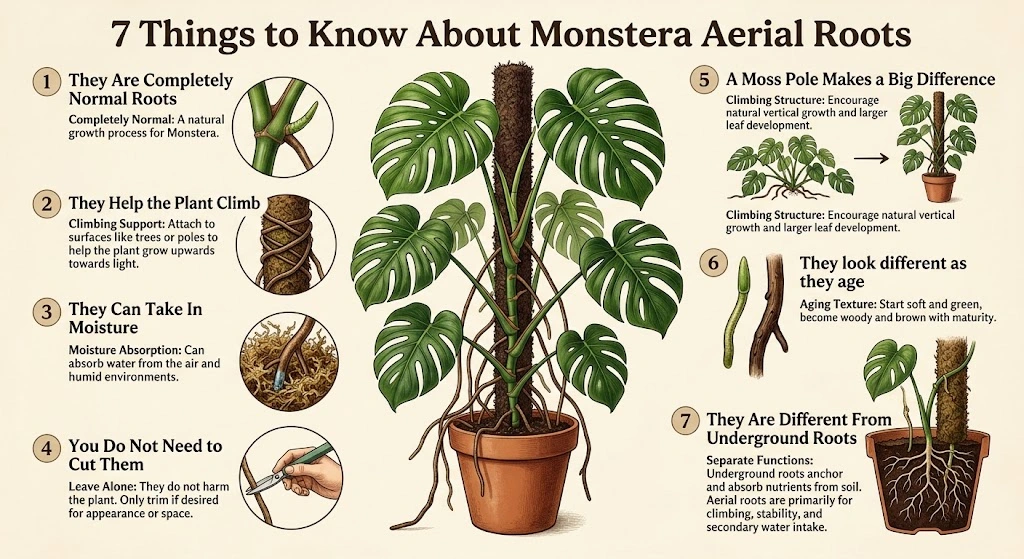
5. A Moss Pole Makes a Big Difference
A moss pole gives aerial roots something to attach to and climb upon. This helps the plant grow in a more natural faster way and often supports larger leaves and decrease the weight of leaves on stem.
6. They look different as they age
Young aerial roots are usually green or light brown and soft. As they grow older they become thicker, darker, and harder and made the look of plant little bad.
7. They Are Different From Underground Roots
The roots under the soli can mainly collect water and nutrients from the soil while aerial roots mainly help in help in climbing, support the plant and can absorb moisture.
What Are Aerial Roots?
These are the roots that grow from the stem toward above the soil. They mostly appear at the nodes where new leaves and stems have to develop. Some aerial roots stay short while others become very long. They may grow straight down toward the soil or stretch outward while looking for something to hold. These roots are not a defect. They are part of the plant structure. In forests, Monstera plants spend much of their life climbing trees instead of growing on the forest floor because they need a good sunlight and the sunlight is not present at the floor. Aerial roots make this possible. Inside home the plant still follows the same growth pattern because it has not lost its natural habit you can add a moss pole for attachments of aerial roots. You cannot do the propagation of monstera plant by aerial roots.
Why do Monstera Plants grow Aerial Roots?
Aerial roots perform many function in plant growth. Such as:
Support
As Monstera plants become larger and start producing more leaves the stems become heavier. Aerial roots help support the stem and extra weight.
Climbing
Monstera is a climbing plant. In nature aerial roots help the plant to climb upon the nearest plant.

Water Collection
When these roots touch soil or another wet surface they can absorb moisture.
Better Growth
Growing upward gives the plant to access the good sunlight. More light often leads to healthier leaves and stronger growth.
What Do Aerial Roots Do?
Many people think aerial roots only help plant in climbing but they have more than one job.
Hold the Plant in Place
Large Monstera plants can become heavy. Aerial roots add extra support so the stems stay stable and the weight will be divided.
Help During Dry Periods
When conditions are humid aerial roots can collect small amounts of moisture from nearby damp surfaces and from air.
Help the Plant Reach Better Light
Instead of spreading across the ground Monstera climbs higher. This growth habit allows the leaves to receive more sunlight.
Support Large Leaves
A full size Monstera can produce very large leaves. Extra support from aerial roots helps carry this weight of these leaves.
Are Aerial Roots a Sign of a Healthy Plant?
Most of the time, yes.
Healthy Monstera plants produce aerial roots as they become mature.
If you saw these in your plant:
* Green leaves
* Strong stems
* New growth
* Firm aerial roots
then there is usually nothing to worry about.
However, aerial roots alone do not tell the whole story of plant health. Always check the leaves, stems and soil before deciding whether your plant is healthy or not.
Should You Cut Monstera Aerial Roots?
Mostly this question was asked by new plant owners.
The short answer is no.
Aerial roots help the plant so leaving them alone is a best choice.
Some people still trim them because they do not like the appearance or because the roots become too long inside the house.
If you decide to trim them:
* Use clean pruning shears.
* Cut only the aerial root.
* Never damage the main stem.
* Do not remove too many roots at one time.
Your Monstera will usually grow new aerial roots according to time.
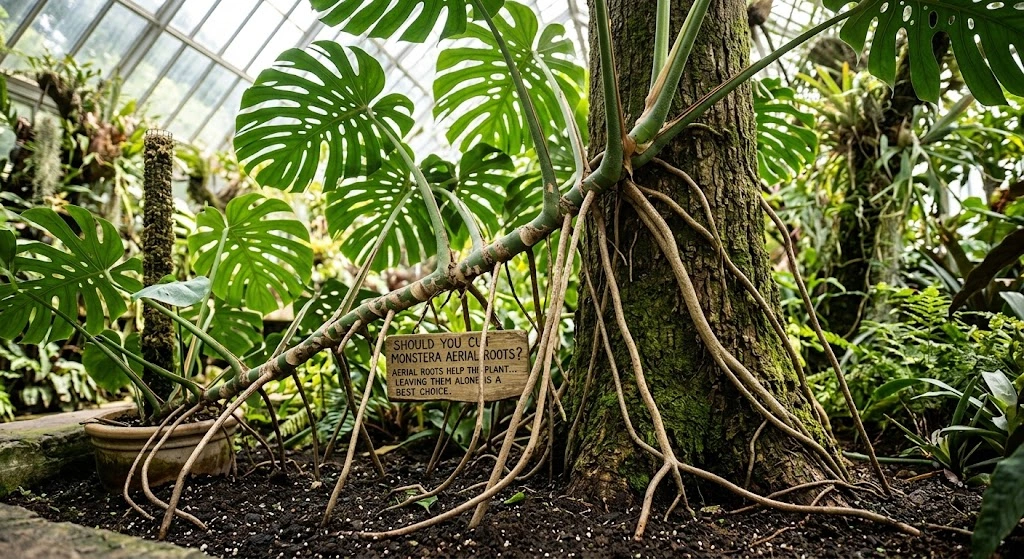
Should You Put Aerial Roots in the Soil?
Yes, you can put them in soil. Many gardeners gently place long aerial roots into the potting mix which may be helpful. This may help the roots to collect extra moisture. Bend them slowly so they do not break and put water in pot before bending them. Some people leave them outside the pot while others guide them on a moss pole. Both methods work better.
Can You Put Aerial Roots in Water?
Yes you can but only if they remain attached to the plant. Some indoor gardeners place long aerial roots into a small container of clean water.
If you try this:
* Change the water often.
* Keep it clean.
* Do not let the stem stay underwater.
This method can provide extra moisture but it is not necessary for a healthy Monstera.
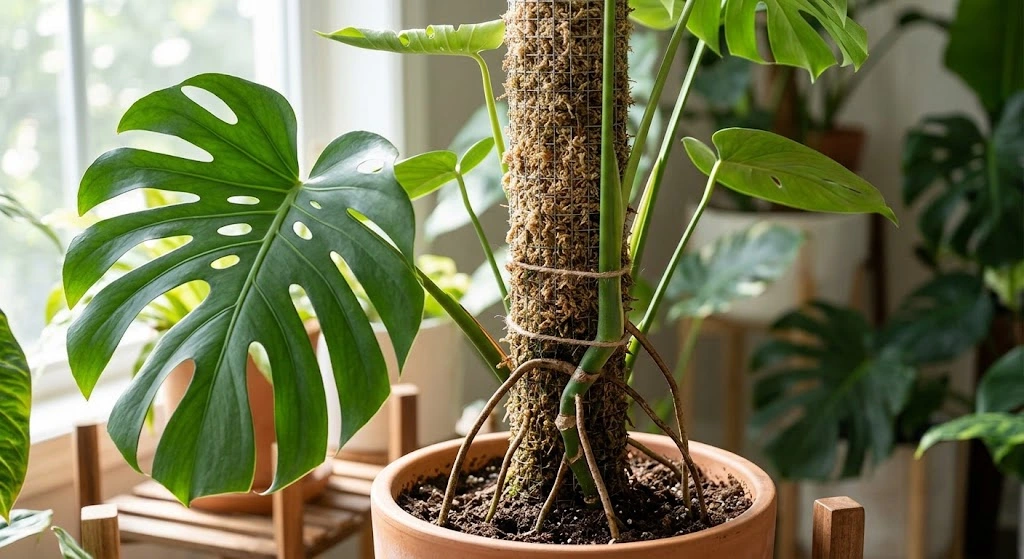
Should You Use a Moss Pole?
A moss pole is best supports for a Monstera plant. As aerial roots touch the moist moss, they begin attaching themselves to it and start climbing according to the time.
A moss pole can help:
* Keep the plant straight upright.
* Support heavy stems.
* Give leaves more space to grow.
* Reduce the need for extra ties.
Many people notice larger and more mature leaves after their Monstera start climbing a support.
Common Problems With Aerial Roots
Most aerial roots never cause problems, but sometimes you may notice changes.\
Dry Roots
Very dry air can make aerial roots look thin.
A small rise in humidity usually help them.
Soft or Black Roots
Roots that become soft, dark or have an unpleasant smell may be staying too wet.
Notice your watering routine and inspect the soil for poor drainage.
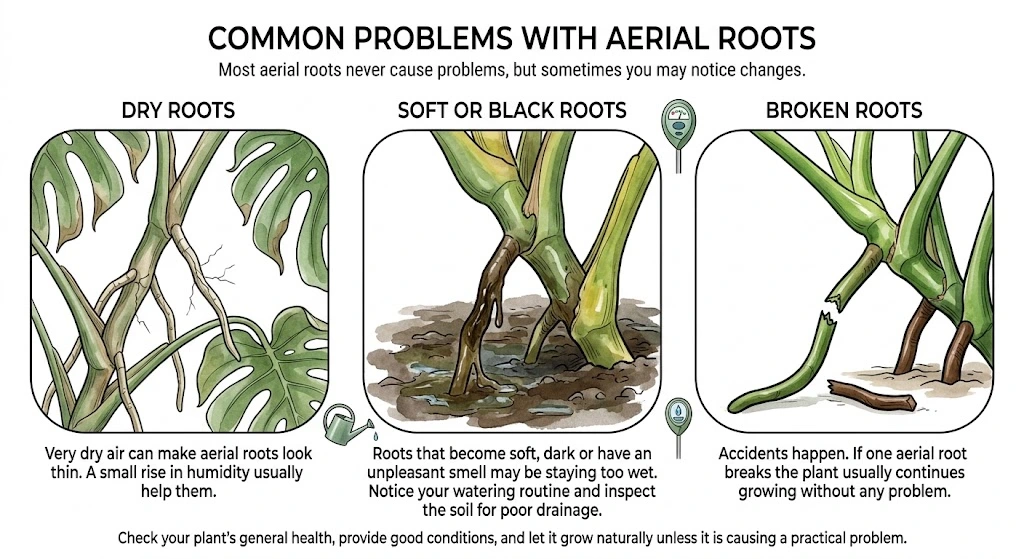
Broken Roots
Accidents happen. If one aerial root breaks the plant usually continues growing without any problem
Simple Care Tips
Simple Care Tips
Healthy aerial roots mostly come from healthy plants.
Here are some easy tips.
Give Bright Light
Place your Monstera where it receives indirect light according to his need.

Water When Needed
Water only after the top part of the soil feels dry.
Use Well Draining Soil
A loose potting mix helps keep the underground roots healthy.
Support the Plant
A moss pole or another sturdy support allows natural upward growth.
Keep the Leaves Clean
Dust can block light from reaching the leaves. Wipe them gently with a soft, damp cloth.
Do Not Worry About Every Aerial Root
Many new plant owners think each aerial root needs special care. In most cases, the best choice is simply letting the plant grow naturally.
Mistakes to Avoid
Avoid these common mistakes if you want a healthy Monstera plant.
* Cutting every aerial root as soon as it grows.
* Pulling roots away from the stem.
* Forcing stiff roots into the soil.
* Letting roots sit in dirty water.
* Growing the plant without proper support.
* Watering too often because aerial roots appear.
* Thinking aerial roots mean the plant needs a bigger pot.
Expert Advice
Aerial roots are a part of Monstera plant growth. Horticulture specialists at the University of Wisconsin Madison note that Monstera produces long aerial roots that attach to nearby trees. For an indoor plant there is usually no need to remove aerial root. If a root is growing toward the soil you can gently guide it into the pot. The University of Connecticut also notes that established aerial roots can be buried with relatively little risk of rot when done correctly. It is also useful to remember that Monstera does not have only one kind of root. Botanical research on Monstera deliciosa found aerial roots, aerial roots that enter the soil and smaller roots that grow from those soil entering roots.
So, when you see a long root coming from your Monstera stem there is usually no reason to panic. Check the plant’s overall condition, provide a suitable support and let the root grow naturally unless it is causing a practical problem.
The main goal is not to make every root look neat. Give the plant good light, suitable soil, proper watering, and a stable support. The aerial roots can then perform their natural role as the Monstera grows.
FAQs
Are Monstera plant roots invasive?
Monstera roots can grow aggressively, especially when the plant is mature and has plenty of space. Its aerial roots may spread outward, attach to supports, or reach the soil and root there. In a home, however, they usually are not considered invasive in the same way as an outdoor weed. If grown outdoors in a warm tropical climate, Monstera can become difficult to control and may climb trees or structures.
What is the usual price of a healthy Monstera Deliciosa?
A healthy standard green Monstera deliciosa commonly costs around $10–$250 USD, depending on its size, age, pot size, leaf development, and seller. Small juvenile plants can be found near the lower end, while large, mature plants with well-developed leaves can cost considerably more. Variegated forms such as Albo and Thai Constellation are usually much more expensive.
What are the uses of aerial roots?
Monstera aerial roots have several important functions. They help the plant climb and anchor itself to trees or other supports. When aerial roots reach moist soil or a suitable growing medium, they can also develop into functioning roots. Indoors, you can guide them toward a moss pole or another suitable support. This helps the Monstera grow upward and provides better structural support.
How do you take care of a Monstera plant?
Give your Monstera bright, indirect light, a well draining potting mix, and water when the upper layer of soil has dried slightly. Avoid keeping the soil constantly wet because excessive moisture can contribute to root rot. Keep the plant warm, provide moderate to high humidity when possible, and give mature vines a moss pole, trellis or similar support. You can also wipe dust from the leaves and fertilize during active growth.