
Care Guide of Monstera deliciosa
A Monstera deliciosa having a strong stem and green leaves is healthy and it didn’t need attention on daily base. Just give it the right light, water, soil and space it will show you the best results of its fast growth. Most problems happen because of too much water, poor drainage or not enough light you have to take care of them. If you understand its basic needs your plant can grow large leaves, strong stems and healthy roots for many years and made your place beautiful. University Extension guidance also recommends bright indirect light, well draining soil, warm temperatures and watering only after the top layer of soil becomes dry. so you also have to check the soil by finger touch before watering it.
Light Requirements
Light is one of the main important thing which can affect the speed of growth. Monstera deliciosa grows best in bright indirect sunlight. Place it near a window where it receives plenty of natural indirect light for fulfilling its needs and made its growth faster. Morning sunlight is usually gentle enough for a few hours but not for a long time because it is direct sunlight and it can affect the leaves.
If the plant stays in a dark room for a long time period you may noticed that:
• Smaller leaves
• Fewer natural holes and splits
• Slow growth
• Long stems reaching toward the window

A lot of direct sunlight can burn the leaves and leave dry brown patches or may cause many other serious problems if you didn’t notice it.
Best location: Place the plant near an east facing window or a few feet away from a south or west facing window with a thin curtain.
Watering Schedule
Many people destroy their monstera because they water it too much. Instead of watering on a fixed day every week you have to check the soil first by finger touch. Push your finger about 1–2 inches into the soil. If it feels dry it the best time to water the plant.
After watering:
• Let extra water drain from the pot.
• Empty the saucer underneath.
• Never leave the roots sitting in water for a long time.
During warm months watering is usually needed about once a week or more according to soil condition. During cooler months the soil stays wet for a long time period so watering less is good. The exact timing depends on light, temperature, humidity and pot size.
Best Soil
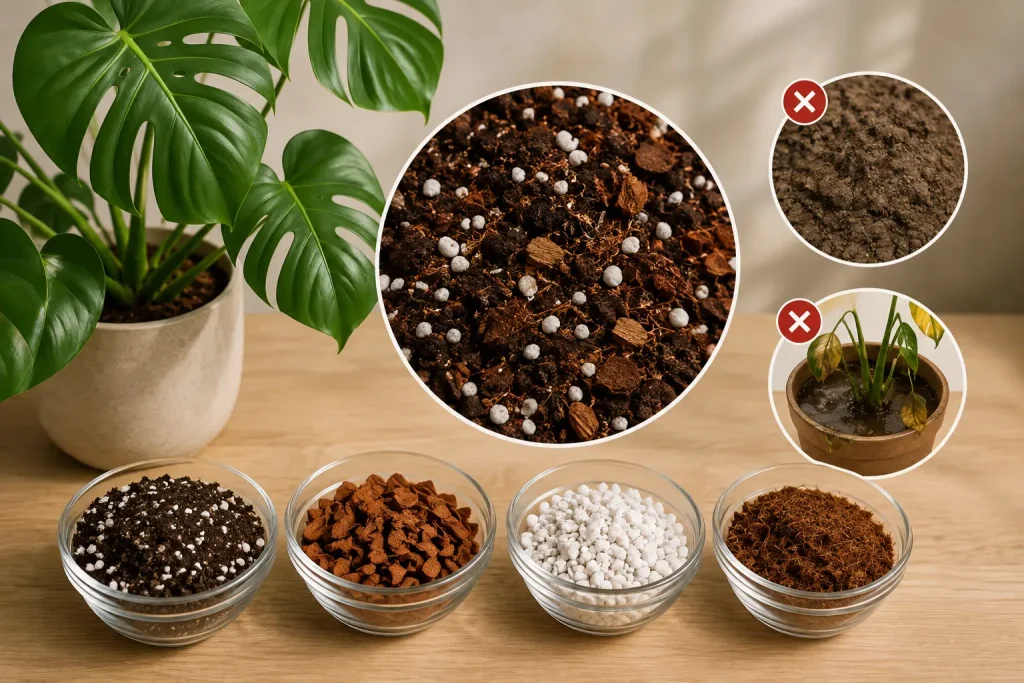
Use the loose soil for Monstera deliciosa because it allows both air and water to move around the roots and made the plant feel fresh.
A good mix usually contains:
• High quality indoor potting mix
• Orchid bark
• Perlite or pumice
• Coco coir or peat free material
Heavy garden soil keeps too much water around the roots which can become the reason of plant destroy . A loose mix dries more evenly and helps roots stay healthy and made plant happy.
Temperature
Monstera grows fast in normal indoor temperatures so you didn’t need any special temperature for monstera growth. Just you have to check the ideal range of temperature is 18°C to 27°C (65°F to 80°F).
You have to try to keep the plant away from:
• Cold drafts
• Air conditioners
• Heating vents
• Frost
Sudden temperature changes can made some slow growth and damage leaves.
Humidity
The Monstera deliciosa plant comes from tropical forests so it likes moderate to high humidity. A humidity level above 50% usually keeps the leaves looking healthy and made the stem strong.
If the place where you plant the monstera deliciosa very dry you can:
• Place plants close together.
• Use a humidifier.
• Keep the plant away from heating vents.
Very dry air may cause brown leaf edges especially during winter.
Fertilizer
Monstera does not need a lot amount of fertilizer. You just have to feed the plant in active growing season in spring and summer. Reduce feeding the plant during winter season because growth naturally slows down and it does not harm the plant. Too much fertilizer can damage the roots and leave white salt deposits on the soil surface and may cause many other problems.
Choosing the Right Pot
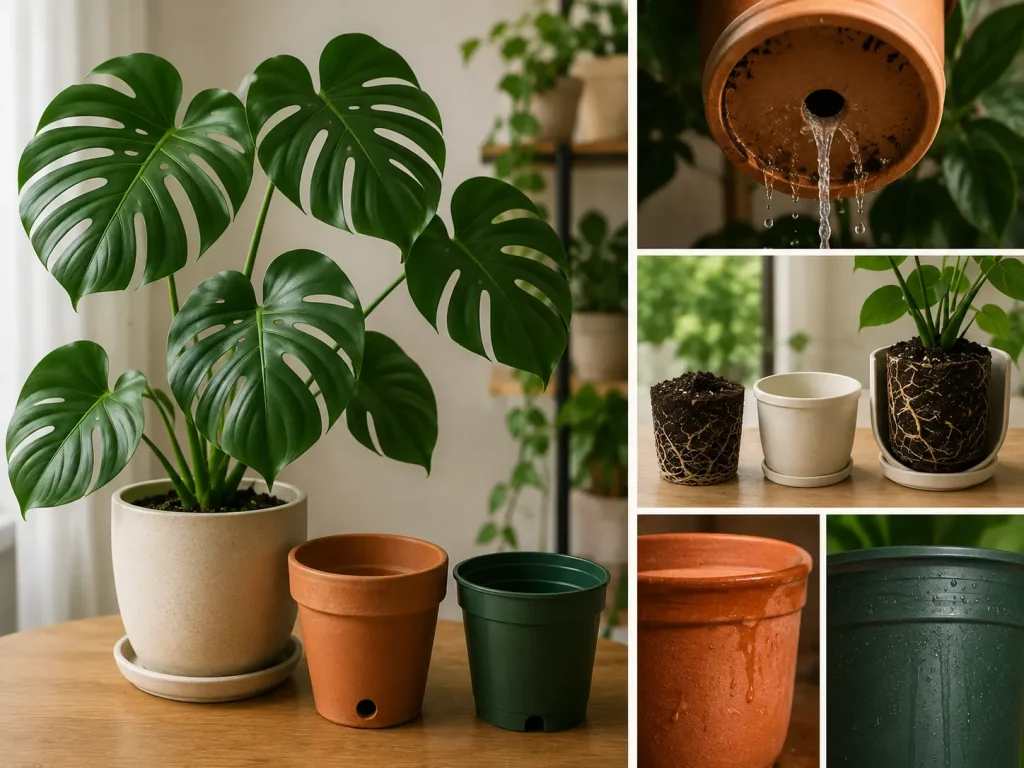
The pot plays a big part in keeping roots healthy.
Choose a pot that:
• Has drainage holes
• Is only slightly larger than the root ball
• Is strong enough to support the plant as it grows
Terracotta pots dry faster while plastic pots hold moisture longer both work well if watering is adjusted to match the pot type.
Repotting
Lorem ipsum dolor sit amet, consectetur adipiscing elit. Ut elit tellus, luRepot your Monstera every 1–2 years and also sooner if roots begin growing out of the drainage holes.
When repotting:
1. Choose a pot one size larger.
2. Remove old, damaged roots if needed.
3. Add fresh soil mix.
4. Water after repotting.
Moving to a pot that is much larger than the previous one may keep the soil wet for too long.ctus nec ullamcorper mattis, pulvinar dapibus leo.
Support With a Moss Pole or Trellis
Monstera is a climbing plant. In nature it climbs trees while at home giving it a moss pole or other support can helps the stems grow upward instead of falling over.
A climbing plant often develops:
• Larger leaves
• Stronger stems
• Better leaf splits as it matures
Tie the stems loosely with soft plant ties and guide the aerial roots toward the support.
Pruning
Pruning keeps your plant neat and healthy.
Remove:
• Yellow leaves
• Brown leaves
• Broken stems
• Dead growth
Always use sharp pruning shears to lower the chance of spreading disease.
Cleaning the Leaves
Large leaves collect dust on them according to time.
Wipe them with a soft damp cloth every few weeks softly.
Clean leaves can receive more indirect sunlight and make it easier to notice pests or other problems early. Penn State Extension also recommends cleaning dusty leaves as part of routine care.
🌱 Spring
New growth usually begins during spring.
- Water more often if the soil dries faster.
- Begin regular feeding.
- Repot if the plant has become root-bound.
☀️ Summer
This is the fastest growing season.
- Check soil moisture more often.
- Protect the plant from harsh afternoon sunlight.
- Maintain good humidity during hot weather.
🍂 Fall
Growth starts slowing down.
- Reduce watering frequency.
- Use less fertilizer.
- Continue checking for pests.
❄️ Winter
The plant rests during the colder months.
- Water only when the soil becomes dry.
- Stop or greatly reduce feeding.
- Keep away from cold windows and heaters.
- Provide as much bright indirect light as possible.
Final Thoughts
Once you learn the basic of monstera deliciosa it’s care become easy for you. Some needs of monstera deliciosa are bright indirect light, well draining soil, proper watering and fertilizers in the season of growth are the foundations of a healthy monstera deliciosa plant. Don’t follow the same routine of plant care just have to check the condition of a plant and then fulfil it’s needs. Remember that Monsteras are naturally slow to mature so patience is necessary. With continue care your plant will reward you with larger leaves, stronger stems and the beautiful natural splits that make it one of the world’s most popular houseplants and made the look of your place amazing and beautiful. By avoiding some of the common mistakes such as overwatering and poor drainage you can enjoy the growth of Monstera for many years. Whether you’re growing your first Swiss cheese plant or caring for a mature specimen you have to follow the tips in this guide it will help’s your Monstera stay healthy for a long time and full of lush green foliage throughout every season.
FAQs
How often should I water a Monstera deliciosa?
Water your Monstera deliciosa when the top 2–3 inches (5–7 cm) of soil feel dry. Watering frequency depends on the season, temperature, humidity, and light. Overwatering is one of the most common causes of root rot.
Does Monstera deliciosa need direct sunlight?
No. Monstera deliciosa grows best in bright, indirect light. A few hours of gentle morning sun are usually fine, but strong afternoon sunlight can scorch the leaves and leave brown patches.
Why are my Monstera leaves not splitting?
Young plants naturally produce solid leaves. Mature Monsteras develop splits (fenestrations) when they receive enough bright indirect light, proper nutrition, adequate humidity, and support such as a moss pole.
What is the best soil for Monstera deliciosa?
A loose, well-draining soil mix works best. A mixture of high-quality potting soil, orchid bark, perlite or pumice, and coco coir provides excellent drainage and airflow for healthy roots.
How often should I fertilize my Monstera?
Feed your Monstera every 4–6 weeks during spring and summer with a balanced liquid houseplant fertilizer diluted according to the manufacturer’s instructions. Reduce or stop feeding during fall and winter when growth slows.
When should I repot my Monstera deliciosa?
Repot every 1–2 years or whenever roots begin growing out of the drainage holes or circling inside the pot. Choose a pot that is only one size larger than the current one.