Monstera deliciosa VS Monstera adansonii
Monstera deliciosa and Monstera adansonii are most famous houseplants. When you see them first time they can look quite similar because both have green leaves havind natural holes. But both of they are different plants with different leaf shapes, sizes, growth habits and care needs. If you are trying to choose between Monstera deliciosa and Monstera adansonii you have to know these differences which can make the choice easier.
Monstera Deliciosa vs Monstera Adansonii at a Glance
| Feature | Monstera deliciosa | Monstera adansonii |
|---|---|---|
| Common name | Swiss cheese plant | Swiss cheese vine |
| Leaf size | Large | Smaller |
| Leaf shape | Broad and heart shaped | Narrower and more oval |
| Leaf holes | Holes and splits as the plant matures | Mostly holes inside the leaf |
| Growth habit | Large climbing plant | Smaller climbing or trailing vine |
| Mature size indoors | Can become very large | Usually stays smaller |
| Stem | Thick and strong | Thin and flexible |
| Space needed | More space | Less space |
| Best for | Large indoor spaces | Small rooms and shelves |
| Support | Moss pole or other support | Pole or trellis can help |
What is Monstera Deliciosa?
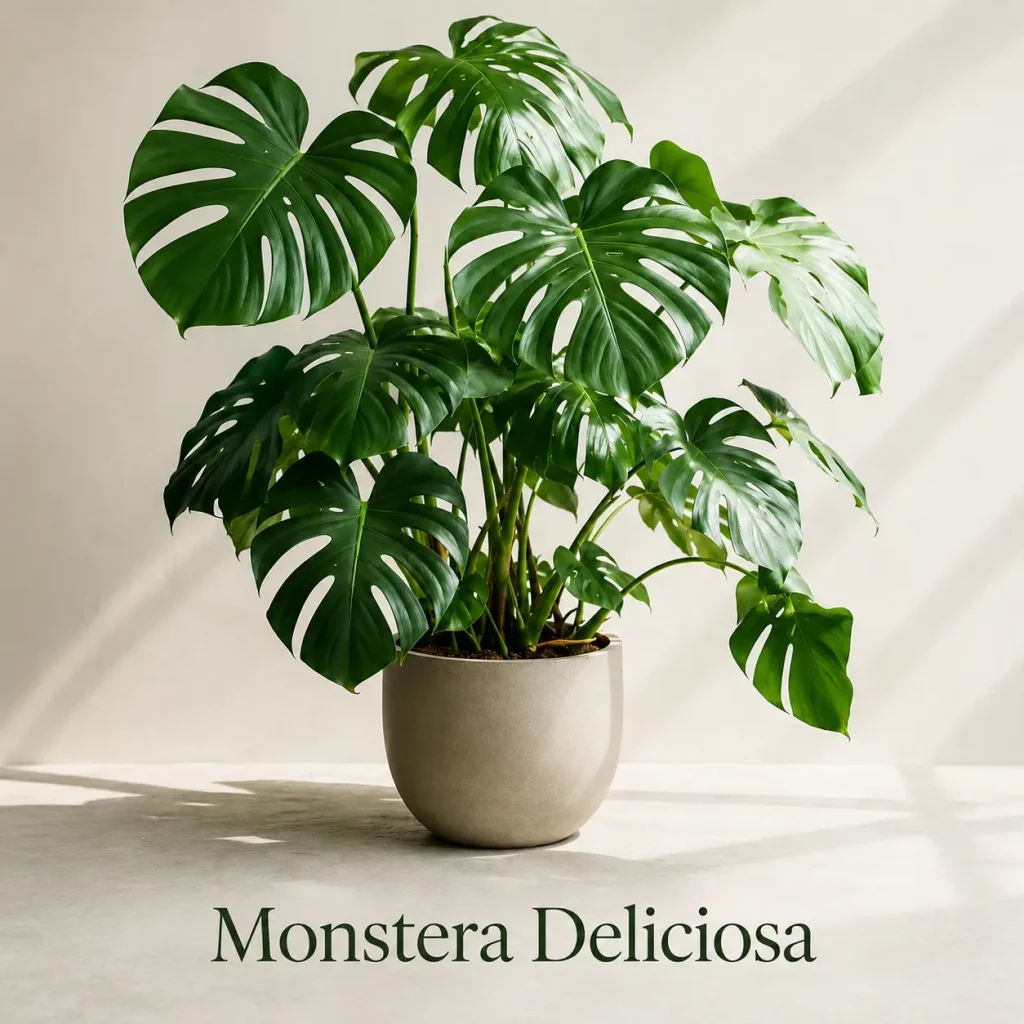
Monstera deliciosa is a type of a monstera plant known for its large beautiful leaves. It is native to parts of tropical Central America where it grows as a climbing plant. Young leaves are usually smaller and may have holes. As the plant gets older and receives suitable growing conditions its leaves can develop more fenestrations which are the natural openings found in Monstera leaves. A Monstera deliciosa can become large indoors. Its thick stems and large leaves make it easy to find.
What is Monstera Adansonii?
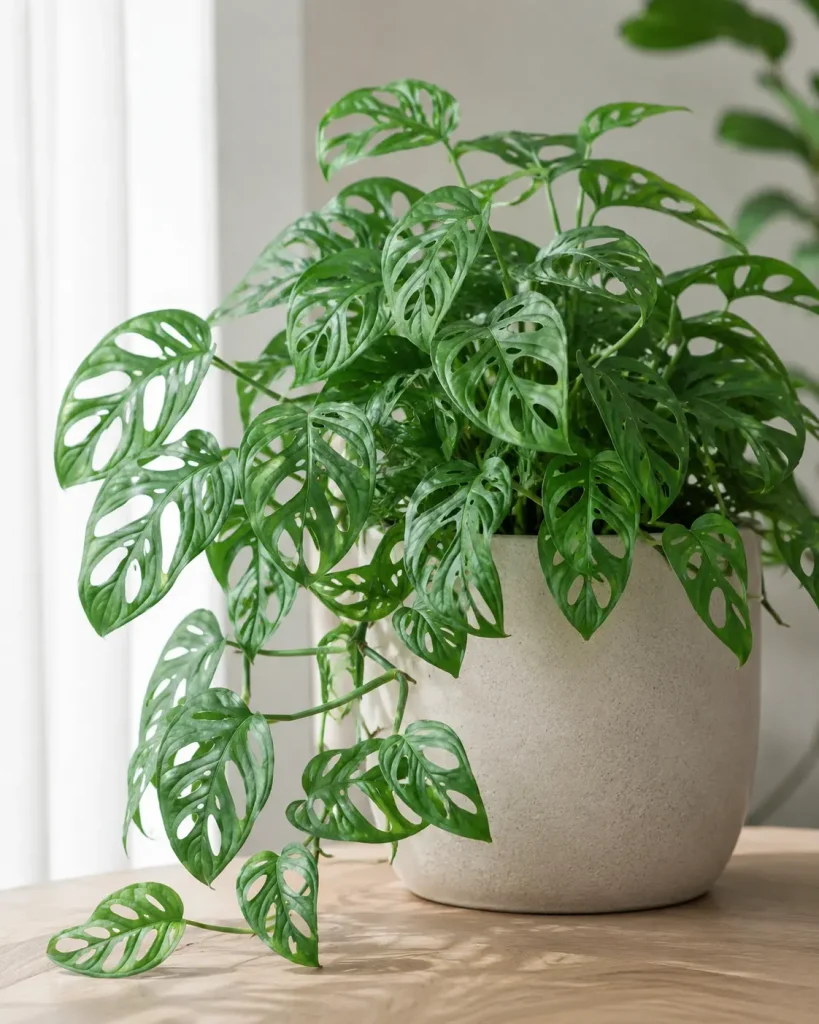
Monstera adansonii is also a specie of a monstera plant. It is smaller than Monstera deliciosa in size and is often chosen for small homes. Its leaves are usually smaller in size. The most noticeable features is the number of holes that can appear inside the leaf. It can grow upward when given support. It usually takes less space than Monstera deliciosa it can be a good choice for smaller indoor areas where space is limited.
Difference
1. Leaf Size
Leaf size is one of the easiest ways to find the difference between both of the plant’s.
Monstera deliciosa develops much larger leaves. Under good growing conditions the leaves can become very large.
Monstera adansonii has much smaller and thin leaves. Its leaves can still become fairly large on a mature climbing plan, but they generally remain smaller and thinner than those of Monstera deliciosa.
2. Leaf Shape
The two plants also have different leaf shapes.
Monstera deliciosa usually has broad leaves with a rounded or heart like outline. Big leaves can become wide and deeply divided.
Monstera adansonii has narrower shaped leaves. The leaf surface often looks more amazing and the holes can take up a large part of the leaf.
3. Leaf holes and splits
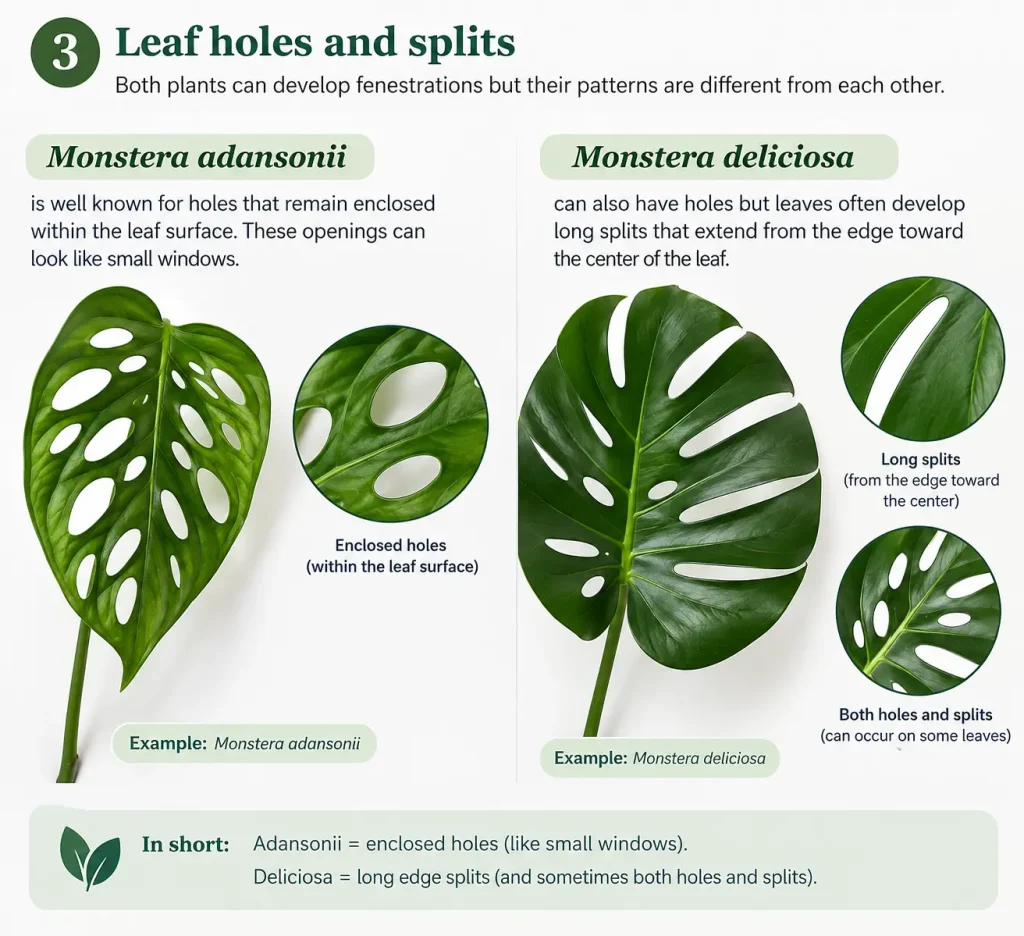
Both plants can develop fenestrations but their patterns are different from each other.
Monstera adansonii is well known for holes that remain enclosed within the leaf surface. These openings can look like small windows.
Monstera deliciosa can also have holes but leaves often develop long splits that extend from the edge toward the center of the leaf. Some leaves can have both internal holes and edge splits.
4. Plant Size
Monstera deliciosa can become very large at indoor. With proper light, water and room space for its roots growing it can produce large leaves and long stems.
Monstera adansonii is generally a small size plant. Its stems can still grow several feet long especially when trained to climb but the plant usually takes up less room than a mature Monstera deliciosa.
5. Stem Thickness
You can also see a difference in stem of both plants.
Monstera deliciosa has thicker stems as it grows while monstera adansonii has thinner and flexible stems. This makes it suitable for climbing structures, shelves and hanging baskets.
6. Growth Habit
Both plants have a climbing ability.
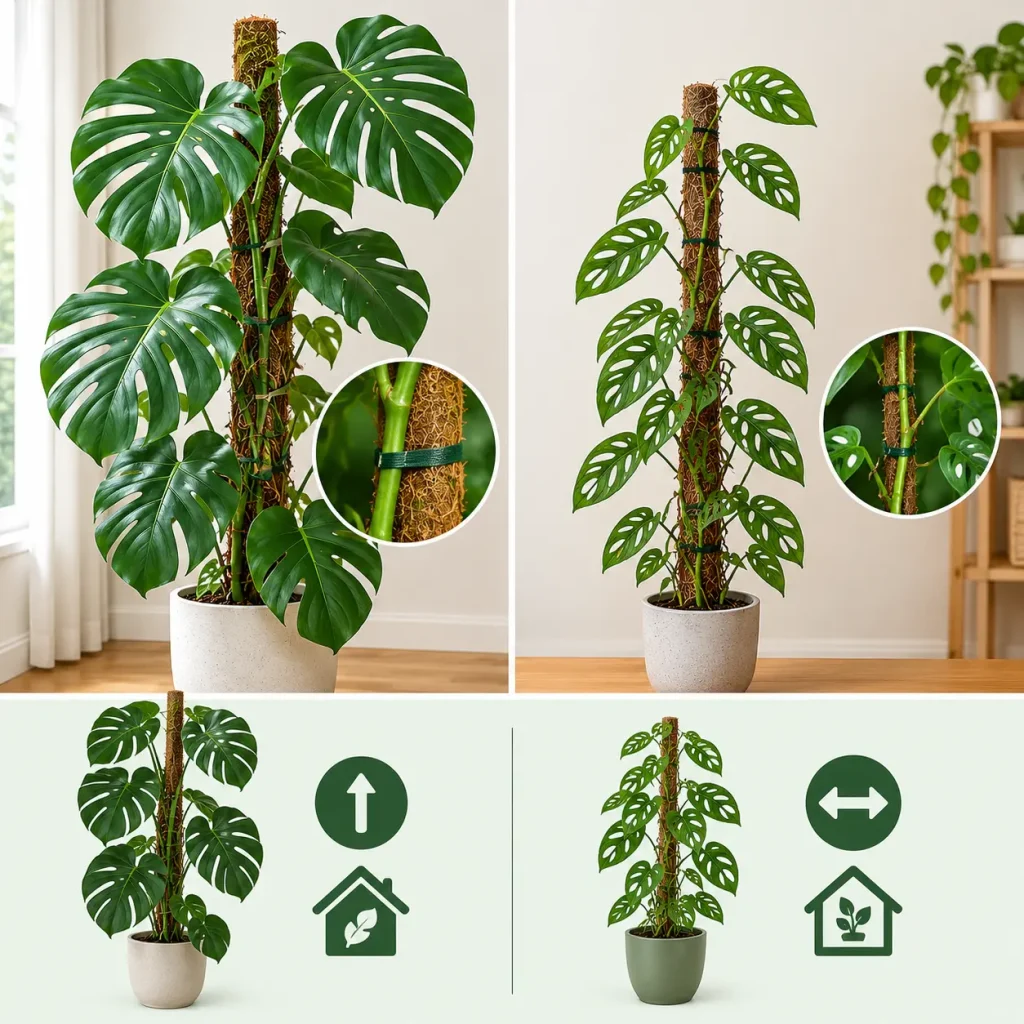
Monstera deliciosa can climb tree trunks in forest and need a support like a moss pole at indoor. Indoors a moss pole can give the plant something to grow against.
Monstera adansonii also likes to climb. Its thinner stems make it easy to train along a pole.
7. Light Requirements
Both of the plants grow well in bright indirect sunlight. A position close to a bright window can work well but direct sunlight through glass can burn the leaves or also cause other serious problems.
Monstera deliciosa need lower sunlight but its growth become slower and new leaves may be smaller.
Monstera adansonii also needs good sunlight for healthy growth. If sunlight is too weak plant may produce smaller leaves and longer spaces between leaves.
9. Humidity
Monstera adansonii also responds good to higher humidity because its thinner leaves can be more sensitive to very dry indoor air.
Monstera deliciosa also benefit from good humidity especially during active growth seasons such as summer or spring.
10. Soil
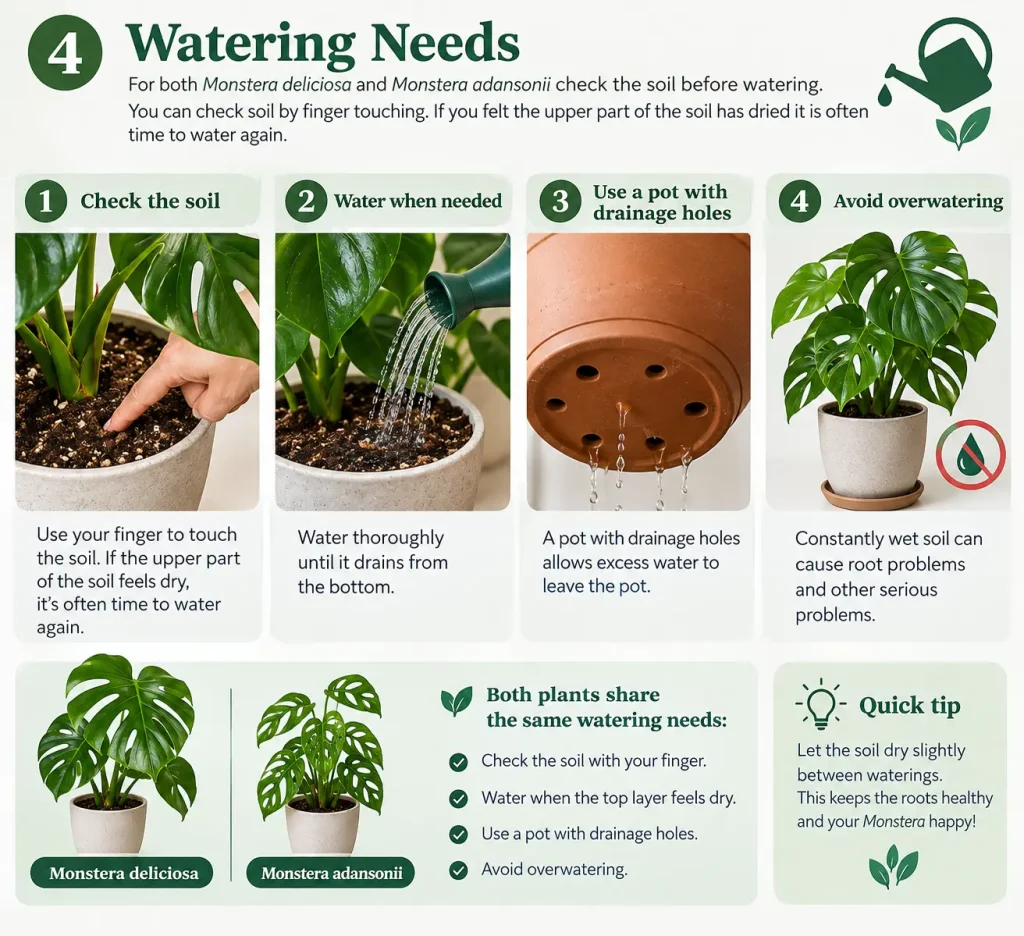
Both plants require a good soil mix that drains well while still keeping moisture around the roots.
A best houseplant mix may include materials such as:
* Potting soil
* Orchid bark
* Perlite
* Coco coir
The main goal is to avoid heavy soil that stays wet for too long. Good drainage is very important when watering on daily base.
11. Climbing Support
Monstera deliciosa needs a strong climbing support. A moss pole or similar support can help keep the plant upright and help’s in supporting the stem in carry the weight of leaves.
Monstera adansonii can also climb a pole. Since its stems are thinner it can work well with a smaller support.
If you want a tall indoor plant with large leaves Monstera deliciosa is usually the better choice. If you want a smaller vine that can climb without taking up as much room Monstera adansonii may be better fit.
12. Growth Speed
When the proper needs of both plants met they grow very well and fast. Growth can slow down only when a plant does not gets its full needs and receives poor sunlight, lacks water or experiences other growing problems.
Monstera deliciosa may slow in grow at start because it is building a larger plant structure. Once established it can produce new leaves during active growth.
Monstera adansonii can also grow quickly and may send out long stems that need regular training.
13. Care Difficulty
Monstera deliciosa is a good choice for someone who likes a large statement plant and has enough space.
Monstera adansonii is easier for someone who likes a smaller plant or enjoys growing vines.
The main care points for both are similar:
* Give bright indirect sunlight.
* Use well draining soil.
* Do not keep the roots sitting in water.
* Check the soil before watering.
* Provide climbing support when plant grows.
* Give the plant enough space for growing.
* Check leaves and stems condition for pests.
Final Takeaway
Monstera deliciosa and Monstera adansonii are different from each other. Both of plant have different abilities. Monstera deliciosa has thicker stems and can produce very large leaves with holes while Monstera adansonii has thinner leaves and is known for its enclosed leaf holes. Monstera adansonii also has flexible climbing stems which can helps in climbing.
Whichever one you choose, good light, well draining soil, proper watering and suitable support can help it grow into a healthy houseplant.
FAQs
Which One Is Better for Small Spaces?
For a small room, Monstera adansonii is usually the easier choice. Its leaves are smaller, and its stems can be trained around a compact support. It can also work well in a hanging basket if you prefer a trailing plant.
Which One Is Better for Large Spaces?
Monstera deliciosa is a strong choice for a large room. Its broad leaves can create a large indoor plant display, especially when the plant has reached maturity.
Can They Grow Together?
Yes. Monstera deliciosa and Monstera adansonii can be grown in the same home. They have similar basic care needs, including bright indirect light, good drainage, and careful watering.
Monstera Deliciosa vs Monstera Adansonii: Which Should You Choose?
Both can make good houseplants when their basic needs are met. The better choice depends mainly on the amount of space you have and the type of plant you want to grow.