
Monstera Obliqua
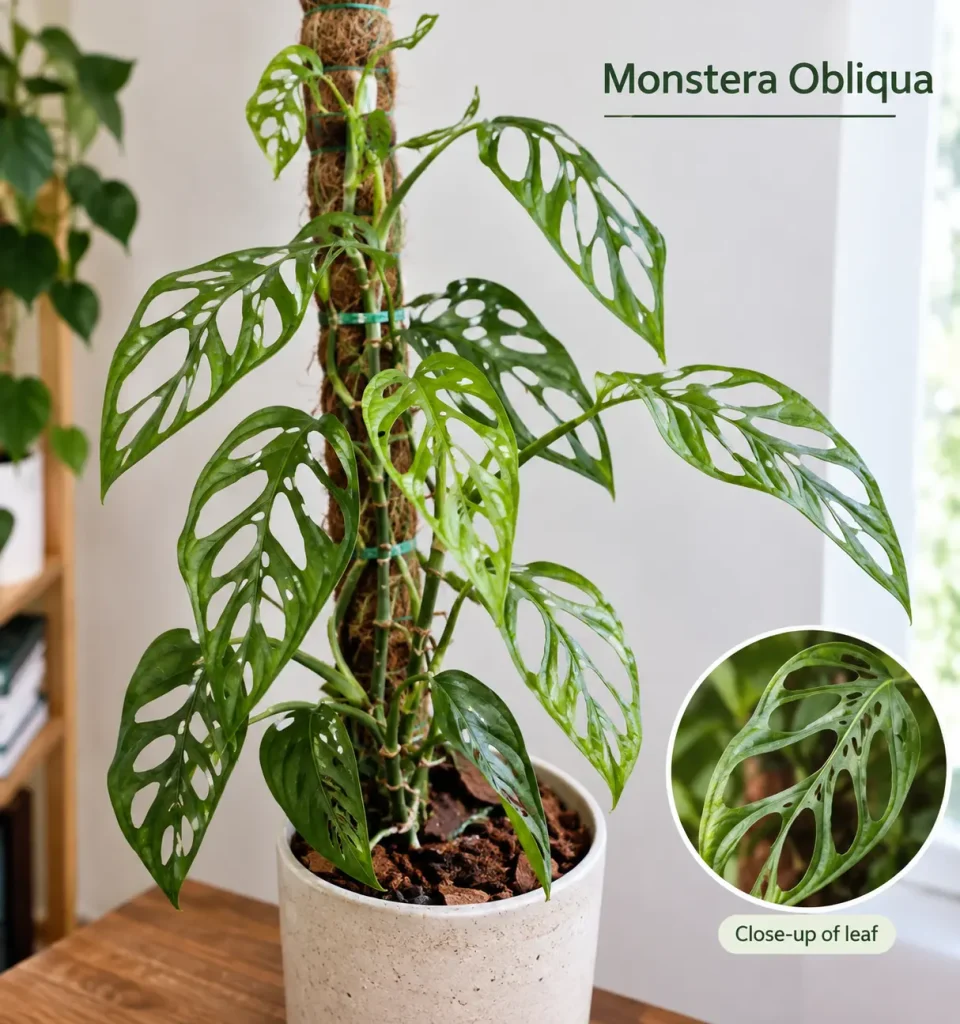
Monstera Obliqua is a rare tropical plant known for its leaves which have large holes and thin green sections. In some plants these open spaces take up most of the leaf, making the leaves look almost like a green net. This unusual feature has made the plant popular or rare among houseplant collectors. The plant belongs to the Araceae family which also includes other well known indoor plants such as Monstera deliciosa and Philodendron species.
What is Monstera Obliqua?
Monstera Obliqua is a climbing plant in the genus Monstera. It grows by attaching itself to nearby trees and other supports. In its natural habitat it uses its aerial roots to climb toward better light. Its best known feature is its thin perforated foliage. The holes can cover a large part of each leaf leaving only narrow strips of green tissue between them. However not every leaf looks the same. The size and number of holes can change as the plant grows.
🌿 Monstera Obliqua: Quick Facts
Learn about the plant's leaves, natural habitat, light, water, soil, and growing needs.
| Feature | Details |
|---|---|
| 🌱 Common Name | Monstera Obliqua |
| 🔬 Scientific Name | Monstera obliqua |
| 🌿 Plant Family | Araceae |
| 🌎 Native Range | Parts of Central and South America |
| 🌳 Growth Habit | Climbing or creeping |
| 🍃 Leaf Shape | Thin leaves with large holes |
| ☀️ Light Needs | Bright, indirect light |
| 💧 Water Needs | Water when the upper potting mix begins to dry |
| 💦 Humidity | Moderate to high humidity |
| 🪴 Soil | Loose, airy, well-draining potting mix |
| 📈 Growth Speed | Often slow in indoor conditions |
| 🌱 Best Growing Method | A pot with climbing support and good drainage |
What Does Monstera Obliqua Look Like?
Monstera Obliqua has a climbing growth habit and delicate green leaves. Its appearance can change with age, growing conditions and the form of the plant.
1. Leaves With Large Holes
2. Thin Leaf Tissue
3. A Climbing Growth Pattern
4. Small Flowers
Why it can be difficult to grow indoors
A home may have dry air sudden temperature changes, limited light and poor airflow. These conditions can make it harder to grow a delicate tropical plant. Monstera Obliqua may also grow slowly, so changes in its health can take time to become visible. A steady care routine is usually more helpful than making frequent changes to its location, soil or watering schedule.
Monstera Obliqua Care Guide
Growing Monstera Obliqua at home requires attention to light, water, humidity, temperature and the condition of its roots. The aim is to provide conditions that support healthy growth without keeping the plant too wet.
1. Light Requirements
Monstera Obliqua grows best in bright, indirect light. Place it near a window where it receives plenty of daylight without strong direct sunlight falling on its leaves for long periods.
2. Watering Monstera Obliqua
Watering is one of the most important parts of caring for this plant. Its roots need moisture but they also need oxygen. Check the upper part of the potting mix before watering. If the surface has started to dry check a little farther down with your finger or a wooden stick. Water when the mix is beginning to dry rather than waiting until the whole root area becomes completely dry.
3. Humidity Requirements
Monstera Obliqua is a tropical plant that generally does well in humid air. Dry indoor air can cause leaf edges to turn brown especially when combined with irregular watering.
A room humidity level around 60–80% can be a useful target for growing delicate tropical plants, although the best level depends on airflow, temperature and the plant’s condition.
4. Temperature Requirements
Monstera Obliqua generally prefers warm conditions. A temperature range of about 18–27°C (65–81°F) is a reasonable starting point for indoor growing.
5. Best Soil for Monstera Obliqua
The roots need a potting mix that holds some moisture but does not remain waterlogged. Dense garden soil is usually unsuitable for this purpose because it can become compacted in a container.
A loose mix can include:
* Coco coir or peat based potting mix: Helps retain moisture.
* Orchid bark: Creates larger air spaces.
* Perlite or pumice: Improves drainage and airflow.
* A small amount of suitable organic material: Helps the mix retain nutrients and moisture.
6. Choosing the Right Pot
Choose a pot with drainage holes at the bottom. A pot without drainage can trap excess water around the roots and raise the risk of root rot.
7. Feeding and Fertilizer
Monstera Obliqua can benefit from fertilizer during periods of active growth. Use a balanced liquid fertilizer made for indoor foliage plants and follow the label instructions. For a delicate plant, it is safer to begin with a lower concentration than to apply a strong dose. Too much fertilizer can damage roots and cause brown leaf tips.
8. Providing Climbing Support
A climbing support can help Monstera Obliqua grow in a way that resembles its natural habit.
🌿 Monstera Obliqua: Quick Facts
Learn about the plant's leaves, natural habitat, light, water, soil, and growing needs.
| Feature | Details |
|---|---|
| 🌱 Common Name | Monstera Obliqua |
| 🔬 Scientific Name | Monstera obliqua |
| 🌿 Plant Family | Araceae |
| 🌎 Native Range | Parts of Central and South America |
| 🌳 Growth Habit | Climbing or creeping |
| 🍃 Leaf Shape | Thin leaves with large holes |
| ☀️ Light Needs | Bright, indirect light |
| 💧 Water Needs | Water when the upper potting mix begins to dry |
| 💦 Humidity | Moderate to high humidity |
| 🪴 Soil | Loose, airy, well-draining potting mix |
| 📈 Growth Speed | Often slow in indoor conditions |
| 🌱 Best Growing Method | A pot with climbing support and good drainage |
Common Problems With Monstera Obliqua
- Yellow Leaves
- Brown Leaf
- Edges
- Soft or Blackened Roots
- Slow Growth
- Pests
Final Thoughts
Monstera Obliqua is known for its delicate leaves and unusually large holes. Its appearance makes it different from many common indoor plants but its care needs deserve as much attention as its looks. Fulfil the proper needs of monstera such as light or temperature make your plant growth faster and can represents a beautiful view.
FAQs
🌱 Why is Monstera Obliqua so rare?
Monstera Obliqua is rare in many plant shops because genuine plants are difficult to find and identify. It also needs careful indoor care, which can make it harder to grow and sell in large numbers.
💧 How often should I water Monstera Obliqua?
Water your Monstera Obliqua when the upper part of the potting mix begins to dry. Water thoroughly and let the extra water drain away. Avoid keeping the roots in soggy soil, as this can lead to root rot.
☀️ Does Monstera Obliqua need sunlight?
Yes, Monstera Obliqua needs light to grow well. Place it in bright, indirect light, such as near a window with a sheer curtain. Strong direct sunlight can damage its delicate leaves.
🍃 What is the difference between Monstera Obliqua and Monstera Adansonii?
Monstera Obliqua often has very thin leaves with large holes that cover much of the leaf surface. Monstera Adansonii usually has thicker leaves with more green tissue between the holes. Monstera Adansonii is also easier to find in plant shops.
🪴 Is Monstera Obliqua easy to grow indoors?
Monstera Obliqua can grow indoors, but it may be challenging for beginners. It prefers bright, indirect light, warm temperatures, high humidity, and a loose potting mix with good drainage. Consistent care can help it grow well.