
Natural Habitat and Distribution of Monstera
Monstera is the most famous indoor plant which liked by people all around the world. Its large green leaves and amazing look make it best choice for indoor plant lovers. Many people know Monstera for it’s easy care and growth. Before becoming monstera as a mostly loved house plant it spend many years in forest where it receives light from sun and use its upper roots for climbing on plants surrounding on it.
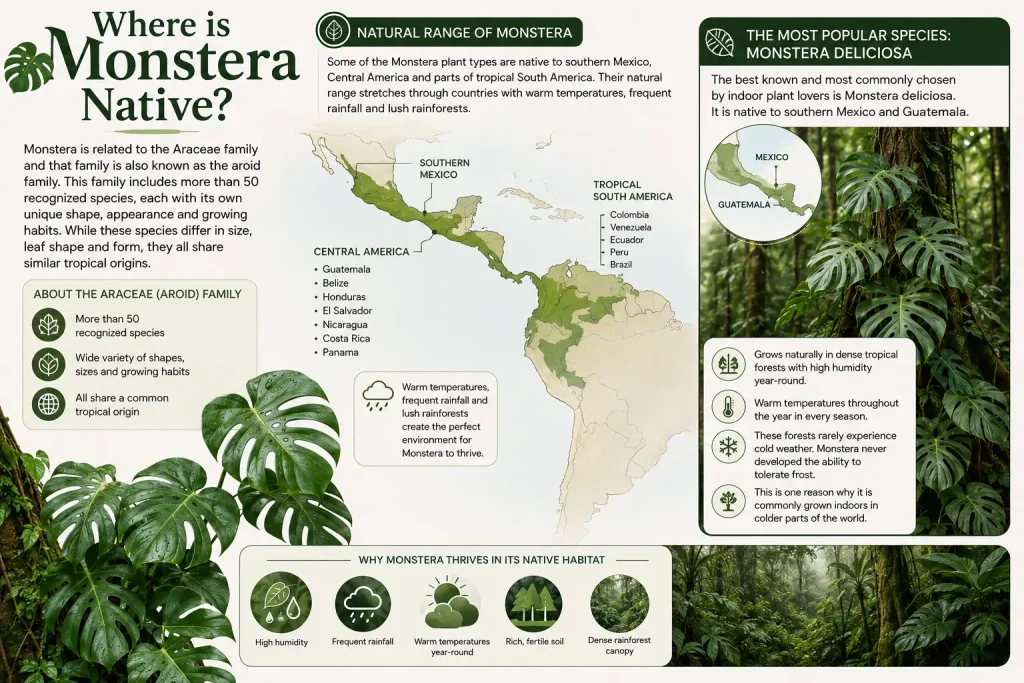
Where is Monstera native?
Monstera is related to the Araceae family and that family is also known as the aroid family. This family tells more than 50 recognized species each has its own unique shape, appearance and growing habits. Also these species are differ in size, leaf shape and all other share similar tropical origins. Some of the Monstera plant types are native to southern Mexico, Central America and parts of tropical South America. Their natural range stretches through countries with warm temperatures, frequent rainfall and lush rainforests. The best species which is common and mostly selected by indoor plant lovers is Monstera deliciosa. It naturally grows in southern Mexico and Guatemala. Here it thrives in dense tropical forests where humidity stays high throughout the year and temperatures remain warm in every season. All the things required for monstera good growth is available there. These forests rarely experience cold weather, Monstera never developed the ability to tolerate frost. This is one reason why it is commonly grown indoors in colder parts of the world.
The Tropical Rainforest: Monstera's Natural Home
The natural place where monstera randomly and mostly grows is tropical rainforest. These forests are the richest ecosystems on Earth, supporting thousands of plant and animal species to live.
Rainforests fulfils all the conditions for Monstera because they offer:
* Warm temperatures year round
* Frequent rainfall
* High humidity
* Rich organic soil
* Protection from harsh sunlight
* Many of trees to climb
In open place the growth of monstera plant between many other plants was amazing because their in forest or other place where many other plants are present the level of temperature and humadity remains best according to plant need. When the monstera start growing more it can climb on the other plants present near on it. The sunlight reach on monstera is also a filtered indirect sunlight because the large plants protect monstera and stops harsh sunlight.
The forest floor is covered by dropped out leaves when they leaves decay and become food they are a best source of fast growth of monstera plant.
How Monstera Grows in forest
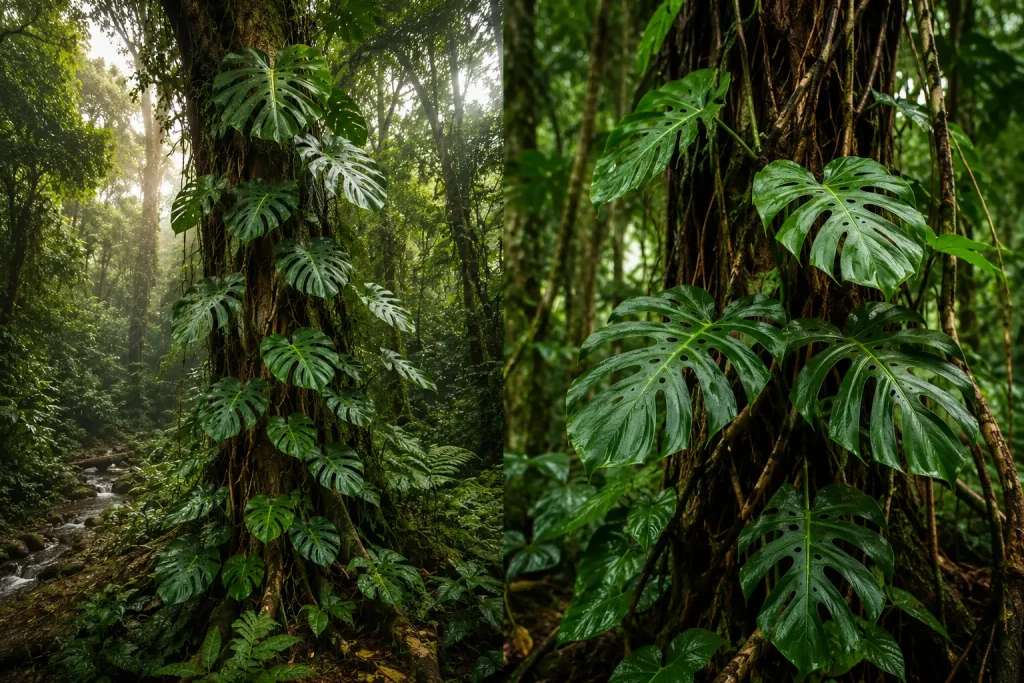
The most interesting things about Monstera is its climbing growth habit.
When the young Monstera plants start growing the sunlight is limited because monstera is on the floor and all the light was covered by big plants surrounding it. The monstera plant didn’t stay on floor hole life when the growth season reaches its grows and start climbing on the plants near on it.
This climbing strategy allows Monstera to reach brighter areas of the forest without investing energy in growing a thick trunk like a tree.
When the plant climbs more higher, it can receives more light and begins producing:
* Larger leaves
* Thicker stems
* Stronger aerial roots
* More noticeable leaf splits and holes
In mature forests some types of Monstera plants can climb above than 20 meters into the tree canopy.
Why Monstera Climbs Trees
Monstera is a vine because it climbs trees but it does not steal nutrients from other plants Trees simply provide support to monstera.
| Benefit | How It Helps Monstera in the Forest |
|---|---|
| 🌿 Better Access to Sunlight | Young Monstera plants start on the rainforest floor where very little sunlight reaches because tall trees block most of it. They climb nearby trees to reach brighter, filtered light. |
| 💧 Protection From Flooding | Climbing above the forest floor helps the plant avoid standing water after heavy rain. Excess water drains away more easily, reducing the risk of root damage. |
| 🌬️ Improved Air Circulation | As the plant grows upward, its stems and aerial roots receive better airflow. Fresh air helps keep the plant healthy and reduces excess moisture around the stem. |
| 📈 More Space to Grow | Climbing allows Monstera to spread its stems and leaves over a larger area instead of competing for limited space on the forest floor. |
The Role of Aerial Roots
| Function | Purpose |
|---|---|
| 🌳 Grip Tree Bark | Anchor the plant securely to trees while climbing. |
| 💦 Absorb Moisture | Take in water from humid air, rain, and moisture on tree bark. |
| 🍂 Collect Nutrients | Absorb nutrients from rainwater, moss, and decaying organic matter trapped on trees. |
| ⚖️ Provide Stability | Help support the plant as it grows taller and develops larger leaves. |
Climate conditions in Monstera's Native Habitat
Monstera has adapted to a stable tropical climate that changes very little throughout the year.
Its native environment typically includes:
* Temperatures between 20°C and 30°C
* Humidity levels above 70%
* Mostly rainfall throughout the year
* Bright but indirect sunlight
* Mild seasonal changes without frost
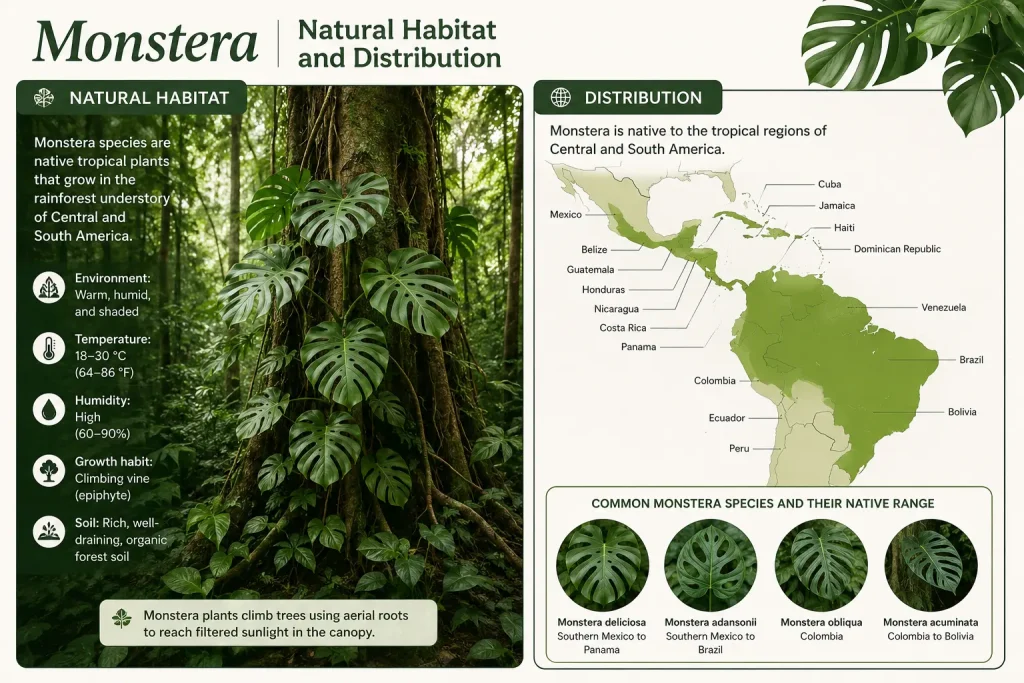
When the climate stays according to the monstera needs the plant grows well and stays healthy for a long time. When grown indoors you have to try to fulfil the needs of monstera plant for good growth.
Why does Monstera have split leaves?
The natural holes and splits present on mature Monstera leaves is known as fenestrations and are one of the plant’s most famous features which make it beautiful and eye catching. Young plants have solid leaves when they receive better light new leaves develop the familiar openings.
Scientists continue to study why these holes came when plant becomes larger but some explanations are widely accepted.
The openings may help:
* Allow sunlight to reach plant’s lower leaves.
* Reduce damage from strong tropical winds.
* Let heavy rain pass through the leaves.
* Lower the chance of large leaves tearing during storms and heavy rain.
Whatever the exact reason is that these natural adaptations help Monstera plant to survive in its rainforest environment.
Natural Distribution beyond its Native Range
Although Monstera originated in Central America and famous in USA but it is now grown and likes across much of the world. Because people like its good looking leaves and easy care, it has been introduced to many tropical and subtropical regions.
Today, Monstera also grows outdoors in places such as:
* Florida
* Hawaii
* Southern California
* Southeast Asia
* Northern Australia
* Parts of India
* Tropical islands throughout the Pacific
* Some places of Africa with warm climates
In some tropical areas the Monstera plant can grows successfully outside cultivation.
In countries with cold winters, the Monstera plant is usually grown indoors because freezing temperatures can seriously damage or kill the plant and it is warm place like plant.
How Its Natural Habitat Influences Indoor Care
| Indoor Care | Why It Matters |
|---|---|
 Indirect Light Indirect Light | Monstera naturally grows beneath the rainforest canopy, where it receives bright but filtered sunlight instead of direct sun. |
 High Humidity High Humidity | Tropical forests stay humid throughout the year, so higher humidity helps keep the leaves healthy, green, and vibrant. |
 Well-Draining Soil Well-Draining Soil | A loose, well-draining soil mix prevents root rot while holding enough moisture for healthy root growth. |
 Warm Temperatures Warm Temperatures | Monstera evolved in warm, frost-free climates, so temperatures between 20°C and 30°C (68°F–86°F) support steady growth. |
 Climbing Support Climbing Support | A moss pole or trellis mimics tree trunks in the wild, encouraging larger leaves, stronger stems, and healthier upward growth. |
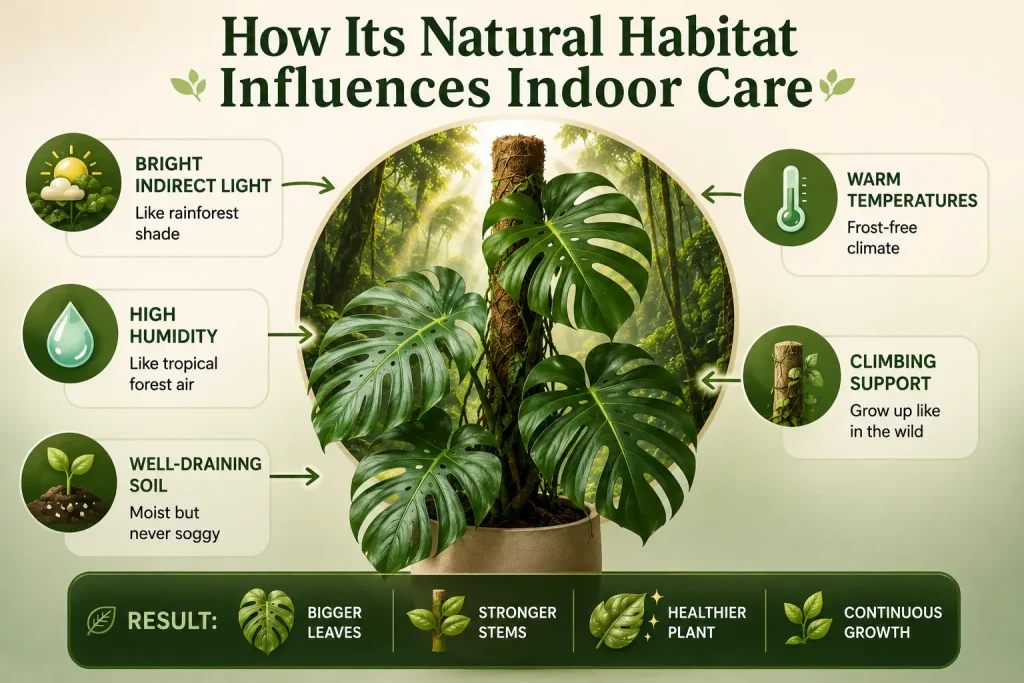
🌱 Results of Providing the Right Conditions
| Benefit | What You’ll Notice |
|---|---|
| 🍃 Larger Leaves | Leaves become bigger and develop more natural splits and holes (fenestrations). |
| 💪 Stronger Stems | The plant grows thicker, sturdier stems that better support large foliage. |
| ✨ Healthier Appearance | The plant looks fuller, greener, and more attractive with vigorous growth. |
| 🚀 Continuous Growth | With the right care, Monstera produces new leaves regularly throughout the growing season. |
A Plant Built for the Rainforest
Every part of Monstera tells the story of its rainforest journey. Its climbing stems help it reach sunlight by climbing on other big plants near it. Its aerial roots attach it to trees and absorb moisture. Its broad leaves capture filtered light . And also its famous leaf holes are adaptations that help it thrive in a challenging tropical environment.
Final Thoughts
It is not any type of miracle that monstera become famous within a day its natural beauty comes from millions of years of adaptation to tropical rainforests where warm temperatures, high humidity, rich soil and towering trees created the perfect environment for it to grow. Then the monstera grows well and represents the beauty of nature.
Native to southern Mexico, Central America and nearby tropical regions Monstera developed many unique features such as aerial roots, climbing stems and split leaves that makes it’s appearance beautiful and eye catching.
By understanding the monstera natural habits and other things related to it you can grow it and can take care of it very properly. If you maintain the things need to monstera for remains healthy it will provides you a good look and made you place eye catching.
FAQs
Where is Monstera naturally found?
Monstera is naturally found in the tropical rainforests of Central and South America. It grows in warm, humid forests, where it climbs trees and thrives beneath the dense canopy in filtered sunlight.
Which countries are part of Monstera's native range?
Monstera species are naturally distributed across countries such as southern Mexico, Guatemala, Belize, Honduras, Costa Rica, Panama, Colombia, Ecuador, Peru, and Brazil, depending on the species.
What type of habitat does Monstera prefer?
Monstera prefers tropical rainforests with high humidity, filtered sunlight, rich organic soil, and consistent moisture. It typically grows in shaded areas with indirect light.
Is Monstera a climbing or ground-growing plant?
Monstera is primarily a climbing plant. It uses aerial roots to attach itself to tree trunks and branches, allowing it to climb toward brighter light while remaining rooted in the forest floor.
Can Monstera grow in direct sunlight in its natural habitat?
No. In the wild, Monstera usually grows under the forest canopy, where it receives bright, filtered, or dappled sunlight rather than prolonged direct sun.