Plant Anatomy of Monstera
Monstera is one of the most famous and loved houseplant because of its large beautiful green leaves and natural leaf holes made on them when they become large. The growing process of monstera is enjoyable. Learning the anatomy of a Monstera helps you to know how it grows and what it needs during its growing process to stay healthy or good.
Every part of monstera plant such as leaf, root, stem and node has a specific job. If any part of a plant is not healthy they whole plant not looks good. Knowing all the plant parts makes it easier to water correctly, prune with confidence, repot at the right time and propagate new plants successfully. This also helps to know that which part of a plant is not healthy and what’s the reason.
What is a Monstera Plant?
Monstera belongs to the Araceae plant family. It is a climbing plant that climbs on trees in forest and need a support like moss pole in indoor for proper and good growth. The most famous species is Monstera deliciosa which is also called the Swiss cheese plant because of the natural holes on leaves that appear in its mature leaves. These unique leaves make it one of the most recognized indoor plants around the world and it is mostly liked in USA.
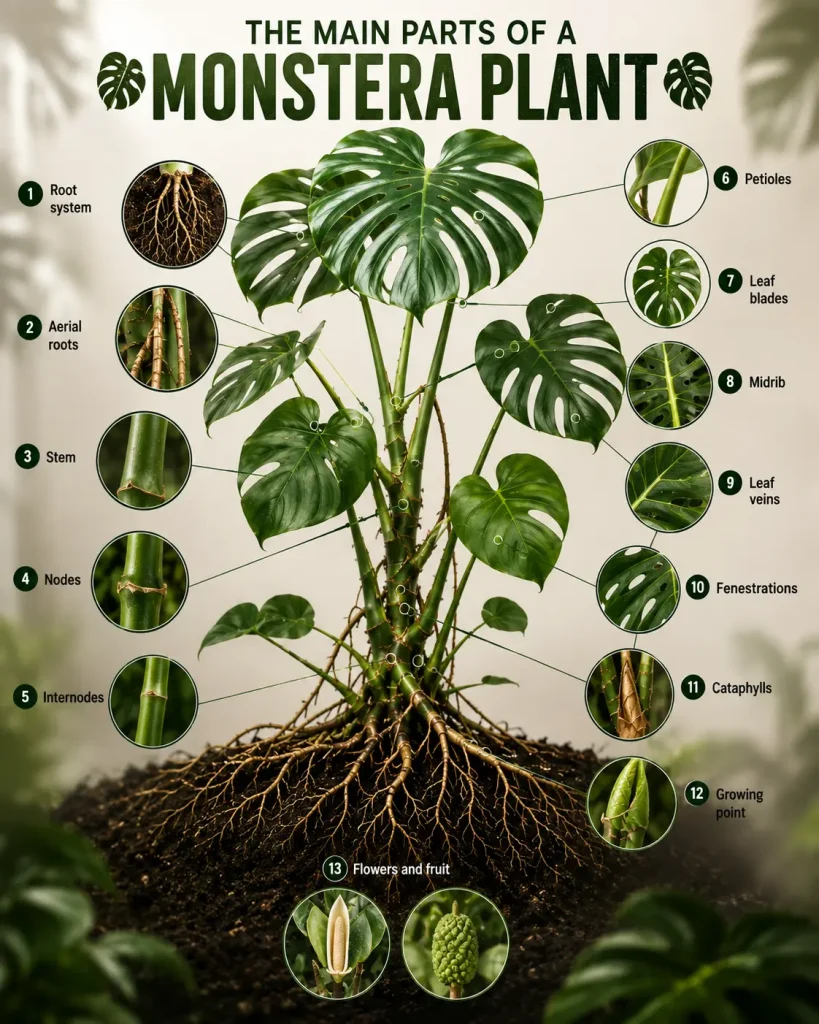
The Main Parts of a Monstera Plant
- Root system
- Aerial roots
- Stem
- Nodes
- Internodes
- Petioles
- Leaf blades
- Midrib
- Leaf veins
- Fenestrations
- Cataphylls
- Growing point
- Flowers and fruit
Each part of plant plays an important role in helping the plant grow.
1. Root System
It is the foundation of every Monstera plant while most of it’s root system remains hidden under the soil, it performs some of the most important tasks needed for survival of a plant. Healthy roots absorb water, oxygen and nutrients from the growing medium. These resources travel through the plant and support for the production of new healthy leaves, stems and roots. Roots also anchor the plant firmly in its pot or in the ground to preventing it from falling.
Healthy roots are usually:
* White or cream colored
* Firm to the touch
Those roots are damaged who are soft, dark brown or black and damaged due to overwatering and poor drainage. Root rot is common reason of a Monstera begins to decline. So you have to check the soil before watering and use a drainage pot.
2. Aerial Roots
Monstera plant can easily recognize by its aerial roots. These are the roots that grow directly from the stem above the soil and can be seen above the soil.In its natural places like forest Monstera climbs on tall trees. Aerial roots help plant to attach itself to rough surfaces while providing additional support.
These roots can only absorb small amounts of moisture from air but their main purpose is climbing.Indoor plants also produce aerial roots. Many growers guide them into a moss pole or allow them to grow into the soil Producing aerial roots is completely normal and usually indicates good growth rather than a problem.
3. Stem
The stem is the main support system of Monstera.
Every leaf, node, aerial root and growing point start’s from the stem. It is the plant transport system, carrying water upward from the roots to leaves while moving sugars produced by the leaves to the rest of the plant.
Young stems are green but when the plant ages they become stronger to support larger leaves.
A healthy stem should remain firm without dark discoloration
4. Nodes
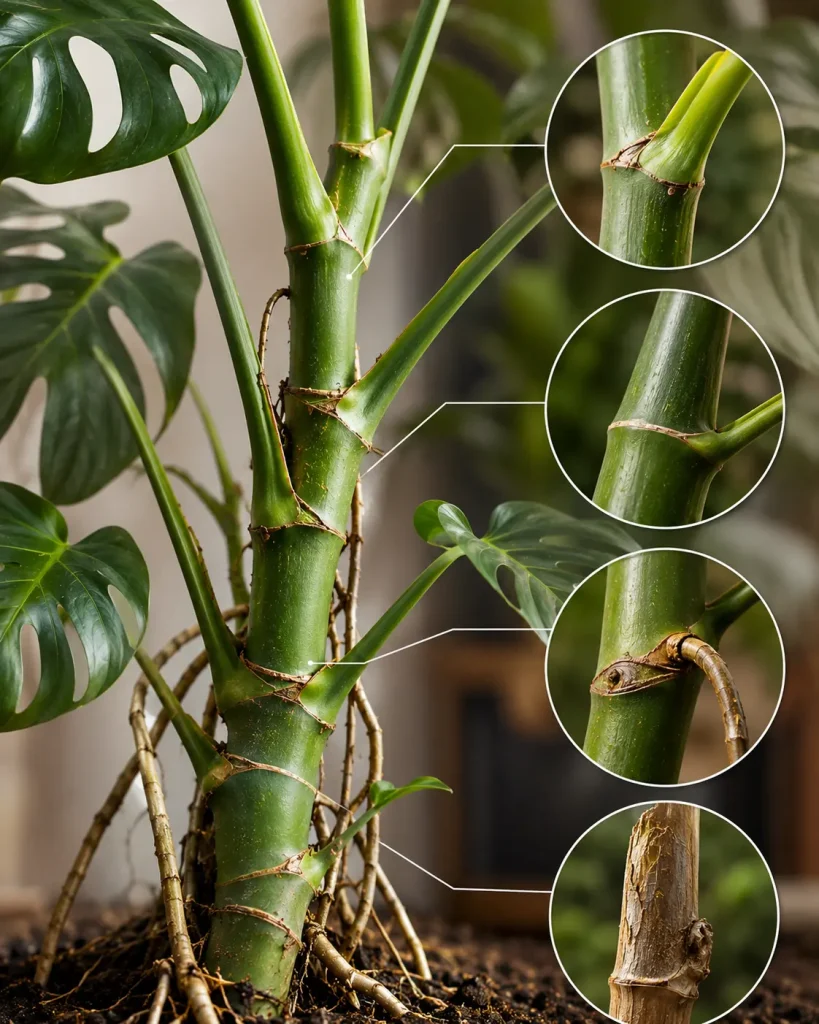
Nodes are among the most important parts of Monstera anatomy A node is the small area where new leaves or aerial roots develop growth. Each node contain growing tissue that allows the plant to produce new structures. The process of propagation is start by a node.
You may notice:
* A leaf growing from a node
* An aerial root emerging from the same point
* New shoots developing after pruning
Nodes are especially important for plant propagation.
Whenever gardeners propagate Monstera through stem cuttings each cutting have a node because without a node a new roots and leaves cannot start developing.
5. Internodes
The stem part between two nodes is known as internode. Its length changes according to the time or growth. When a Monstera receives proper bright indirect light internodes usually stay shorter and gives the plant a fuller appearance. If the plant does not receive enough light the internodes become longer. This makes the plant look thin or leggy.
Observing internode length can provide useful clues about your Monstera is receiving suitable lighting or not.
6. Petioles
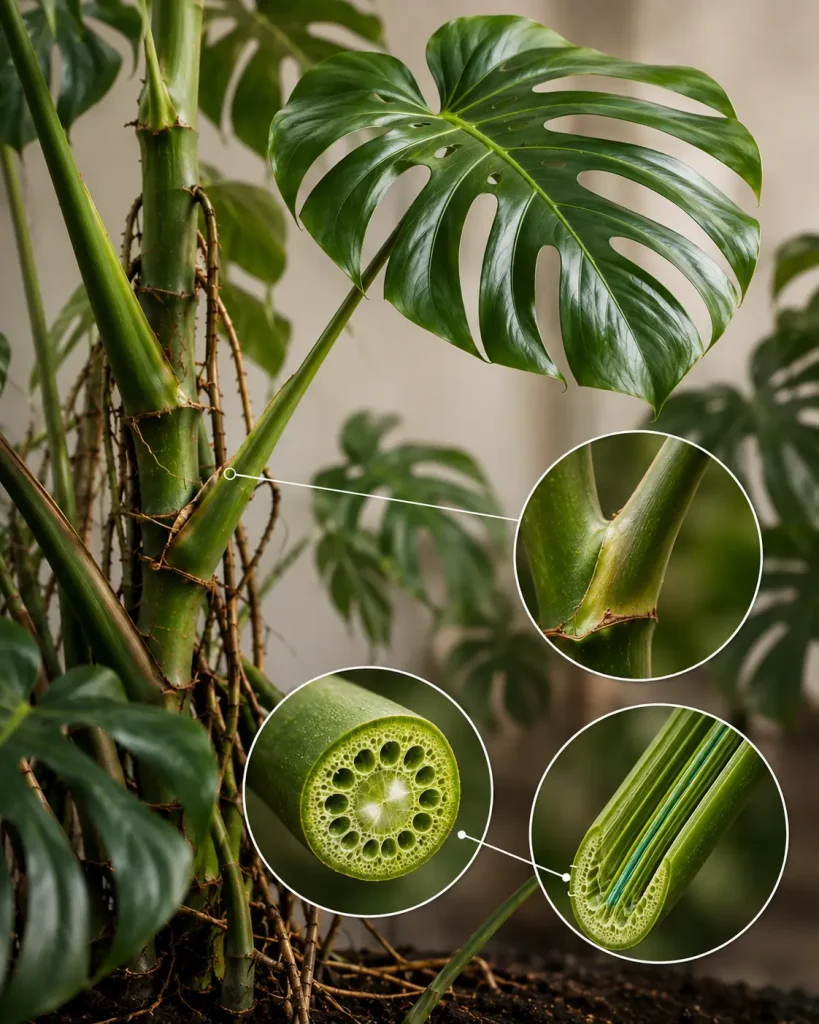
As we know every Monstera leaf has a connection with the stem through a long stalk which is called the petiole. Many beginners thought the petiole is the part of the stem but it has a separate function. The petiole support the leaf and allow it to move slightly toward. There are tissues inside the petiole that transport water and nutrients into the leaf while carrying sugars back.
As Monstera leaves become larger the petioles also become stronger to support their increasing weight and maintains the leave stable.
7. Leaf Blade
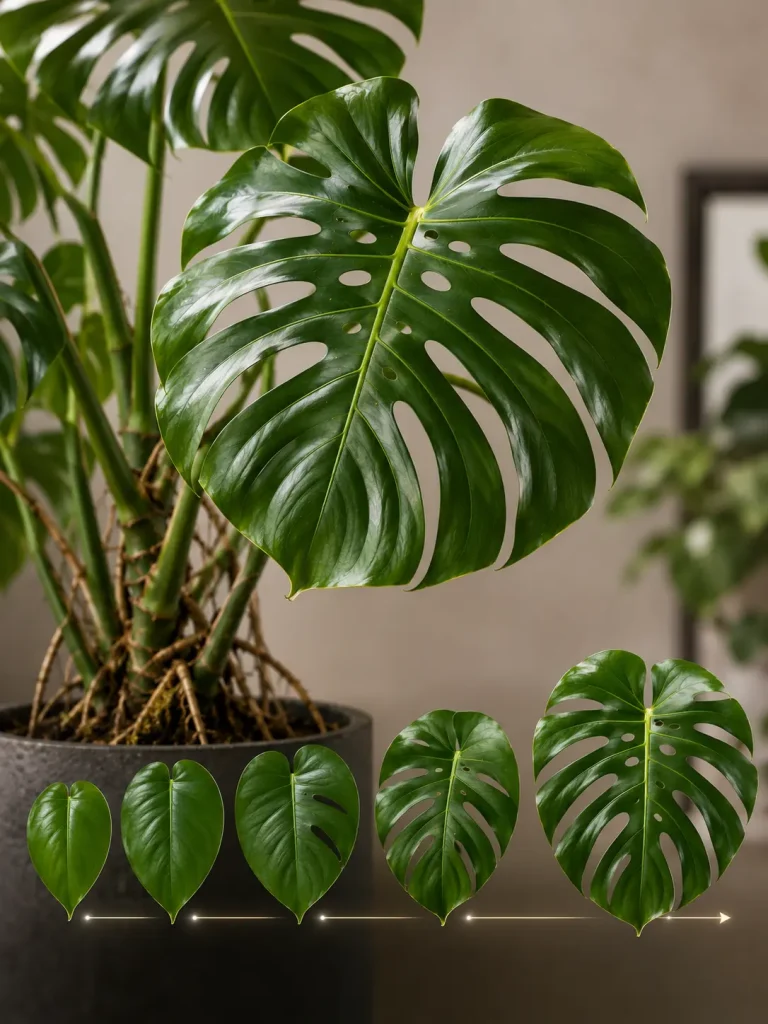
The leaf blade is also known as lamina. It is the broad green part of leaf that most people notice first on monstera. This is where photosynthesis takes place. During photosynthesis plant uses sunlight, water and carbon dioxide to produce its own food for a growth. Large leaf helps the plant to collect more light especially beneath the rainforest where sunlight is limited. Young Monstera plants have small and solid leaves.
As the plant becomes older and receives proper care new leaves gradually increase in size and develop the natura beautiful holes and splits.
8. Midrib
The small mini pipe looking things running through the center of every leaf is midrib.
It is thick central vein that acts like the main support of leaf. It keeps large leaves upright and also transport water and nutrients through the leaf tissue.
Without a midrib the mature Monstera leaves would have to struggle to support their own size.
9. Leaf Veins
There are many smaller veins branch outward from the midrib across the entire leaf. These veins can transfer water in every section of the leaf while moving sugars to other parts of the plant. The network of veins also made leaf stronger and helps prevent tearing.
As leaves mature the vein pattern becomes visible and easier to see.
10. Fenestrations
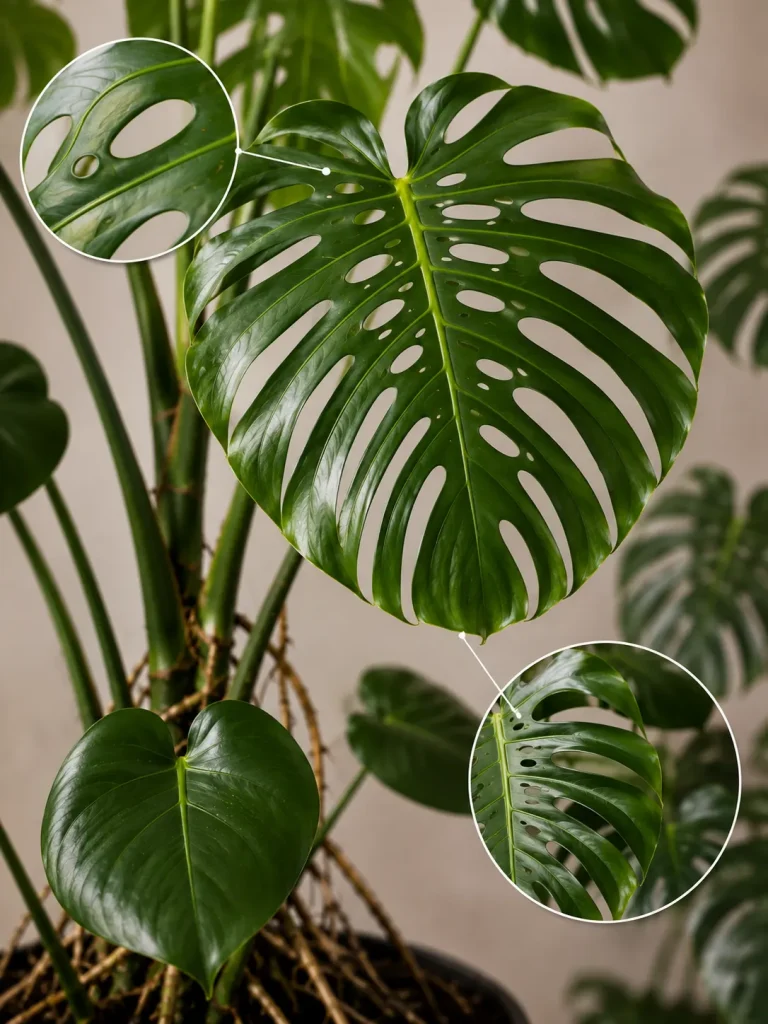
The natural holes and deep splits found in mature Monstera leaves are called fenestrations. These openings do not appear immediately. Young plants almost always produce solid leaves. As the plant becomes taller new coming leaves often develop larger and more numerous fenestrations.
Scientists have studied these unique openings for many years. Several ideas suggest they may allow more light to reach lower leaves, reduce damage caused by strong winds, and lower the weight of large leaves. More than one of these reasons may contribute to the development of fenestrations.The number and size of leaf holes depend on many factors in which the plant’s age, available light and overall health are added.
11. Cataphyll
Before opening a new Monstera leaf it remains wrapped inside a protective cover known as the cataphyll. The cataphyll shields protect the leave from physical damage while it remains still soft. Once the new leaf unfolds the cataphyll dries slowly, turns brown and falls away.
Many beginners think this dried covering is dead leaf but it is simply a normal part of the plant’s growth life cycle.
12. Growing Point
It’s the active area where new growth starts. It is mostly found at the end of main stem. When every new leaf starts here and slowly unfolding over few weeks. Because this area produces future growth it should be protected from physical damage. If a plant continue producing new leaves it’s a good sign of a healthy plant.
13. Flowers
Fruit
Indoor Monstera plants not mostly flower because they need suitable growing conditions. When flowering does occur the plant produces two main parts which is a special flower structure. The outer white or cream colored covering is called spathe while the thick central spike is known as the spadix.
Instead of producing one large flower the spadix contains many tiny flowers packed closely together.
This flowering structure is common among members of the Araceae family. Mostly the outdoor plants produce flower’s.
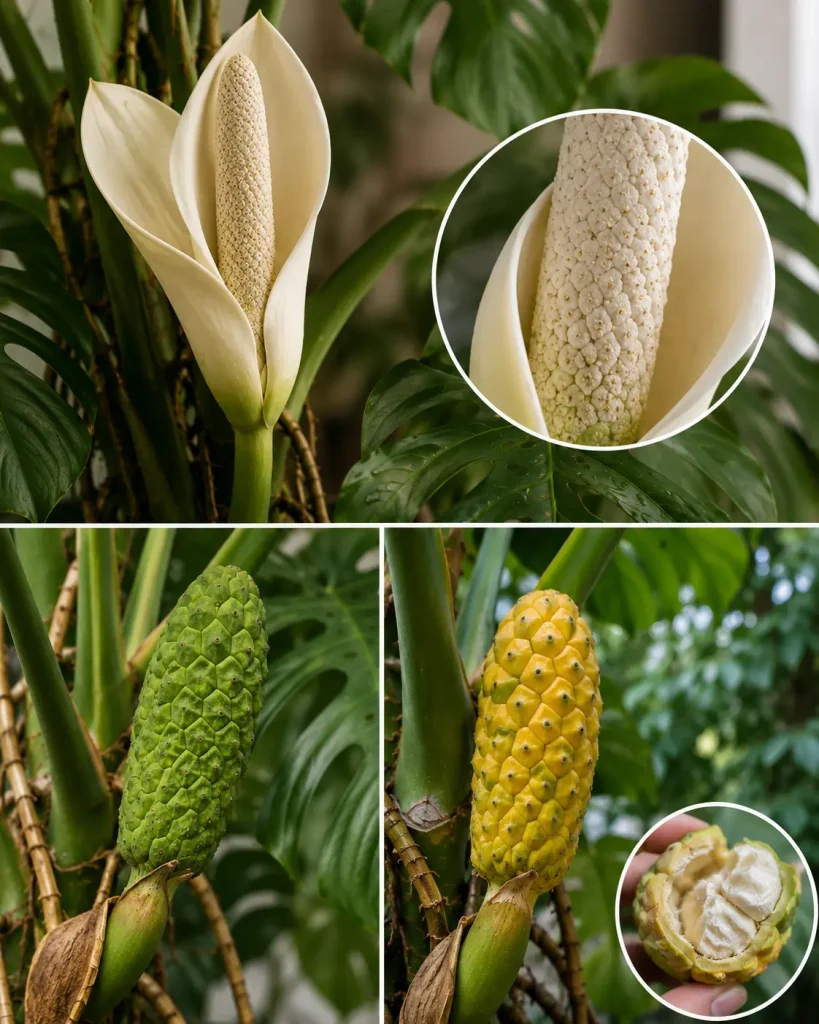
After successful pollination outdoor Monstera plants may produce fruit. The fruit may take many months to ripen completely. When the fruit is fully ripe it creates a sweet flavor which is a mixture of pineapple and banana but the unripe fruit contains calcium oxalate crystals that can cause irritation in the mouth and throat.
Internal Structure of a Monstera Leaf
Includes:
* The epidermis which protects the leaf surface.
* The waxy cuticle which helps reduce water loss.
* The mesophyll where photosynthesis takes place.
* The xylem which transports water from the roots.
* The phloem can carries sugars throughout the plant.
* Stomata tiny openings allow gas exchange
Final Thoughts
Learning the anatomy of a Monstera plant tells you how the plant structure works and how to remain the plant healthy. The roots below the soil and the leaves at the top works together to support the plant.
Whether you are new to growing Monstera learning about its anatomy helps you recognize healthy growth and spot problems. Healthy roots, strong stems, active nodes and mature leaves all play an important role in the plant’s growth. The more familiar you become with these plant parts the more confident you will feel while caring for your Monstera. With proper light, watering, humidity and regular care your plant can continue producing healthy leaves and remain a beautiful part of your indoor garden and gives a amazing look.
FAQs
What are the main parts of a Monstera plant?
A Monstera plant consists of several important parts, including the root system, aerial roots, stem, nodes, internodes, petioles, leaf blades, midrib, leaf veins, fenestrations, cataphylls, growing point, flowers and fruit. Each part has a specific function that supports the plant’s growth and survival.
What is the function of Monstera roots?
The root system anchors the plant in the soil and absorbs water and essential nutrients. Healthy roots are firm, light colored and help support vigorous growth.
Why does a Monstera have aerial roots?
Aerial roots grow above the soil from the nodes. They help the plant climb, provide extra support and absorb moisture from the surrounding air.
What is the difference between a stem and a petiole?
The stem is the plant’s main support structure that transports water and nutrients throughout the plant. A petiole is the stalk that connects an individual leaf to the stem and supports the leaf.
What are nodes on a Monstera?
Nodes are growth points found along the stem. New leaves, aerial roots, branches and flowers develop from these locations, making them essential for propagation.
Why is understanding Monstera anatomy important?
Learning the anatomy of a Monstera helps you identify healthy growth, diagnose problems early, propagate the plant successfully and provide the proper care needed for long term growth.